
Get into Columbia
Columbia's ~4% acceptance rate is daunting. But this is the only Ivy League school in Manhattan—where the Core Curriculum shapes how you think, and New York City becomes your extended classroom. Understanding what Columbia actually values makes all the difference.
64%
64% of Cosmic’s applicants are admitted into Columbia versus only 4.1% nationally.
What Makes Columbia Unlike Any Other University
Dartmouth combines Ivy League academics with a tight-knit community, unparalleled flexibility, and an outdoor culture that shapes everything about life on College Hill.
The Core Curriculum: A Shared Intellectual Experience
Since 1919, Columbia's Core has been the first and most enduring general education program in the U.S. Literature Humanities, Contemporary Civilization, Art Humanities, Music Humanities, small seminars of 15 students where you debate Homer, Plato, Du Bois, and Morrison with classmates who become lifelong friends.
"Remember that everyone is doing the Core together. Conversations about Nietzsche or Morrison happen in dining halls, dorms, and library steps. The Core becomes more than a requirement—it's a defining part of the Columbia experience."
— Columbia Student
New York City Is Your Campus
Wall Street. Silicon Alley. The Met and MoMA. Broadway. This isn't just geography, it's your extended classroom. Free museum access through the Columbia Arts Initiative, internships at world-class institutions, and a city that never stops teaching you how the world actually works.
"I have been able to see several Broadway shows for free through Columbia's Urban New York program. New York City is unmatched for career opportunities and learning how to 'adult.'"
— Columbia Student
An Oasis in the City
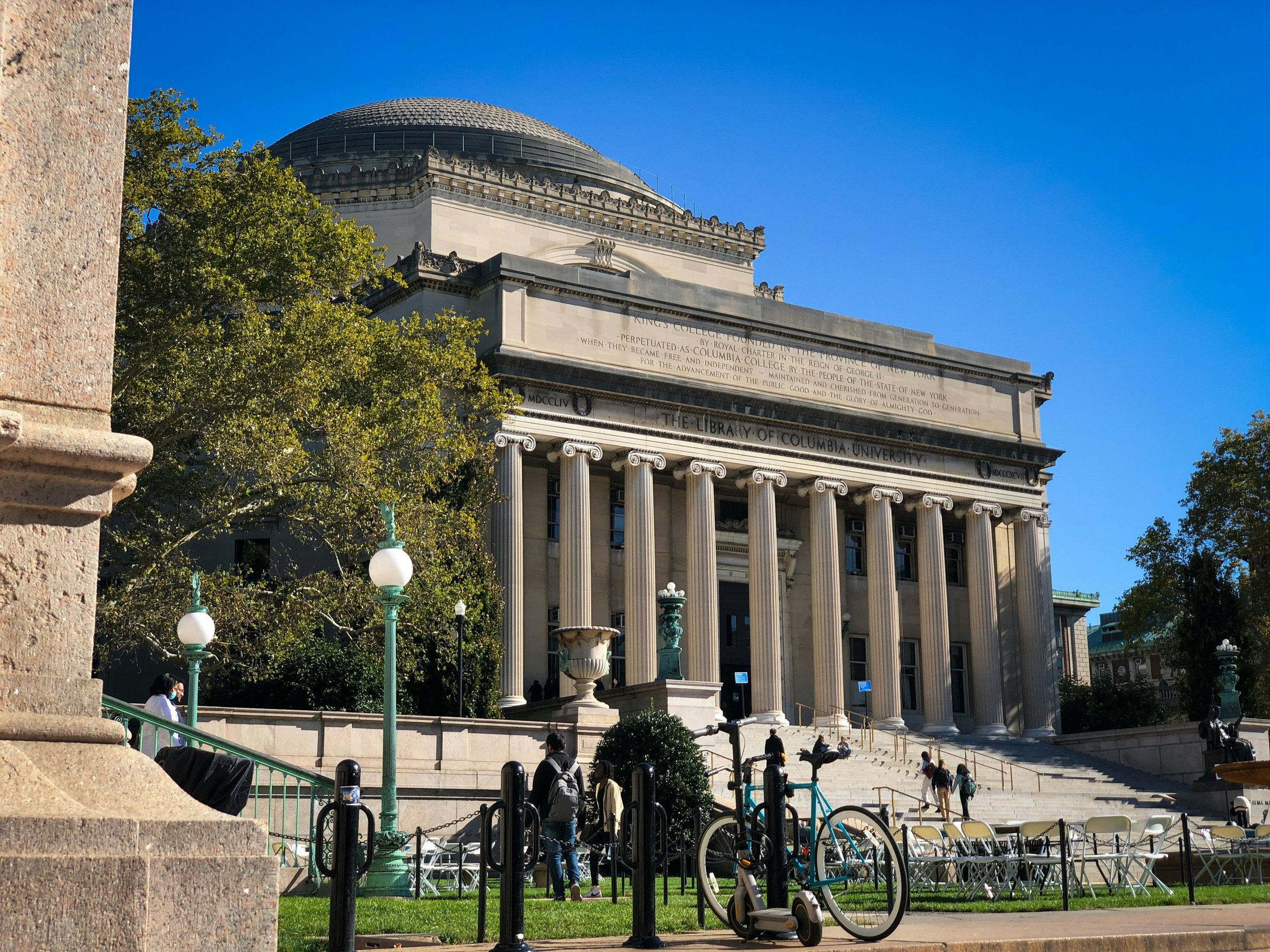
Columbia's Morningside Heights campus offers the best of both worlds: a beautiful, walkable beaux-arts campus tucked away in a residential neighborhood, minutes from Central Park and the Hudson River. When you need the city, it's there. When you need quiet, so is campus.
"Columbia's campus is an oasis in the city. When you're in the center of campus, it can be super quiet. You're not surrounded by the buzz of the city, which can be very comforting."
— Columbia Student
Traditions That Define the Experience
The Varsity Show has satirized campus life since 1894 (launching careers like Kate McKinnon's). Bacchanal brings major artists to Low Steps each spring. Tree Lighting transforms College Walk into magic before finals. These aren't just events, they're what makes you a Columbian.
"My favorite tradition is attending the annual Varsity Show—this student-run musical production truly encompasses the spirit of Columbia: witty, brilliant, quirky and just a tiny bit sassy."
— Columbia Student
A Multidimensional, Collaborative Community
Columbia explicitly values collaboration and diverse perspectives. Students from every corner of the globe come together to debate, question, and challenge each other's ideas, in seminars, dining halls, and dorm rooms. This isn't passive diversity; it's active intellectual engagement.
"From community-wide discourse on humanity's most enduring questions to campus traditions that draw from the full spectrum of cultures, every sphere of the Columbia experience is enriched by all the diverse voices among us."
— Columbia Admissions
Guaranteed Housing, Real Community
Nearly all undergraduates live on campus for all four years, with housing guaranteed. This creates genuine community, friendships form in dining halls, study sessions happen spontaneously, and the campus becomes home. You're not scattered across New York; you're together.
"My friends and I have a tradition following a big final exam of sitting out on Math or Lewisohn lawn and spending hours just enjoying each other's company. The heart of campus can feel like an escape from NYC."
— Columbia Student
What Columbia Actually Looks for in Applicants
Columbia's six supplemental essays reveal exactly what they value. We've decoded them so you don't have to guess.
Columbia's application is extensive, a list question plus five essays. Each one tests something specific.
Here's what the admissions committee is really looking for:
-
The reading list question isn't about impressing anyone—it's about revealing how you learn when no one's grading you. Books, podcasts, museums, websites. Follow directions exactly (no creative flourishes), and avoid controversial figures. This is the easiest question any college asks—if you don't overthink it.
Connected Essay: "List a selection of texts, resources and outlets that have contributed to your intellectual development outside of academic courses."
-
Columbia wants students who bring unique perspectives to collaborations. Show yourself vividly in an extracurricular, extract the lessons you learned, then demonstrate how you'll apply those lessons to specific Columbia clubs and student spaces. Make admissions officers visualize you contributing.
Connected Essay: "Tell us about an aspect of your life... and describe how it has shaped the way you would learn from and contribute to Columbia's multidimensional and collaborative environment."
-
In a community as diverse as Columbia's, disagreements happen. They want students who can engage respectfully and learn from conflict. Best approach: disagree with a peer (not an authority figure), show both parties learned something, and demonstrate you'll thrive in intellectually vibrant debate.
Connected Essay: "Please describe a time when you did not agree with someone and discuss how you engaged with them and what you took away from the interaction."
-
Don't talk about struggling academically—Columbia expects coursework to come easily so you have time for extracurriculars that make campus vibrant. Instead, describe a "metaphorical dragon you slayed": research setbacks, family challenges, standing up for what's right and facing consequences.
Connected Essay: "Please describe a situation in which you have navigated through adversity and discuss how you changed as a result."
-
Write a hypothetical day or week at Columbia, focusing on social aspects and the Core Curriculum. Name specific traditions (Tree Lighting, Varsity Show), Core classes you're excited about, and student spaces. Connect each engagement to a personal experience that motivates it.
Connected Essay: "Why are you interested in attending Columbia University? We encourage you to consider the aspect(s) that you find unique and compelling about Columbia."
-
Save research for this essay. Another hypothetical day or week, but this time in research institutes, professors' labs, and academic opportunities unique to Columbia. Leverage NYC geography. Name names. End by showing how you'll use your Columbia education to impact the world.
Connected Essay: "What attracts you to your preferred areas of study at Columbia College or Columbia Engineering?"
How We Build Columbia-Ready Applicants
Columbia wants intellectually curious students who thrive in collaboration, embrace diverse perspectives, and can envision themselves contributing to campus. Here's how we build that applicant.
8th Grade
Cultivating Intellectual Curiosity
Columbia's reading list question reveals what you pursue when no one's watching. We help students develop genuine intellectual interests early, books, podcasts, museums, ideas, that will become the foundation of their intellectual identity.
9th Grade
Building Academic Foundations
Columbia expects coursework to be easy. We ensure students develop the academic rigor and broad intellectual interests the Core Curriculum demands, humanities, sciences, philosophy, the arts, while building the habits that prevent academic struggle.
10th Grade
Developing Collaborative Leadership
Columbia values collaboration over individual achievement. We help students find extracurriculars where they work with others, develop perspectives through engagement, and learn to contribute productively to communities, skills the application specifically tests."
11th Grade
Research and NYC Opportunities
Junior year is when we connect students' interests to Columbia's specific academic offerings and NYC's resources. Our PhD-level consultants help students pursue meaningful research and identify professors, institutes, and opportunities they'll reference in essays.
12th Grade
Application Excellence
Six essays require strategic coordination. We craft reading lists that reveal genuine curiosity, structure "Why Columbia" essays as vivid hypothetical days on campus, and ensure every element works together. Each essay answers a specific question Columbia is asking about you.
Senior Year Start
It's Not Too Late
Starting at the beginning of senior year? We can still make a significant impact. Columbia's essays test specific qualities, collaboration, resilience, intellectual curiosity, that we can help you demonstrate through strategic presentation of your existing experiences.
Ready to Start Your Columbia Journey?
of the students Cosmic serves were admitted to at least one of their top 3 preferred colleges.
96%
