
Get into Cornell
Cornell's ~8% acceptance rate belies an even more complex reality: you apply to one of seven undergraduate colleges, each with its own admissions process and essay.
Understanding which college fits you and how to demonstrate that fit makes all the difference.
72%
72% of Cosmic’s applicants are admitted into Cornell versus only 8.1% nationally.
What Makes Cornell Unlike Any Other University
Cornell combines Ivy League prestige with a land-grant mission, world-class research with undergraduate focus, and seven distinct colleges within one university overlooking the gorges of Ithaca.
"Any Person, Any Study"
When Ezra Cornell founded the university in 1865, his vision was radical: an institution where any person can find instruction in any study. Cornell was coeducational and nonsectarian from day one. As the only Ivy League land-grant university, Cornell merges practical and technical education with classical liberal arts. This founding philosophy still shapes admissions today.
"Cornell values students who think beyond boundaries, those who dive deep into their interests while exploring connections across fields."
— Cornell Admissions
Seven Colleges, One University
Unlike any other Ivy, Cornell has seven undergraduate colleges, each with its own admissions, faculty, and academic culture. Arts and Sciences, Engineering, Architecture Art and Planning, Agriculture and Life Sciences, Human Ecology, Industrial and Labor Relations, and the SC Johnson College of Business each require separate essays. You apply to a college, not just to Cornell.
"Each college and academic division has near autonomy in defining its respective admission standards and academic curriculum."
— Cornell University
World-Class Niche Programs
Cornell is home to programs that exist nowhere else at this level. The School of Hotel Administration is the world's top hospitality program. ILR (Industrial and Labor Relations) is the only undergraduate school of its kind. The veterinary program is among the nation's best. Architecture, engineering, and agriculture draw students who know exactly what they want to study.
"Cornell is known for certain niche programs that don't exist elsewhere at this caliber."
— Cornell Student
"Ithaca Is Gorges"
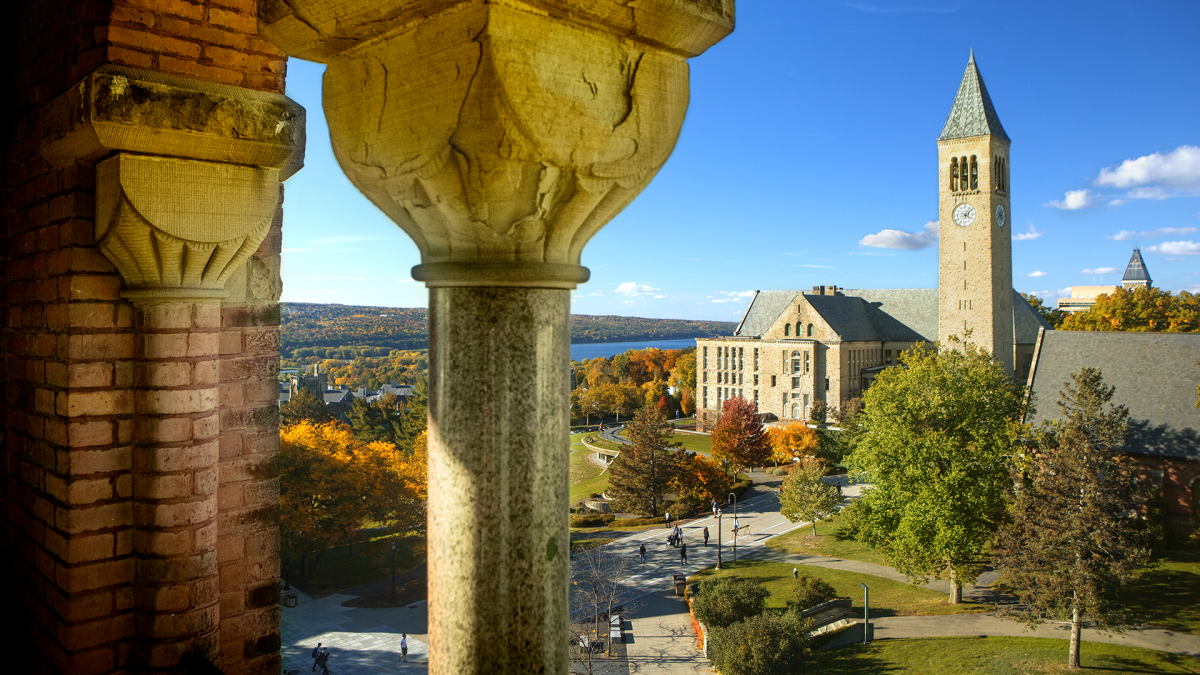
Cornell's 745-acre campus sits on East Hill overlooking Cayuga Lake in the Finger Lakes region of New York. Two dramatic gorges cut through campus, with waterfalls and swimming holes. The Appalachian Trail is nearby, and Cornell manages over 4,000 acres of botanical gardens and natural areas. The setting is stunning and isolated, far from any major city.
"You might cross a suspension bridge to get to class, walk past a waterfall on your study break, or hear rushing water while relaxing on the Arts Quad."
— Cornell Student
Scale and Opportunity
With over 16,000 undergraduates, Cornell is the largest Ivy. This means 1,000+ student organizations, 37 varsity athletic teams, 60+ Greek chapters, and research opportunities across every field imaginable. The scale creates options. If you want to find your people and pursue your passions at the highest level, they exist here somewhere.
"Cornell offers a diverse and dynamic student body, equipped to tackle global challenges."
— Cornell Admissions
Traditions That Unite
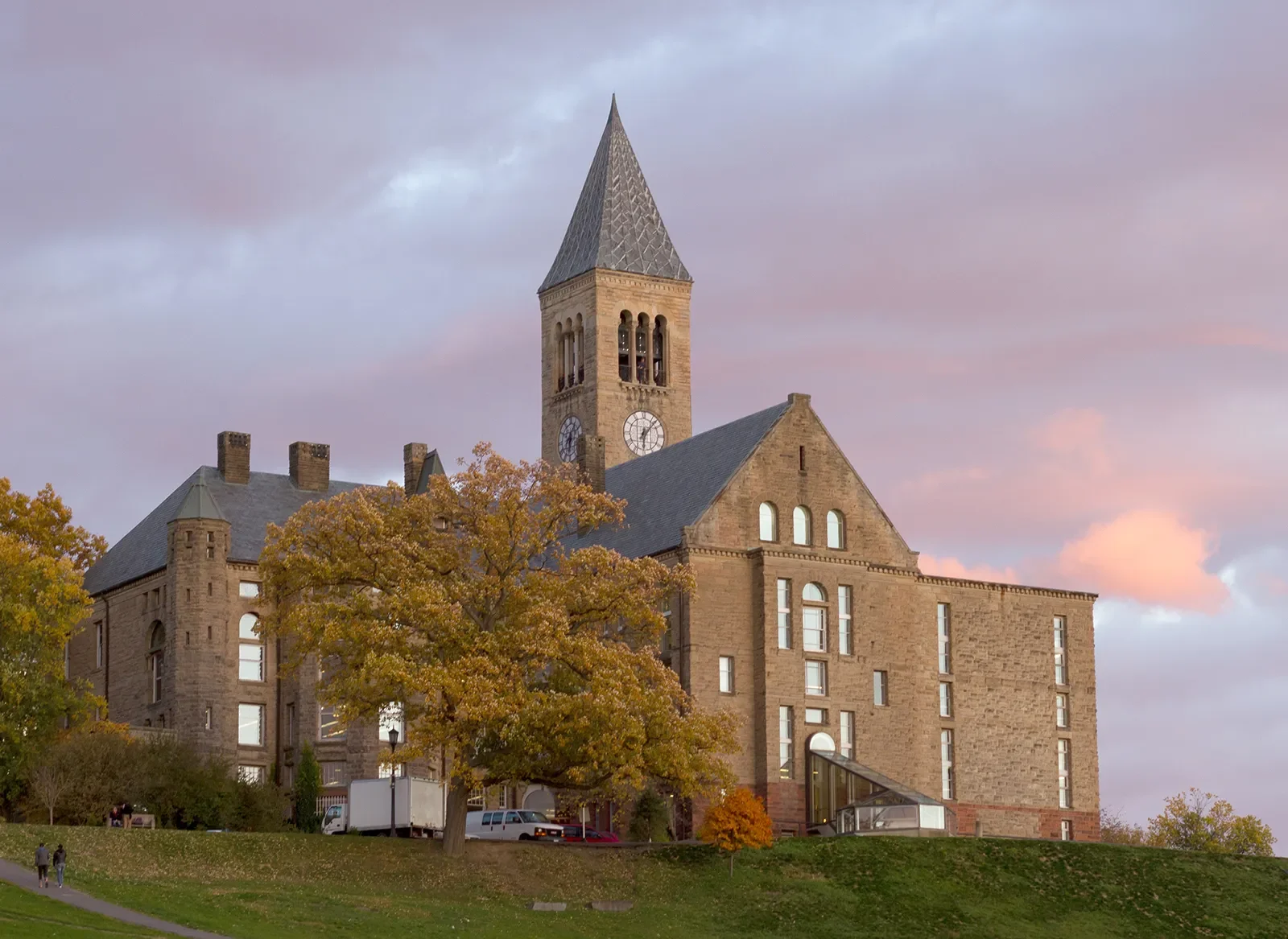
Dragon Day, when architecture students parade a massive student-built dragon across campus while engineering students counter with a phoenix. Slope Day, when the entire campus gathers on Libe Slope for a concert to celebrate the end of classes. Hockey games at Lynah Rink, where the "Lynah Faithful" throw fish at Harvard. The Cornell Chimes playing three times daily from McGraw Tower.
"From Dragon Day to Slope Day, a Chimes concert to an a cappella concert, there are many unique Cornell experiences."
— Cornell Alumni Association
What Cornell Actually Looks for in Applicants
Cornell requires a university-wide community essay plus a college-specific essay. The community essay tests one thing; each college essay tests something different.
Every Cornell applicant writes the same community essay. But then each college has its own prompt, ranging from 500 to 650 words. Understanding what each college values is essential to crafting a successful application.
-
The required community essay asks how you have been shaped by a community you belong to. This is about demonstrating you thrive in reciprocal relationships where you both benefit from and contribute to a group. Open with a vivid snapshot of yourself within the community. Show social interactions that made you grow. Conclude with how this community shaped goals related to your strengths.
Required Essay (350 words): "Share how you've been shaped by one of the communities you belong to."
-
A&S wants to see that your passion for learning is genuine and self-directed. Open with yourself engaged in your favorite academic activity. Establish a personal connection to your area of study. Show how you went above and beyond coursework. Name specific professors, courses, and programs at Cornell. The reader should want you to study this field.
Arts and Sciences (650 words): "Discuss how your passion for learning is shaping your academic journey."
-
The College of Agriculture and Life Sciences values science that connects to real-world problems. Open with a personal anecdote that establishes your connection to your chosen major's subject matter. Show how you explored this interest beyond requirements. Demonstrate how your work connects to a problem you want to help solve. Reference specific CALS courses, faculty, and interdisciplinary opportunities.
CALS (500 words): "Why are you drawn to studying the major you have selected and specifically, why do you want to pursue this major at Cornell CALS?"
-
AAP asks different questions by major. B.Arch applicants need to show a creative project or passion that justifies a five-year professional commitment. BFA applicants should show how they will integrate diverse interests into a coherent art practice using Cornell's broader resources. URS applicants must demonstrate genuine depth on urban and regional issues.
AAP (650 words): "How do your interests directly connect with your intended major at AAP?"
-
The Jeb E. Brooks School of Public Policy wants students who understand that the problems they care about are fundamentally policy problems. Open with a moment when you realized this. Show what steps you took to explore policy. The Brooks School emphasizes rigorous, evidence-based analysis, so show you can think critically about how policy works and where it falls short.
Brooks (650 words): "Why are you interested in studying policy, and why do you want to pursue this major at Brooks?"
-
The Dyson School and Nolan School of Hotel Administration ask what kind of business student you are. Open with a topic or issue you care about. Explain why it matters to you personally. Show how you have already engaged with this issue through tangible action. Connect your interests to the specific school you are applying to and its curriculum.
SC Johnson (650 words): "What kind of a business student are you?"
-
Cornell Engineering requires two long essays and four short essays. For "why engineering," give readers a front-row seat inside your mind as you solve a problem. For "why Cornell Engineering," write a hypothetical showing your life there, naming specific professors, labs, project teams, and courses. The short essays test joy, unique contribution, meaningful activity, and personal achievement.
Engineering (200 + 200 + 4x100 words): "Why do you want to study engineering?" and "Why Cornell Engineering?"
-
Human Ecology asks you to identify a challenge and show how CHE's major and breadth of majors will help address it. ILR asks about topics related to work, labor, and employment that matter to you personally. Both want lived experience, not abstract interest. Show you have witnessed the issues you care about and taken action to understand them.
CHE (600 words) / ILR (650 words): Challenge-focused and labor/employment-focused essays respectively.
The Seven College Essays at a Glance
Each Cornell college has its own supplemental essay. Here is what each one really asks.
College of Arts and Sciences
650 words
A "why major" and "why college" essay combined. Show your passion for learning through first-person anecdotes of going beyond coursework. Explain how this led you to your chosen field. Name specific A&S opportunities: courses, professors, academic centers. Conclude with impact or personal transformation.
College of Agriculture and Life Sciences
500 words
Open with a personal connection to your CALS major's subject matter. Show exploration beyond requirements. Demonstrate how your interest connects to a real-world problem. Reference specific CALS courses, faculty, labs, and interdisciplinary opportunities. CALS values purpose-driven science.
College of Architecture, Art, and Planning
650 words
Prompt varies by major. B.Arch: show a creative project that justifies five years. BFA: show how you will integrate interests into a coherent art practice. URS: demonstrate depth on urban and regional issues. All should reference specific AAP opportunities.
Jeb E. Brooks School of Public Policy
650 words
Open with a moment when you realized the problems you care about are policy problems. Show steps taken to explore policy. Demonstrate critical thinking about how policy works and where it fails. Reference specific Brooks courses, faculty, and centers.
SC Johnson College of Business
650 words
Define yourself as a business student through what you care about. Open with a topic or issue. Explain personal stakes. Show tangible engagement. Connect to Dyson (applied economics and management) or Nolan (hospitality) specifically. They want to see who you are, not just what you have done.
College of Engineering
200 + 200 + 4x100 words
Two long essays: why engineering (show problem-solving joy or real-world impact connection) and why Cornell Engineering (hypothetical scenario naming professors, labs, project teams). Four short essays: what brings you joy, unique contribution, meaningful activity, important achievement.
College of Human Ecology
600 words
Identify a challenge in your community or intended career. Show you have personally witnessed or been affected by it. Explain how your CHE major will address it. Discuss how the breadth of CHE majors (interdisciplinary collaboration) will complement your education.
School of Industrial and Labor Relations
650 words
Open with a vivid anecdote about work, labor, employment, or organizational dynamics. Explain personal connection. Show actions taken to explore further. Demonstrate active, sustained interest. Reference specific ILR courses, faculty, centers, and experiential learning opportunities.
How We Build Cornell-Ready Applicants
Cornell wants students who embody "any person, any study" by pursuing deep interests while exploring connections across fields. Here is how we build that applicant.
8th Grade
Discovering Direction
Cornell's college-specific admissions reward students who know what they want to study and why. We help students explore interests early, identifying which of Cornell's seven colleges might be the right fit and building experiences that demonstrate authentic engagement.
9th Grade
Building Academic Foundations
Cornell values rigorous coursework. We help students select challenging courses aligned with their intended college. For CALS or Engineering, this means strong STEM foundations. For ILR or Brooks, it means developing critical thinking through humanities and social sciences.
10th Grade
Deepening Community Engagement
The required community essay asks how you have been shaped by communities you belong to. We help students find and contribute to communities where they experience the reciprocal relationships Cornell values. This is also when we begin connecting interests to real-world problems.
11th Grade
Connecting to Cornell
Junior year is when we connect students' interests to specific Cornell opportunities. Our PhD-level consultants help students identify professors, research centers, courses, and programs they will reference in their college-specific essays. We ensure every application shows deep, specific knowledge of the college.
12th Grade
Application Excellence
Cornell's seven colleges have different essay prompts with different emphases. We craft a community essay that showcases your character and a college essay that demonstrates fit. For Engineering's six-essay structure, we ensure each piece reveals a new dimension of who you are.
Senior Year Start
It's Not Too Late
Starting at the beginning of senior year? We can still make a significant impact. Cornell's essays test specific qualities: community contribution, academic passion, and college fit. We help you present your existing experiences strategically to demonstrate what each college values.
Ready to Start Your Cornell Journey?
of the students Cosmic serves were admitted to at least one of their top 3 preferred colleges.
96%
