
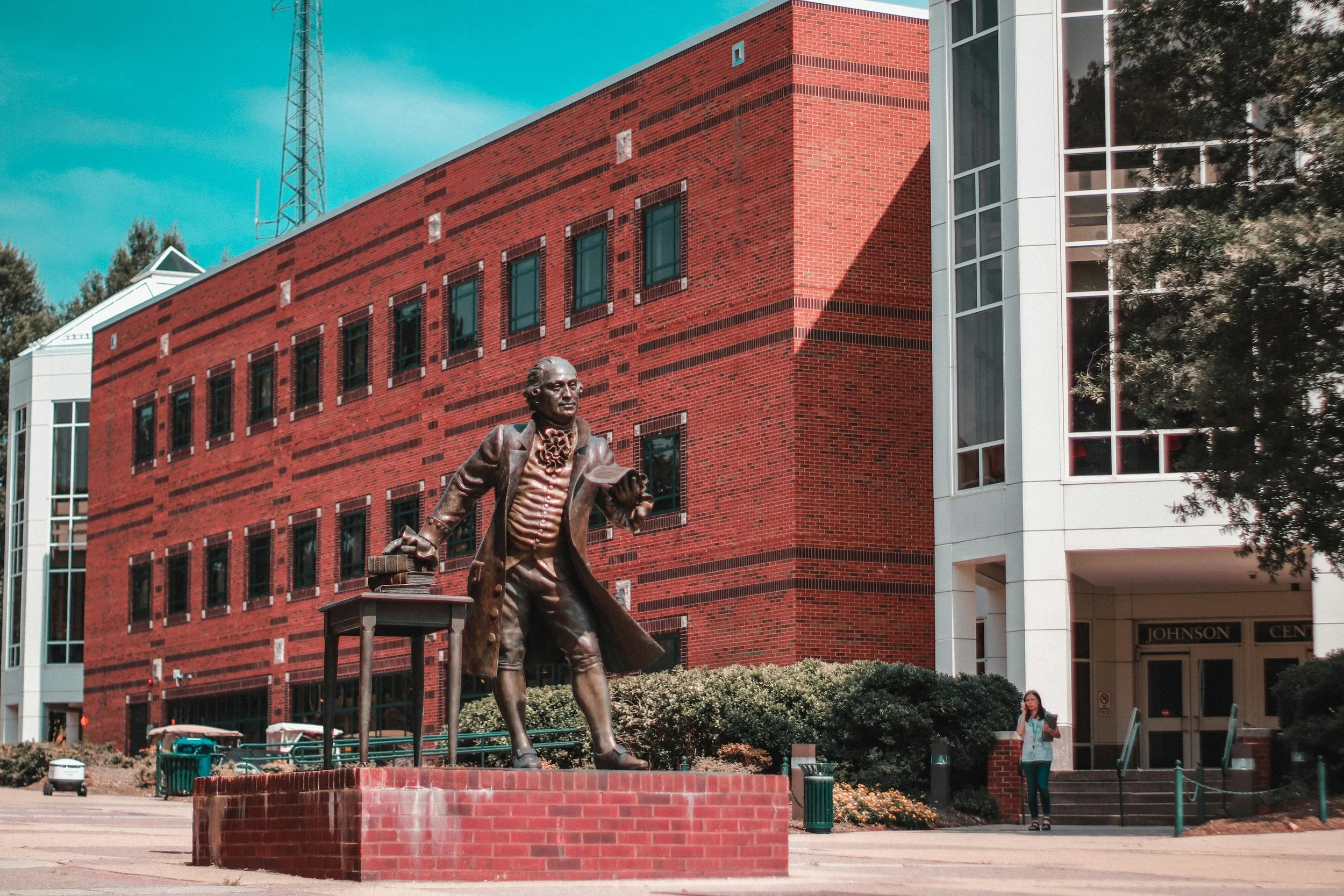
ASSIP: Aspiring Scientists Summer Internship
George Mason University's nationally recognized research program.
One-on-one faculty mentorship, real scientific contributions, college credit, and publication opportunities—all in eight transformative weeks.
~10%
Acceptance Rate
8
Weeks of Research
100+
Faculty Mentors
6
Weeks at MIT
Research That Actually Matters
ASSIP isn't a summer camp where you follow pre-written lab protocols. It's a genuine research internship where you work one-on-one with faculty researchers on projects with unknown outcomes—the same uncertainty that defines real science.
Founded over a decade ago at George Mason University's College of Science, ASSIP has grown into one of the nation's premiere pre-college research experiences. In 2023, the program accepted 292 interns from nearly 2,900 applicants—a roughly 10% acceptance rate that reflects its competitive standing. What distinguishes ASSIP from other summer programs is its structure: you're not in a cohort following a set curriculum. You're embedded in a working research lab, contributing to projects that may lead to publications, patents, or conference presentations.
"Students don't work on canned experiments where we know what is going to happen. We have no idea what will happen. They are participating day to day with us. Some experiments work; some don't. Some results show that our hypothesis is correct and sometimes we have findings that lead us down an entirely new pathway."
— Dr. Virginia Espina, ASSIP Mentor and Systems Biology Research Professor
🔬
One-on-One Mentorship
Work directly with George Mason faculty researchers—not TAs or graduate students. Your mentor guides you through every stage of a real research project, from hypothesis to presentation.
📚
3 College Credits
Earn transferable undergraduate credits from George Mason University (COS120: Introduction to Research). Your work is recognized academically, not just experientially.
📖
Publication Opportunities
Research abstracts are published in Mason's Journal of Student Scientists' Research. Many students present at conferences like AGU and ACS, and some have their work published in peer-reviewed journals.
💡
Real Innovation
RSI research projects frequently win top prizes at Regeneron STS, Siemens Competition, and ISEF. The program is specifically designed to produce research that can compete at the highest levels of national and international science competitions.
What Sets ASSIP Apart: You Choose Your Mentor
Unlike most summer programs where you're assigned a project, ASSIP lets you select up to three prospective mentors whose research aligns with your interests. If shortlisted, you interview directly with those faculty members—and they choose whether to take you on as their intern. This mutual selection process means you're working with someone who genuinely wants to mentor you, on a topic you genuinely care about.
Three Formats: One Rigorous Experience
ASSIP expanded its remote options during the pandemic and kept them—recognizing that geography shouldn't limit access to elite research opportunities. Today, you can participate from anywhere in the country (or world).
ASSIP expanded its remote options during the pandemic and kept them—recognizing that geography shouldn't limit access to elite research opportunities. Today, you can participate from anywhere in the country (or world).
🏛️ In-Person
Work in labs at Mason's Fairfax, SciTech (Manassas), or Potomac Science Center campuses. Access sophisticated equipment and develop hands-on wet-lab or computational skills.
💻 Remote
Participate from anywhere with computational, data science, or theoretical research projects. Perfect for students outside the DC metro area or those focused on coding-heavy research.
🔄 Hybrid
Combine remote work with periodic on-campus sessions. Mentors design hybrid formats based on project needs—offering flexibility without sacrificing hands-on experience.
Note:
Wet lab positions (involving chemicals or biohazards) require in-person attendance and applicants must be 16+ by June 18, 2026. Remote/computational positions are available to students 15+.
Research Areas: Find Your Match
ASSIP offers one of the broadest ranges of research opportunities among any high school summer program. With 100+ mentors across Mason's College of Science, College of Engineering and Computing, School of Public Health, and beyond, you'll find faculty working on topics that align with virtually any STEM interest.
Astronomy & Astrophysics
Bioengineering
Cybersecurity
Renewable Energy
Women's Health
Nanotechnology
Molecular Medicine
Climate Science
Data Science & AI
Physics
Spatial Sciences & GIS
Sustainable Botany
Biochemistry
Environmental Science
Machine Learning
Chemistry
Psychology
Quantum Materials
Drug Discovery
Neuroscience
Robotics
Proteomics
Game Design & XR
STEM Education
Recent ASSIP projects have included solar coronal magnetic loop analysis, lipid nanoparticle synthesis, bacterial contamination reduction in hydroponic systems, machine learning for wildfire prediction, endometriosis cellular mechanisms, and the development of AI-driven prosthetics that led to patent filings.
The Competitive Reality
ASSIP's acceptance rate hovers around 10%—competitive with many prestigious summer programs. In recent years, the program has received nearly 2,900 applications for approximately 290 positions. But unlike programs that select based purely on grades and test scores, ASSIP uses a mentor-matching process where faculty choose the students they want to work with.
~2900
Applicants Annually
~290
Accepted Interns
100+
Faculty Mentors
33+
States Represented
Accessible by Design
ASSIP costs $1,299 in tuition (for 3 college credits) plus a $25 application fee—but both can be fully waived for students with financial need. Provide proof of free/reduced lunch eligibility or Pell Grant status, and you can participate at no cost. No transcripts or recommendation letters required to apply.
ASSIP's application is essay-focused. No transcripts. No recommendations (at the initial stage). Your essays are your primary opportunity to demonstrate you're ready for serious research—and to convince specific mentors that you're the right fit for their lab.
What ASSIP Values in Applicants
The Secret to ASSIP Essays
Unlike programs with word limits, ASSIP doesn't specify essay length. We recommend ~300 words per essay—enough depth to demonstrate genuine engagement without padding. Every sentence should either reveal something meaningful about you or demonstrate authentic scientific curiosity.
Essay 1: Work/Volunteer Experience
Start with a vivid anecdote showing something impactful you did. Cite quantitative results that demonstrate your success. Unite your experiences under a common theme—you don't need to list everything, only contributions that mattered. Conclude by explaining how these experiences shaped your aspirations as a researcher.
Essay 2: What Do You Hope to Gain from ASSIP?
Specificity is everything. Valid goals include: learning to navigate peer-reviewed literature, understanding statistical methods for data analysis, communicating scientific findings effectively, identifying complex problems that capture your imagination, and developing the drive to tackle unsolved challenges. Ground these goals in your lived experiences—don't just list them abstractly.
Essay 3: Your Area of Scientific Interest
Don't start with childhood fascination—ASSIP wants to know who you are now. Establish a recent, personal motivation for your field, then demonstrate genuine understanding of its contemporary state. Convince the reader why solving current problems in this area matters, and conclude with either a core insight from the field, your excitement to contribute, or a vision of how advances will change lives.
Essay 4: Creative Problem-Solving
This is one extended anecdote centered on you solving a problem—STEM or otherwise. Show your ability to deviate from textbook approaches, your comfort with uncertainty, and your capacity for original thinking. Convey the emotions you experienced while grappling with challenges. This essay assesses both critical thinking and passion for discovery.
The ASSIP Experience: Eight Weeks That Matter
ASSIP runs 30 hours per week, Monday through Friday, 9 AM to 5 PM. But the experience extends far beyond clock-in hours—you're becoming part of a research team with real stakes and real discoveries.RSI isn't summer camp. It's an immersion into what life as a researcher actually looks like—with all the intensity, uncertainty, and exhilaration that entails.
Week 1:
Orientation & Onboarding
Program orientation, lab safety training, and introduction to your research project. You'll meet your mentor, understand the scope of your work, and begin familiarizing yourself with the tools and literature.
Weeks 2–7:
Deep Research
Hands-on experimentation, data collection, analysis, and iteration. Some experiments work; others don't. You'll learn to adapt, troubleshoot, and think like a scientist. Workshops and seminars enhance your scientific communication skills.
Week 6:
Symposium & Presentation
Prepare and present your research at the ASSIP Research Symposium. Faculty, peers, and family attend as you defend your findings—a preview of academic conference presentations you'll give throughout your career.
Beyond the Summer
Your abstract is published in the Journal of Student Scientists' Research. Some students continue collaborating with mentors, present at national conferences, or develop their work toward patent applications.
"My experience at ASSIP for the last two summers was probably the most beneficial and impactful experience I have had in my life so far. It taught me how to be a better scientist and engineer, how to develop new ideas, and how to make those ideas a reality. I accomplished a lot that I never thought I was capable of doing as a high school student such as filing for three patents and inventing new technologies to be used by companies to help others."
— R.N., ASSIP Alum 2017 & 2018, Harvard University Class of 2023
Application Timeline for Summer 2026
ASSIP's application process is streamlined but competitive. Mark these dates:
December 8, 2025
Applications open. Begin reviewing the list of prospective mentors immediately—this is your most important strategic decision.
February 15, 2026
Application deadline. All materials must be submitted by 11:59 PM. No late applications accepted. Select 1–3 mentors whose research aligns with your interests.
Late February – March 2026
Mentors review applications and select candidates for interviews. If shortlisted, you'll interview directly with faculty—your chance to demonstrate fit and enthusiasm.
Early April 2026
Internship offers extended by mentors. You'll need to accept by mid-April and pay tuition (or submit financial aid documentation) to secure your position.
June 18 – August 12, 2026
Program runs for 8 weeks. Orientation on June 18; Research Symposium on August 12. Closed for Juneteenth (June 19) and Independence Day observance (July 3).
Why Cosmic Is the #1 Firm for ASSIP Preparation
ASSIP's mentor-matching process rewards applicants who can demonstrate genuine scientific curiosity and the skills to contribute meaningfully to research. Most consultants can help you polish prose. We can help you develop the scientific foundation that makes your essays authentic.
Our Consultants Are Scientists
PhD researchers who understand what faculty mentors look for in prospective interns. We've been on both sides of the research mentorship relationship—and we know how to position you as someone worth investing in.
What We Provide That No One Else Can
-
With 100+ mentors across dozens of fields, choosing the right 1–3 to apply to is critical. We help you identify faculty whose research genuinely aligns with your interests and whose mentorship style fits your goals—increasing your interview chances dramatically.
-
The "area of scientific interest" essay separates serious applicants from casual ones. We help you demonstrate genuine understanding of contemporary research, not just surface-level enthusiasm.
-
Your creative problem-solving essay needs to show original thinking and comfort with uncertainty. We help you identify and frame experiences that reveal these qualities authentically.
-
If shortlisted, you'll interview with faculty who want to assess whether you're ready for their lab. We prepare you for the questions researchers actually ask—about your background, your goals, and your ability to handle challenges.
-
If your profile lacks research experience, we can help you find opportunities to develop the skills and mindset that ASSIP mentors seek—before you apply.
Ready to Start Your ASSIP Application?
95%
95% of Cosmic applicants are admitted to a Top-3 Choice school.
