
The Summer Science Program
The longest-running pre-college STEM program in America.
Since 1959, SSP has transformed how high school students experience real scientific research—and it's MIT's favorite feeder program.
~10%
Acceptance Rate
5
Weeks of Research
60+
Research Hours/Week
66
Years of Excellence
The Educational Experience of a Lifetime
SSP isn't a summer camp. It isn't a lecture series. It's a total immersion into what it means to be a working scientist—complete with the late nights, the breakthroughs, the failures, and the exhilaration of contributing real data to the scientific community.
Founded in 1959 at The Thacher School in California, the Summer Science Program is the oldest residential STEM education program in America. What began as a local outreach program has evolved into a national institution that consistently produces future scientists, engineers, and leaders. The program's culture—built over more than six decades—is unlike anything else in pre-college education.
MIT's Unofficial Feeder Program
MIT explicitly lists SSP alongside RSI as a competitive-admission program that signals exceptional academic capability. Roughly 40% of SSP alumni enroll at Ivy League or top-10 universities, and MIT admissions officers consistently report that SSP participants present strong applications with demonstrated research experience.
🔬
Real Research, Real Contribution
Your work doesn't end up in a filing cabinet. Astrophysics teams submit their asteroid observations to the Minor Planet Center at Harvard. Your data becomes part of the permanent scientific record.
👥
Teams of Three
Every research project is completed by teams of three participants. You'll learn to collaborate under pressure, divide complex tasks, and produce results together—exactly as professional scientists do.
📖
No Grades, No Competition
SSP fosters cooperation, not competition. There are no grades, no tests, no rankings. The absence of competitive pressure creates an environment where learning accelerates dramatically.
🌙
60+ Hours Weekly
This isn't a 9-to-5 program. Expect morning lectures, afternoon lab sessions, and—for astrophysics—observation runs that extend past midnight. The intensity is the point.
The SSP Legacy
In 2022, Franklin Antonio—a 1969 SSP alumnus and co-founder of Qualcomm—donated $200 million to SSP in his will, ensuring the program's future for generations. This single gift reflects what SSP means to its alumni: a transformative experience that shaped the trajectory of their lives. The program has produced Nobel laureates, MacArthur Fellows, and leaders across technology, academia, and research. When you attend SSP, you join a network of 4,300+ alumni united by the experience of doing real science before college.
Four Research Tracks: Choose Your Path
SSP offers four distinct research programs, each hosted at different university campuses across the country. You'll apply to one track—choose the one that genuinely excites you and aligns with your academic interests.
Astrophysics
Asteroid Orbit Determination
The Project
Track near-Earth asteroids using professional telescopes. Write Python software to calculate orbital elements using the Method of Gauss. Submit your observations to the Minor Planet Center.
Skills Developed
Celestial coordinates & astrometry
Vector calculus & orbital mechanics
Python programming & data analysis
Telescope operation & imaging
Prerequisites
Juniors: Calculus OR (Physics AND Precalculus)
Sophomores: Calculus AND Physics
Biochemistry
Fungal Inhibitor Design
The Project
Characterize enzymes from fungal crop pathogens. Use molecular modeling to visualize protein structures. Design inhibitor molecules that could become the basis for new antifungal drugs.
Skills Developed
Affinity chromatography & gel electrophoresis
Enzyme kinetics & inhibition assays
Homology modeling & ligand docking
Bioinformatics & sequence analysis
Prerequisites
Biology AND Chemistry AND strong algebra skills
Bacterial Genomics
Antibiotic Resistance Evolution
The Project
Cultivate Vibrio natriegens under antibiotic selection pressure. Sequence the evolved genome. Map the genetic mutations that confer resistance—addressing one of medicine's most urgent challenges.
Skills Developed
Microbiology & bacterial culture
PCR & DNA sequencing
Genome assembly & SNP calling
Bioinformatics & data analysis
Prerequisites
Biology AND Algebra II
Synthetic Chemistry
Macrocyclic Catalyst Design
The Project
Design macrocyclic ligands that mimic natural enzymes. Synthesize novel catalysts using first-row transition metals. Contribute to developing new tools for green chemistry and pharmaceuticals.
Skills Developed
Organic synthesis techniques
Coordination chemistry
Spectroscopy & characterization
Catalysis mechanisms
Prerequisites
Chemistry AND strong math skills
The Competitive Reality
BU doesn't publish official acceptance rates, but with approximately 190 students admitted from hundreds of applicants each year, the acceptance rate is estimated at 8-10%. This is comparable to the most competitive pre-college STEM programs in the country.
~700
Participants in 2026
36
Students per Campus
7
Faculty per Campus
6
Essays Required
Financial Aid That Actually Works
SSP is need-blind in admissions and guarantees to meet 100% of demonstrated need. Families earning under $75,000 typically attend free. Those under $140,000 usually qualify for substantial aid. SSP even offers $3,000 "lost wages" stipends for students who would otherwise need to work.
By analyzing the six essay prompts SSP requires—and understanding the program's culture—we can identify exactly what the admissions committee is looking for.
What SSP Actually Values in Applicants
1. Deep-Seated Passion, Not Surface Interest
The first essay asks about scholarly topics you find interesting. SSP wants to see personal motivation rooted in experience—not generic enthusiasm. Start with an anecdote that shows why you care about this field. Describe the moment you became aware of the topic, then demonstrate how you've pursued it through classes, competitions, or projects. The reader should understand how this interest has genuinely shaped you.
2. Scientific Thinking as a Way of Life
The "relaxation" essay is deceptively important. It's not asking about hobbies—it's asking whether you apply scientific thinking even when you're not in a classroom. If you read science fiction, discuss how you analyze the physics of the scenarios. If you play card games, explain how you use statistics to optimize your strategy. This essay reveals whether science is something you do or something you are.
3. Specific Technical Goals
The "Why SSP" essay asks what you hope to gain from the program. Open with a vivid moment of solving a STEM problem—one where, in hindsight, you recognize room for improvement. Then identify specific technical skills you want to strengthen: navigating peer-reviewed literature, applying statistical methods, communicating findings effectively, developing the drive to tackle unsolved problems. These goals should align directly with your chosen research track.
4. Community Contribution, Not Just Benefit
The community essay asks about a community you belong to and how you contribute. Choose a STEM community and show yourself in action—interacting with peers, participating in traditions, engaging in intellectual exchange. The goal is to demonstrate that you thrive in environments like SSP: intellectually vibrant, collaborative, and mutually supportive.
5. Problem-Solving Beyond the Classroom
The "non-academic challenge" essay seems to ask for something personal—but SSP wants to see you view all challenges through a scientific lens. Approach the problem systematically: break it down, cut through noise, pay attention to evidence, even use Bayesian reasoning. Demonstrate that scientific thinking isn't reserved for labs; it's how you navigate life.
6. Intellectual Humility and Growth
The final essay asks about learning from someone unlike yourself. The strongest responses describe a genuine disagreement where you let evidence and argument—not emotion—determine your conclusions. SSP wants students who will benefit from a diverse, intellectually vibrant community where disagreements happen regularly, and everyone emerges more educated.
The SSP Experience: Five Weeks That Transform You
SSP isn't just academically rigorous—it's designed to simulate what life as a working scientist actually looks like. The intensity is deliberate: it reveals whether STEM research is truly your path.
Morning Lectures
8:30 AM – 12:30 PM
College-level instruction covering advanced topics in your chosen field. Material is presented at an intense pace—equivalent to a third-year undergraduate course compressed into five weeks.
Afternoon Lab Sessions
2:00 – 5:30 PM
Hands-on work with your team. Programming assignments, data reduction, laboratory experiments. You're not watching—you're doing, making mistakes, and learning from them.
Evening Observations
Astrophysics
Beginning at 9 PM and often extending past midnight, teams rotate telescope access on clear nights. You'll operate professional equipment under dark desert skies—some of the clearest in North America.
Community Life
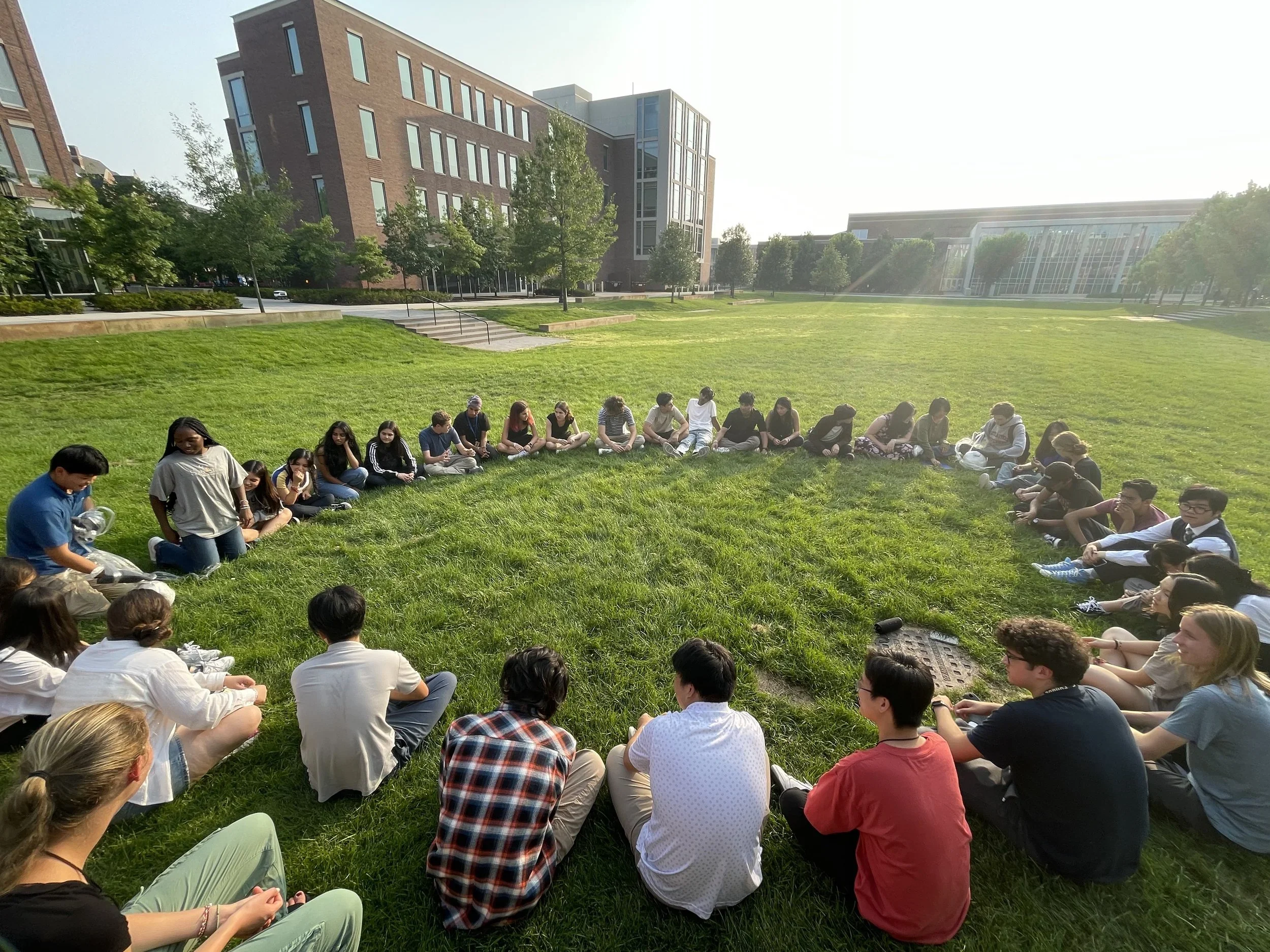
Field trips to museums and labs. Saturday Walmart runs that become legendary. Movie nights watching classic sci-fi. Talent shows. The friendships formed here—with people who share your passions—last for life.
"I went to bed every night knowing that I was collecting light that had travelled unimaginable distances through space, just to be intercepted by me. Then I woke up the next morning and let that light help me understand the universe."
— SSP Alumna, MIT Class of 2028
The SSP Network: 66 Years of Excellence
SSP alumni have gone on to become leaders in science, technology, business, and academia. When you attend SSP, you join this network for life—with access to mentorship, career connections, and a community that understands what the experience meant.
Jerry Nelson
SSP 1960
Pioneer of segmented mirror telescopes
Project Scientist for the W.M. Keck Observatory
Robert Tarjan
SSP 1964
Turing Award winner
Professor of Computer Science at Princeton University
Mitch Kapor
SSP 1966
Founder of Lotus Development Corporation
Designer of Lotus 1-2-3
Franklin Antonio
SSP 1969
Co-founder of Qualcomm
Donated $200 million to SSP
Ronald Kaplan
SSP 1962
Computational linguist
Chief Scientist for Amazon Search
Ed Krupp
SSP 1961
Astronomer and author
Director of Griffith Observatory in Los Angeles
Why Cosmic Is the #1 Firm for SSP Preparation
SSP's essays are designed to reveal whether you think like a scientist—not just whether you want to become one. Most consultants can help you write polished prose. We can help you develop the scientific mindset that makes those essays authentic.
Our Consultants Are Scientists.
PhD physicists who understand orbital mechanics. PhD biochemists who can explain enzyme kinetics. Software engineers who code in Python daily. We don't just know what good science sounds like—we know what good science is.
What We Provide That No One Else Can
-
Whether you're applying to astrophysics, biochemistry, or genomics, we can teach you the actual science. Our consultants can explain celestial coordinates, enzyme inhibition, or genetic sequencing—giving you genuine understanding, not just vocabulary.
-
SSP's essays reveal whether you apply scientific thinking to everyday life. We help you recognize and articulate the ways you already think like a scientist—or help you develop those habits if you haven't yet.
-
If your profile lacks the depth SSP is looking for, we can help you find and pursue opportunities—research projects, competitions, independent investigations—that will strengthen your candidacy.
-
Choosing between astrophysics, biochemistry, genomics, and synthetic chemistry isn't just about interest—it's about fit. We help you select the track where your experience and goals align most naturally.
-
These essays trip up many applicants. We help you identify the right stories and frame them in ways that demonstrate your fit for SSP's collaborative, intellectually intense environment.
The Cosmic SSP Preparation Timeline
SSP applications close in mid-February of your junior year. But the strongest applicants have been building their profiles—often unconsciously—for years.
9th–10th Grade: Foundation Building
Complete prerequisite coursework (calculus, physics, chemistry, biology—depending on your intended track). Begin exploring STEM through competitions, clubs, and independent projects. Develop the habit of applying scientific thinking beyond the classroom.
10th–11th Grade: Depth Development
Pursue research experience—even informal projects count. Engage deeply with a STEM community where you contribute, not just participate. Build relationships with teachers who can write strong recommendations attesting to your scientific abilities and character.
11th Grade (Fall): Application Season
Choose your track strategically. Begin drafting your six essays—each requires genuine reflection, not template responses. Request recommendations from teachers who know you well and can speak to your scientific potential and collaborative spirit.
Application Deadlines:
January 29 / February 19, 2026
International deadline: January 29. Domestic deadline: February 19. SSP has a strict no-late-materials policy. Decisions released in mid-March (international) and mid-April (domestic). Financial aid applications open after admission.
Ready to Start Your SSP Journey?
95%
95% of Cosmic applicants are admitted to a Top-3 Choice school.
