Is Robotics a Good Extracurricular?
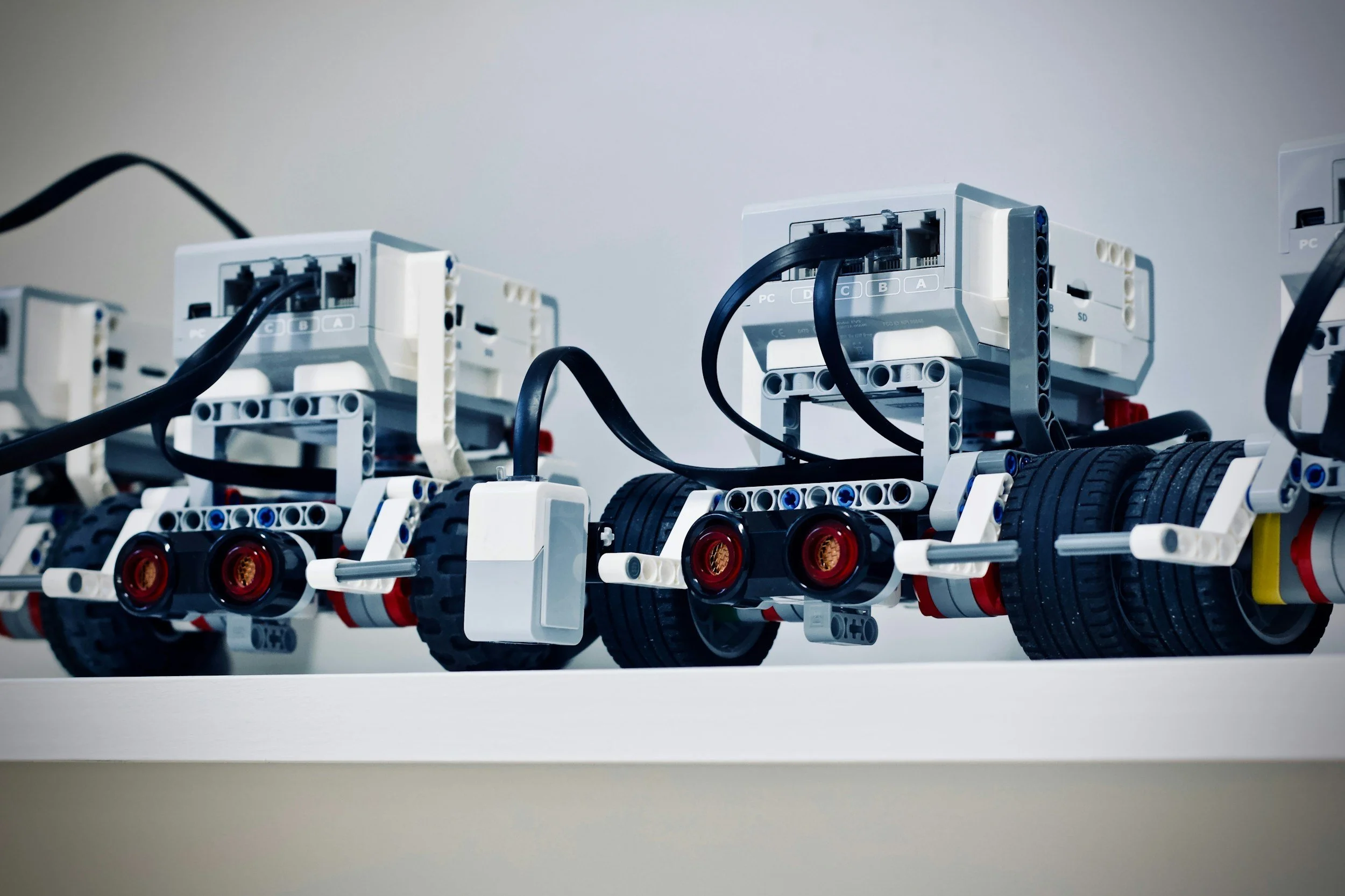
If you're a high school student serious about pursuing mathematics, applied mathematics, physics, engineering, or computer science at a top university, competitive robotics belongs near the top of your list. Few extracurriculars demand the same combination of technical rigor, collaborative problem-solving, and high-stakes performance under pressure. Elite admissions officers know what robotics actually requires, and they respect it.
FIRST vs. VEX: Understanding the Two Major Leagues
The two dominant competitive robotics ecosystems at the high school level are FIRST Robotics Competition (FRC) and VEX Robotics. They're distinct in meaningful ways, and understanding the difference matters both for choosing the right program and for how you present your experience in applications.
FIRST Robotics Competition is widely considered the more prestigious of the two. Teams of up to 30+ students collaborate to design, build, and program a robot from scratch over a six-week build season in response to a newly announced game challenge each year. The robots are large, the engineering is serious, and the competition is intense. FIRST draws sponsorships from major engineering companies and universities, and the culture reflects that, it's often described as "the sport of the mind." FRC operates at the regional, district, and world championship levels, with the FIRST Championship drawing thousands of teams from across the globe.
VEX Robotics, run through the Robotics Education & Competition (REC) Foundation, is more accessible in terms of cost and team size, but no less competitive at its highest levels. VEX teams are smaller, typically two to five students, which actually means individual contributions are easier to identify and articulate. VEX also culminates in a World Championship that draws tens of thousands of participants annually, making placement at that level genuinely impressive.
Both programs are viewed favorably by admissions committees. What matters most is not which program you choose, but how deep you go and how well you perform.
At Cosmic College Consulting, we've worked with students who competed at the national and international levels in both FRC and VEX, and the results speak for themselves. Students whose teams reached and placed competitively at national championships and world-level competitions have earned admission to MIT, Caltech, and Ivy League universities. This isn't coincidental. High-level robotics signals exactly what these schools are looking for in STEM applicants: the ability to apply technical knowledge in high-pressure, real-world contexts, work across disciplines, and iterate under constraints.
Robotics is particularly powerful for students targeting engineering programs, because it demonstrates applied engineering instincts that a transcript alone cannot convey. For math and physics students, the motion planning, mechanical design, control systems, and sensor integration involved in competitive robotics show that their theoretical knowledge has real-world traction. For CS students, writing efficient autonomous and driver-assisted code for a physical system is meaningfully different from competitive programming, and admissions readers know it.
The One Real Limitation — And How to Overcome It
There is a ceiling on how much any single student can distinguish themselves through robotics, and it's worth being honest about that. Robotics is fundamentally a team sport. No matter how talented you are, the robot is a collective product. When your team wins, the credit is shared. Admissions readers understand this, but it does mean that robotics alone, even at the highest levels, may not be enough to make you the most distinctive candidate in the room.
The students who get the most mileage out of their robotics experience are those who pair it with individual work that proves their skills are genuinely theirs. That might mean pursuing supervised research, through a university lab, or a mentored program, or it might mean identifying a real problem in your community and using your STEM toolkit to meaningfully tackle it in some measurable way. Either path accomplishes the same thing: it creates proof that the technical instincts you developed on a robotics team belong to you, not just the team. That arc, from team competitor to independent contributor, is one of the most compelling stories a STEM applicant can tell.
If you need help trimming the fat of your current extracurriculars so you can use your time better to distinguish yourself, need help selecting which activities to participate in, or have any other questions related to the college admissions process, schedule a free consultation with an admissions expert today.