How Hard Is It To Get Into Columbia University
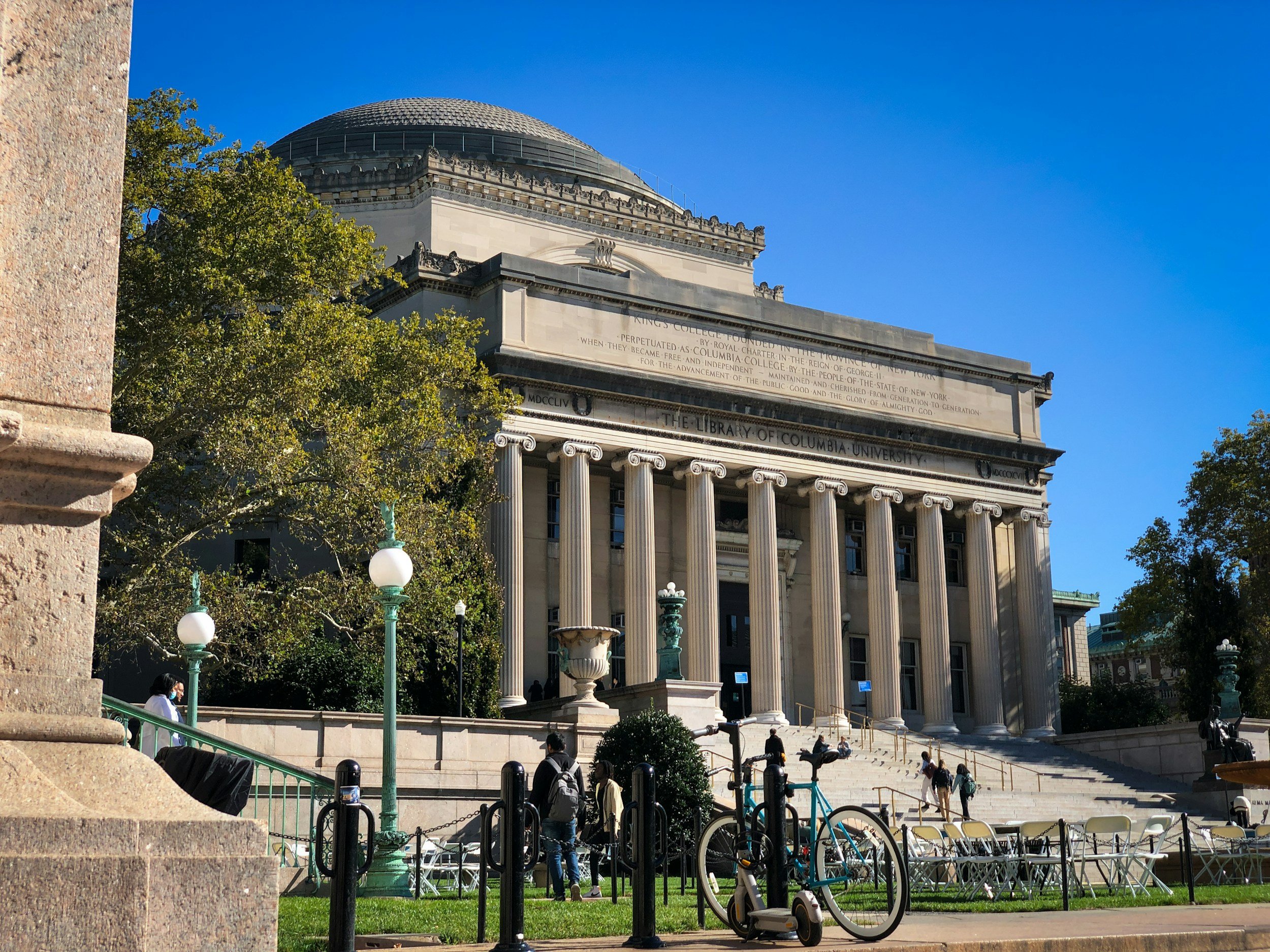
For the Class of 2030, Columbia received 61,031 applications to Columbia College and Columbia Engineering and admitted 2,581 students on Ivy Day, an acceptance rate of 4.23 percent. That was the largest applicant pool in the university's history, and the admitted class came from all 50 states and 111 countries.
The prior cycle looked different in a way worth understanding. Columbia admitted 2,557 students to the Class of 2029 by Ivy Day, then extended roughly 389 more offers from the waitlist over the summer, finishing near 2,946 admits and enrolling a record 1,806 first-year students. Applications rose about 2.4 percent between the two cycles while offers fell, which is most of the reason the published rate moved.
Those figures describe the size of the field. What they do not describe is what the admitted students actually did, which is the question families are really asking when they ask how hard Columbia is.
What The 4.2 Percent Is Actually Measuring
The first thing the headline rate conceals is the early round. Columbia does not publish separate early and regular figures when decisions go out, so the most recent complete numbers come from its Common Data Set. For the Class of 2028, Columbia admitted 795 students from 6,007 binding early decision applicants, roughly 13 percent, in a year when the overall rate was 3.86 percent. Because early decision is binding and nearly every admit enrolls, an early round of that size settles a large share of an entering class that has recently run between 1,500 and 1,800 students.
The early pool has also been shrinking. Columbia received 5,497 early applications for the Class of 2030, down from 5,872 the year before and 6,007 the year before that, an 8.5 percent decline across two cycles, at the same time that total applications reached a record. Fewer people are using their binding card on Columbia while more people are applying regular decision, which is the least favorable version of this math for a regular applicant.
The Core Is An Admissions Criterion
Every student in Columbia College takes the same five courses regardless of major. Literature Humanities. Contemporary Civilization. Art Humanities. Music Humanities. Frontiers of Science. They also take University Writing, two Global Core courses, and requirements in a foreign language, the sciences, and physical education. Most of the Core runs as small discussion seminars where students argue about difficult texts in front of each other.
This is the most useful thing to understand about Columbia admissions, because it changes what the application is testing. Every admitted student will spend two years in seminars discussing Plato, Kant, and Woolf with the same twenty classmates. Columbia is therefore judging whether you read closely, arrive with something worth saying, and can hold a position when someone in the room disagrees with you. A student who applies to study physics is judged on that as closely as a student who applies to study history, because both of them will be sitting in that seminar.
That is why the writing supplement looks the way it does. Every question in it is a test of whether you think in public.
The Level Of Achievement That Clears The Bar
Columbia admits students whose applications have almost nothing in common on the surface. Research records, working lives, civic records, and bodies of independent creative work all clear the bar, and they clear it in different combinations. Underneath the variation there is a shared shape, and these dimensions describe it.
An Intellectual Life That Has Sources
Columbia asks for the list because the list is hard to fake, and the students who write good ones have been building them since ninth grade. That means reading outside assigned reading, following people who explain hard things well, working problems for pleasure, going to museums, and keeping track of what stuck.
This is the cheapest of the these dimensions to start and the most expensive to fake. A ninth grader who begins keeping a running note of what they read and watch has the list finished three years before it is due.
Research With A Named Mentor And A Specific Contribution
The research entries in admitted files name a person, a laboratory, a duration, and a contribution stated in the first person. Built the models. Sourced the additional data. Wrote sections of the manuscript now under review. Identified the candidate. Vague research entries describe a program. Strong ones describe what the student personally did inside it.
Most of these placements come from the student writing to a professor with a resume and a specific reason for choosing that lab, then studying whatever materials come back before the summer starts. The reply rate is low, the process takes months, and it is available to a student at any high school in the country.
Work, Care, And Obligation Counted As Achievement
Columbia describes its review as holistic and contextual, and the files bear that out. A student working fifteen hours a week across four years, training coworkers twice their age, is not a student with a thin activities list. A student who is a primary caregiver for younger siblings, handling meals, transportation, and overnight care, has a record of responsibility that most applicants cannot match at any price.
The Common Application has a section for responsibilities and circumstances of exactly this kind, and it exists because admissions offices want the hours accounted for. Report them plainly, with the same specificity you would use for a research role. Achievement gets read against opportunity, and hours spent holding a household together are part of the opportunity picture rather than a gap in it.
Civic Work That Produced An Outcome
The strongest service entries in these files ended in something happening. A policy proposal presented to a city board by the one student selected to present it. Research that fed a bill that was formally introduced. Grant funding secured for an experiment that then ran. Workshops that reached a counted number of people.
Membership in a civic organization is common. An outcome attributable to your participation is rare, and it is the difference between the two entries.
Something Made And Shipped
Admitted files contain built things. Instruments and rigs assembled from parts. Models trained and evaluated. A small business with revenue and repeat customers. A website with traffic. A club that did not exist and now has members and a budget.
Columbia's supplement gives you very little room to explain yourself, so an object or an organization that already exists carries the argument faster than any description of interest can.
A Second Domain At A Judged Level
Alongside the central pursuit there is usually something unrelated carried to a level where other people evaluate it. A four-year varsity starter with all-conference honors. A juried art award. A competitive musician. Columbia's own portfolio guidance describes the standard it expects from students who submit creative work, and that standard is a useful benchmark even for applicants who never submit a portfolio.
Four Year Entries With Honest Hours
The activities lists in these files start in ninth or tenth grade and keep going, at ten to fifteen hours a week across forty or more weeks a year for the central commitments, with several others running alongside. Grade levels and hours are printed next to every line. A record assembled in eleventh grade announces itself no matter how strong the individual entries are.
How To Read This Standard Honestly
You do not need to be exceptional in all of these dimensions. You need strength across most of them, something genuinely exceptional in at least one, and a file that reads as one person rather than a portfolio of unrelated achievements.
Coherence matters at Columbia in a particular way, because six short responses and a list give a reader an unusually fast route to the question of whether you are interesting to talk to. The list, the disagreement answer, and the adversity answer are all asking a version of the same thing. The applications that succeed answer it consistently, and they leave the reader able to picture the applicant in a seminar of twenty people arguing about a text nobody chose.
Building Toward It On A Four Year Timeline
Ninth and tenth grade are for starting things and reading widely. Get onto the most rigorous course track available and plan where you will go when your school runs out. Begin the pursuit that will still be running in twelfth grade. Start keeping a running record of what you read, watch, and listen to, because the list question is due in three years and cannot be reconstructed later. If you are working or carrying responsibilities at home, those hours count, so track them the way you would track anything else.
Eleventh grade is where output happens. Research placements come from outreach that starts months before a summer begins. Manuscripts, abstracts, portfolios, and organizations acquire the specifics that will fill the supplement. Leadership acquires numbers. Juniors should also lock in a testing plan, since the requirement returns with their cycle.
Twelfth grade is execution on a fixed calendar. Early decision applications and any supplementary materials are due November 1, with regular decision and its supplements due January 1. Six responses at 150 words each take more drafting than families expect, and the research abstract and mentor letter need to be arranged in September rather than in the last week of October.
Working With Cosmic On Your Columbia Application
Cosmic's consultants hold PhDs in the fields our students are applying to enter, which matters at Columbia because so much of the file is compressed. Judging whether a research contribution is worth an abstract, whether a course sequence reads as genuine rigor, and how to compress two years of work into 150 words takes someone who has done that work and read it professionally.
We start by mapping where a student stands against the standard described in this article, then build the missing pieces in the order they have to be built. That covers course sequencing, research placement and professor outreach, competition and summer program selection, the activities list, the early decision question, the Common Application essay, all six Columbia responses, and the research abstract and portfolio materials.
If Columbia is your goal, whether you are entering ninth grade or submitting on November 1, schedule a complimentary consultation with an admissions expert today.