Best Colleges for Computer Science 2026: Which One Fits You
If you are a top computer science applicant, your list likely includes some combination of Harvard, Yale, Princeton, MIT, Stanford, Caltech, UC Berkeley, UCLA, Carnegie Mellon, and the University of Illinois Urbana-Champaign (UIUC). Every one of these programs will give you a first-rate CS education, access to leading employers, and a credible path to a top PhD program. What separates them is how each one structures the degree, which research areas its faculty concentrate in, which fields you can formally combine with computing, and what kind of industry surrounds the campus. Those differences determine which program fits your interests and goals.
This guide explains what kind of CS student each of these ten programs serves best. With early application deadlines arriving in November, it is written for you if you are deciding right now where to apply early and where you would most want to enroll.
Start With How Each School Admits CS Students
These ten schools fall into two groups. Harvard, Yale, Princeton, MIT, Stanford, and Caltech admit you to the university as a whole. You declare computer science after you arrive, usually within your first two years, so you can move between CS, math, physics, or economics as your interests develop.
UC Berkeley, UCLA, Carnegie Mellon, and UIUC admit you into a specific college or major, so your seat in computer science is decided at admission. Moving into CS after you enroll is competitive at each of these schools and depends on grades and available space. At UCLA, for example, a student hoping to switch into Computer Science must earn at least a C in COM SCI 31 and at least a B minus in COM SCI 32 and 33, each on the first attempt, just to be eligible to apply. If you apply to any of these four, list the computing major you actually want to study.
Harvard Computer Science
Harvard is the best fit for students who want computer science alongside a second serious field. Its CS concentration, Harvard's term for a major, leads to an AB degree and requires 11 to 14 courses depending on where you start in math. That leaves room to build real depth elsewhere. You can add a four-course secondary field (Harvard's version of a minor), pursue a joint concentration that pairs CS with another discipline through a single senior thesis both departments accept, or follow the Mind, Brain, and Behavior track if your interests run toward cognition and neuroscience. You declare your concentration in the spring of your sophomore year.
If you move quickly, the AB/SM program lets you apply as a current student to earn a master's in computer science alongside your bachelor's degree. Most successful applicants have at least a 3.6 GPA and have completed a 200-level (graduate) CS course with an A minus or better by the end of their fifth semester. Harvard's Kempner Institute for the Study of Natural and Artificial Intelligence also gives undergraduates a route into research that studies intelligence in brains and machines together.
Choose Harvard if you see computing as a tool you will apply in economics, government, law, medicine, or finance, if you want to found a company with a network that reaches across industries, or if you want a flexible CS degree at a university whose graduates move into law, finance, policy, medicine, and technology in large numbers.
Yale Computer Science
Yale is the best fit for students who want computer science inside a liberal arts education, with close contact with faculty. The department offers both a BS and a BA, plus four combined majors in Electrical Engineering and Computer Science, Computer Science and Economics, Computer Science and Mathematics, and Computer Science and Psychology. Yale also offers a Computing in the Arts major. All of these share a common core of five or six CS courses, and Yale keeps its total course requirement somewhat lower than many peer schools so that you can study widely. Some Yale CS majors use that room to complete a second major in fields like economics, music, or political science.
The capstone of the major is a senior project, original research under a faculty mentor. The Computer Science and Economics major deserves a close look if you are drawn to market design, computational finance, the economics of online platforms, or machine learning applied to economic data. Yale is also in the middle of a long-term expansion of engineering, including a new engineering campus on lower Hillhouse Avenue that begins with a building dedicated to robotics research, and a separate Physical Sciences and Engineering Building that will house quantum computing work.
Choose Yale if your interests sit where computing meets economics, psychology, mathematics, or the arts, if you want a smaller department where professors know your work, or if you are headed toward law, policy, finance, or an interdisciplinary PhD.
Princeton Computer Science
Princeton is the best fit for students who want original research built into the degree. Its computer science department is the only department at Princeton that offers both a Bachelor of Arts (AB) and a Bachelor of Science in Engineering (BSE). Both degrees require eight departmental courses, including core courses in computer systems, AI and machine learning, theoretical computer science, and a breadth area. The difference lies in general education requirements and in research. AB students complete independent work in their junior year and a full-year senior thesis. BSE students complete at least one term of independent work and may choose to write a thesis. BSE students declare the major in the spring of their first year, and AB students declare in the spring of their second year.
Whichever degree you choose, you graduate having completed supervised, original work in computing with a faculty adviser, a record that PhD programs and research-driven employers weigh heavily. Princeton has no medical, law, or business school, so its faculty time and funding concentrate on undergraduates and PhD students. The university has long been a center of theoretical computer science, and its Princeton Language and Intelligence initiative supports research on large AI models.
Choose Princeton if you are drawn to theory, if you plan to pursue a PhD, or if you are aiming at quantitative finance or research-heavy technical roles where a thesis and independent work set you apart.
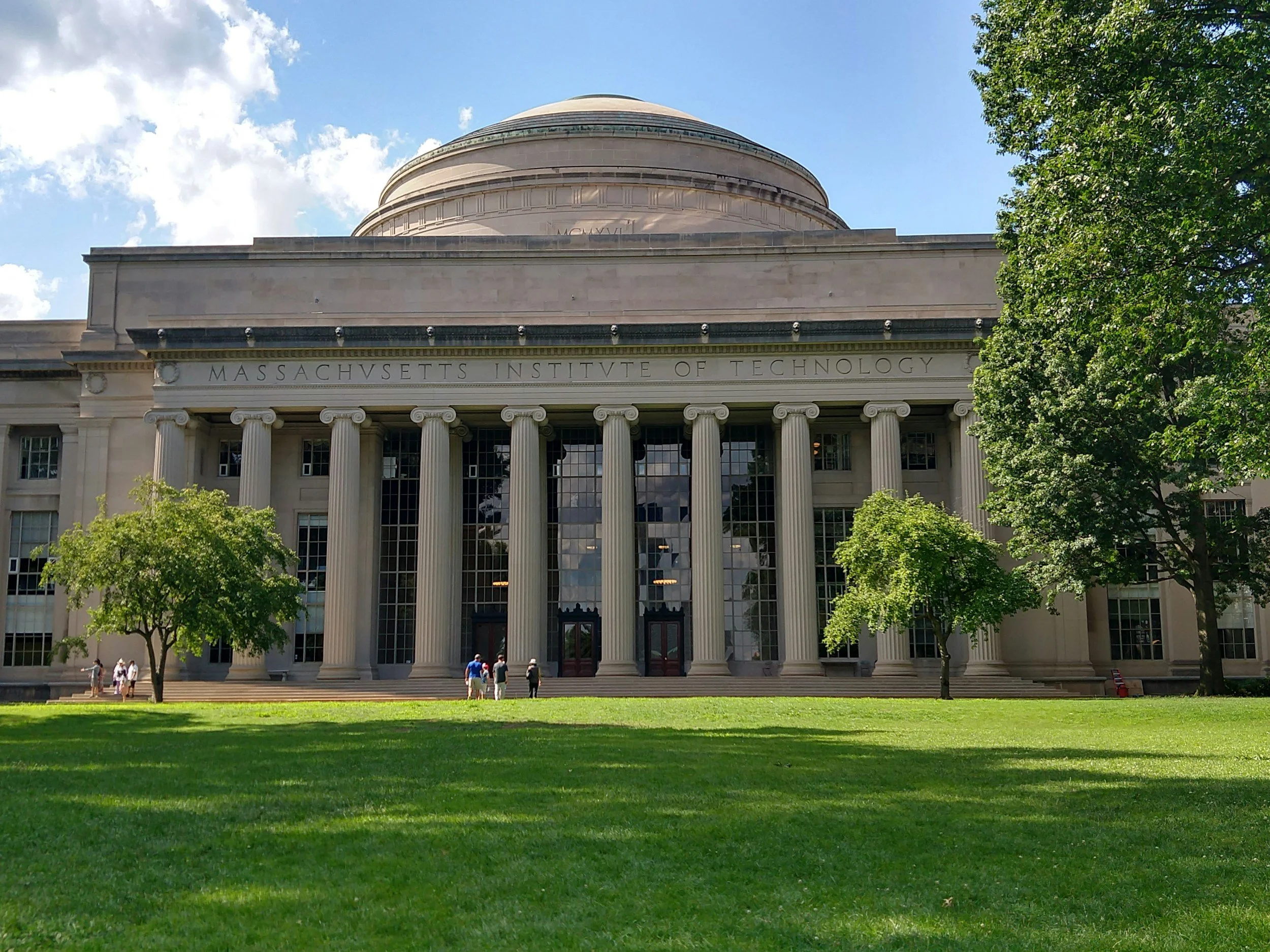
MIT Computer Science
MIT is the best fit for students who want a CS education built on heavy mathematics and engineering, and who want to reach the research frontier early. MIT names its majors by number, and its Department of Electrical Engineering and Computer Science, known as Course 6, is the largest undergraduate program at the Institute. The core CS major, 6-3 (Computer Science and Engineering), covers programming, computer systems, and algorithms and theory before you choose two specialized tracks from areas such as computer architecture, human-computer interaction, programming tools, systems, and theory.
MIT also offers 6-4 (Artificial Intelligence and Decision Making), which combines electrical engineering, computer science, statistics, operations research, and brain and cognitive science into a single major built around AI. Alongside it sit 6-5 (Electrical Engineering with Computing) and blended majors in computer science and molecular biology (6-7), computation and cognition (6-9), computer science, economics, and data science (6-14), and urban science and planning with computer science (11-6). You declare your major after your first year.
Research access begins early through UROP, the Undergraduate Research Opportunities Program, which places undergraduates in faculty labs across MIT, including the Computer Science and Artificial Intelligence Laboratory (CSAIL).
Choose MIT if you want hardware and software in one education, if you want to do AI research from its mathematical foundations, if you plan to build a deep technology company, or if you are aiming at quantitative finance, where trading and research firms recruit heavily at MIT.
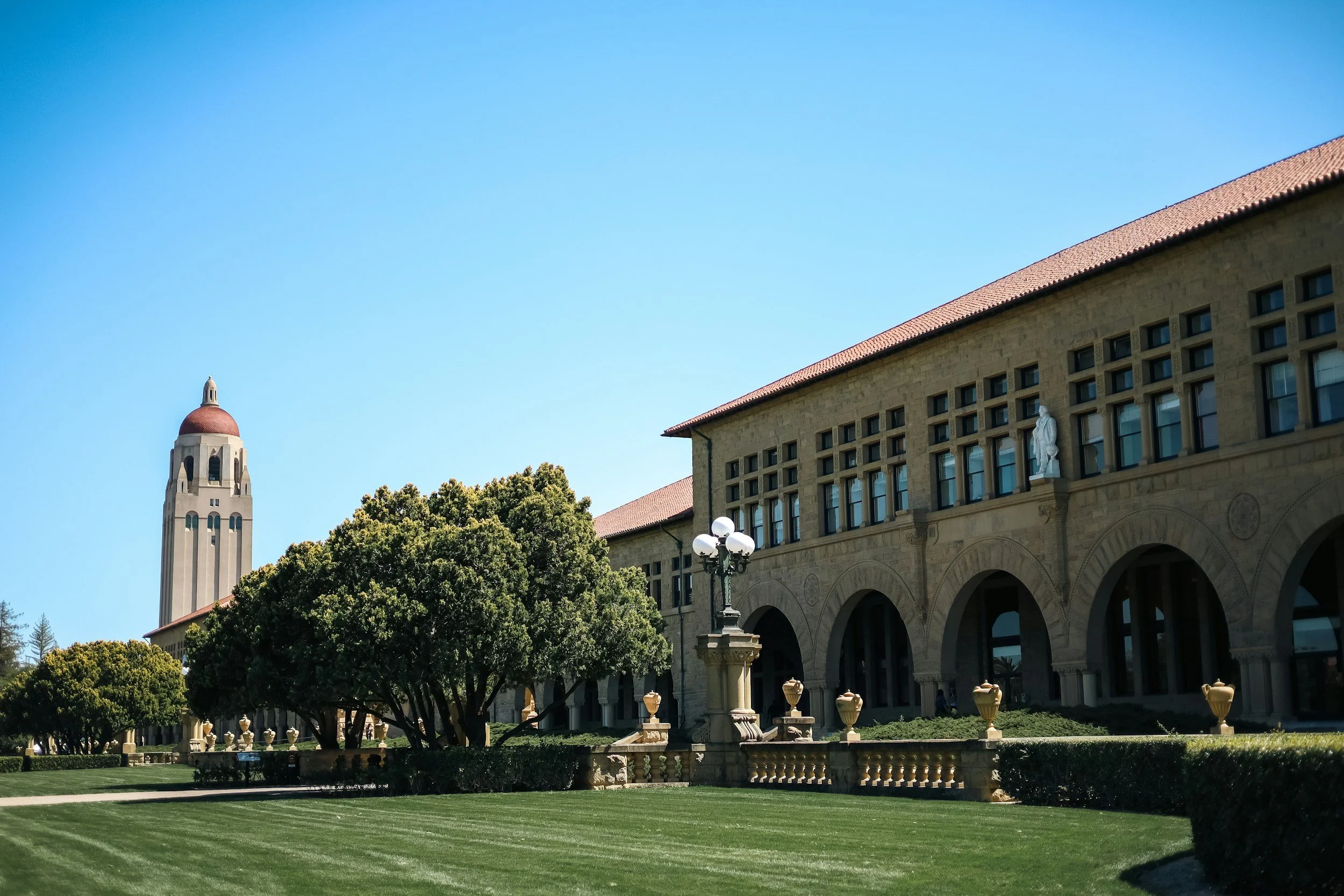
Stanford Computer Science
Stanford is the best fit for students who want to build products and companies. Its CS major pairs a shared core with a track, a concentration you choose for depth. The tracks are Artificial Intelligence, Systems, Theory, Human-Computer Interaction, Visual Computing, Information, Computational Biology, Computer Engineering, and Unspecialized, and you can propose an individually designed track if none of these fits. Stanford also offers Symbolic Systems, a major that connects computer science with linguistics, philosophy, and psychology, as well as Mathematical and Computational Science. Many CS majors apply to the coterminal master's program, known as the co-term, which lets you earn a Stanford MS with overlapping bachelor's study.
Stanford's defining advantage is its place in Silicon Valley. Technology companies and venture firms sit a short drive from campus, and student startups are part of everyday campus life. The Stanford Institute for Human-Centered Artificial Intelligence (HAI) connects AI research with medicine, law, policy, and industry.
Choose Stanford if you want to start a company, work in applied AI, build products as a technical founder or engineer, or combine CS with human-centered fields such as HCI or Symbolic Systems.
Caltech Computer Science
Caltech is the best fit for students whose computing interests run through mathematics and physics. Computer science at Caltech is an option, Caltech's term for a major, within the Computing + Mathematical Sciences department, which also offers options in Applied + Computational Mathematics and Information and Data Sciences. Every Caltech student completes a shared core curriculum heavy in mathematics and physics, with chemistry and biology as well, so you graduate with the scientific foundation of a physicist or engineer. The CS option builds from programming principles, algorithms and complexity, and computing systems into advanced tracks that include Quantum and Molecular Computing, Robotics, and Programming Languages.
Caltech enrolls about 970 undergraduates and has 42 computer science professors, so faculty are accessible from your first year. Undergraduates do research with Computing + Mathematical Sciences faculty, in other departments, and at NASA's Jet Propulsion Laboratory (JPL), which Caltech manages. The Summer Undergraduate Research Fellowships (SURF) program funds summer projects, and upperclass students can write a CS undergraduate thesis.
Choose Caltech if you are drawn to quantum computing, theory, scientific computing, or robotics, if you want physics and math to remain close partners to your CS work, or if you are aiming for a PhD.
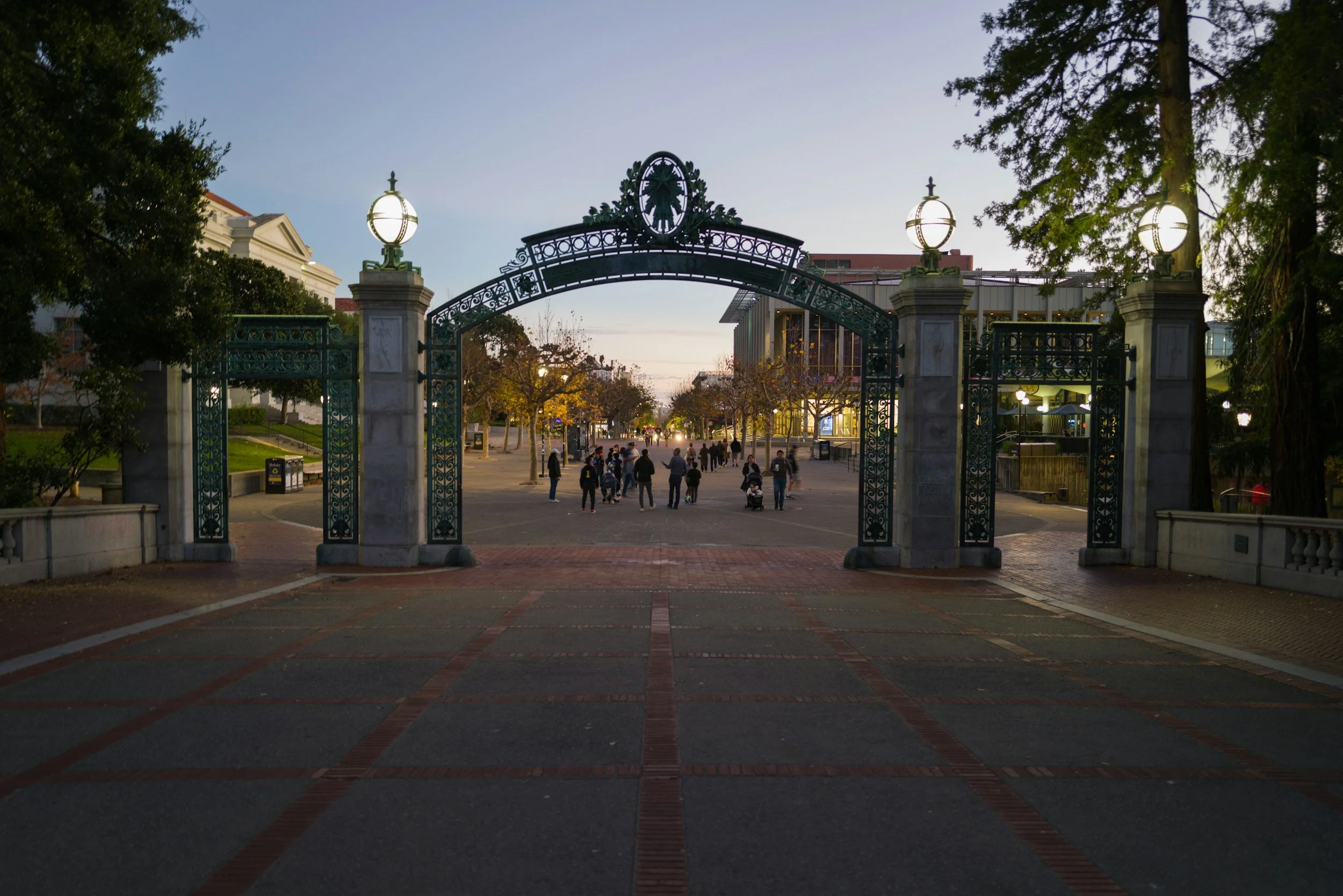
UC Berkeley Computer Science
Berkeley is the best fit for students who want systems and AI research at a large public university in the Bay Area. Berkeley offers computer science through two degrees in two colleges. The BS in Electrical Engineering and Computer Sciences (EECS) is in the College of Engineering and requires more math and science. The BA in Computer Science is in the College of Computing, Data Science, and Society (CDSS) and requires more breadth courses outside computing. If you select Computer Science on your application and are admitted, you enter CDSS directly in the CS major. EECS admits students directly into the College of Engineering, and students admitted to other colleges cannot transfer into Engineering to declare EECS, so choose between the two when you apply.
Berkeley's labs created Apache Spark and Ray, open-source systems that companies use to process data and train AI models at scale, and both projects grew into companies, Databricks and Anyscale. Berkeley Artificial Intelligence Research (BAIR) brings together faculty in machine learning, computer vision, language, and robotics, and the Simons Institute for the Theory of Computing is on campus.
Choose Berkeley if you want to work in systems, AI, or theory, if you want Bay Area industry access at public tuition (especially as a California resident), or if you want to start an infrastructure or AI company. Pick EECS if you want electrical engineering in your foundation, and pick the CS BA if you want room for another field.
UCLA Computer Science
UCLA is the best fit for students who want a top CS program within a large university with highly ranked programs across the sciences, arts, and professional fields. UCLA's Department of Computer Science is part of the Samueli School of Engineering and offers a BS in Computer Science and a BS in Computer Science and Engineering. The Computer Science degree focuses on software, algorithms, and systems, and Computer Science and Engineering adds electrical and computer engineering coursework for students who want to understand hardware as well. You apply directly to Samueli by selecting the major. Outside engineering, UCLA offers Linguistics and Computer Science, Mathematics of Computation, Computational and Systems Biology, and Data Theory, each of which pairs computing with another discipline.
UCLA has deep roots in networking. The first message over ARPANET, the network that became the internet, was sent from a UCLA lab in 1969. UCLA runs on a quarter system, three ten-week terms each year, which lets you take a wider range of courses across four years. Its Los Angeles location puts you near the entertainment, gaming, and aerospace industries, which hire engineers for graphics, simulation, and embedded systems.
Choose UCLA if you want a highly ranked CS program at a university where your classmates study everything, if your interests connect computing with language, biology, or media, or if you are a California resident looking for elite CS at public tuition.
Carnegie Mellon Computer Science
Carnegie Mellon is the best fit for students who already know they want to spend college on computing and want to specialize from day one. CMU made computer science its own college, the School of Computer Science (SCS), in 1988. SCS now has seven departments and institutes, including the Machine Learning Department, the Robotics Institute, the Human-Computer Interaction Institute, and the Language Technologies Institute, which focuses on how computers process human language. Students admitted to SCS choose among five primary majors in Computer Science, Artificial Intelligence, Robotics, Human-Computer Interaction, and Computational Biology. CMU launched the first undergraduate AI degree in the United States in 2018, and in 2023 added a BS in Robotics that approaches the field from the computer science side. Students with artistic interests may also pursue Computer Science and Art.
You apply to SCS directly. In recent cycles, CMU has asked applicants whose main interest is AI to select SCS Undecided and describe that interest in their first short answer, because AI is an interdepartmental major. Transferring into SCS from another CMU college has strict requirements and depends on available seats. CMU also has a strong security program through CyLab, and its student hacking team, the Plaid Parliament of Pwning, has won DEF CON's capture the flag competition, the best-known contest in competitive hacking, more times than any other team.
Choose Carnegie Mellon if you want a specialized undergraduate major in AI, robotics, HCI, machine learning, language technologies, or security, or if you want the most computing-focused college experience on this list.
UIUC Computer Science
UIUC is the best fit for students who want rigorous systems and software training, strong industry placement, and a formal way to combine CS with another field. UIUC's Siebel School of Computing and Data Science, part of the Grainger College of Engineering, offers a BS in Computer Science that emphasizes software systems. It also offers more than 17 blended CS + X degrees that pair the same core computing courses with another field, including economics, physics, linguistics, philosophy, music, chemistry, astronomy, bioengineering, and advertising, along with Mathematics and Computer Science and Statistics and Computer Science. Each blended degree is awarded by the college that houses its partner field, and you apply through that college. UIUC reviews applicants against the pool for the major they list first, so list the CS program you want as your first choice.
Illinois has a long history in computing infrastructure. Its National Center for Supercomputing Applications (NCSA) developed Mosaic, the browser that brought the World Wide Web to a mass audience. Employers that recruit Siebel School students include Amazon, Apple, Google, Meta, Microsoft, Netflix, and Capital One, and graduates move into roles ranging from software engineering to machine learning engineering and quantitative development. UIUC students who complete CS 374 plus CS 340, CS 341, or ECE 391, with at least a 3.4 GPA across their CS courses, qualify for guaranteed admission to UIUC's Master of Computer Science programs.
Choose UIUC if you want strong systems training, a direct path into big tech or quantitative development, a blended degree in CS and a second field, or strong value, especially as an Illinois resident.
Matching Your Goals to a Program
If you want a PhD in theoretical computer science, weigh Princeton, MIT, Caltech, and Berkeley most heavily. Princeton builds a thesis into the degree, MIT and Caltech give you early lab access through UROP and SURF, and Berkeley puts you next to the Simons Institute.
If AI research is your goal, Carnegie Mellon, Stanford, MIT, Berkeley, and UIUC all have large AI research groups, and CMU and MIT offer undergraduate majors built specifically around AI.
If you want to start a company, Stanford and Berkeley place you inside the Bay Area startup ecosystem, and MIT has a long record of launching deep technology companies.
If your target is software engineering at a major technology company, every school on this list places graduates well, and UIUC, Berkeley, and UCLA give you large cohorts of peers going through the same recruiting cycle.
If you are aiming at quantitative finance, MIT, Princeton, Harvard, and Carnegie Mellon are long-established recruiting grounds for trading and research firms.
If you want computing combined with another discipline, match the program to the field. For economics, look at Yale, MIT, Harvard, and UIUC. For cognition and psychology, look at MIT, Yale, Harvard, and Stanford. For biology, look at Carnegie Mellon, MIT, and UCLA. For language, look at UCLA, UIUC, and Carnegie Mellon. For physics and quantum computing, look at Caltech and UIUC. For the arts, look at Carnegie Mellon, Yale, and UIUC.
Choosing Where to Apply Early
The first place this decision matters is your early application. Harvard, Yale, Princeton, Stanford, and Caltech run restrictive early programs that limit where else you can apply early, and Carnegie Mellon's Early Decision is binding. MIT and UIUC offer nonbinding Early Action, and the University of California campuses review all applicants in a single round. Most of these early deadlines fall on November 1, so settle now which program best matches your academic interests and career goals, and use your early application on that program.
Picking the right CS program is one of the highest-leverage decisions in a college application cycle, and the nuances matter far more than any single number ranking can capture. If you want to work through your specific goals, research interests, and school list with an experienced advisor, schedule a consultation with a college admissions expert today to build a strategy that actually fits where you are trying to go.