Why MIT Rejects Some Math Olympiad Team Members
Families in the competition math world pass along a line that tends to alarm strong students. MIT, the story goes, has turned down members of the U.S. team for the International Mathematical Olympiad. Many readers conclude that MIT's academic bar sits somewhere above the best high school mathematicians in the country. The statement means something different. MIT selects students for their match with the Institute, and a central part of that match is hands-on creativity, a quality an olympiad score was never designed to measure. If you are a strong math or physics student aiming at MIT, this distinction should shape both how you build your profile and how you present it.
Where the Statement Comes From
The claim traces back to MIT's own admissions office. In the mid-2000s, MIT admissions officer Matt McGann joined an online Q&A hosted by Art of Problem Solving, the website and forum where many competition math students train. A student asked how MIT weighs international applicants, and whether it would prefer a country's olympiad representative over a strong applicant who believed in MIT's mission. McGann answered that MIT had turned down international olympiad team members in favor of solid, well-rounded applicants, and that it had also made the reverse call.
That line travels far because of how rare those students are. The United States picks its six-person team for the International Mathematical Olympiad (IMO), widely regarded as the most prestigious high school math competition in the world, through a long pipeline. It begins with the AMC exams, which hundreds of thousands of students take each year, narrows through the AIME, and then reaches the USA Mathematical Olympiad (USAMO), a proof-based exam for a few hundred qualifiers. Top USAMO scorers are invited to the Mathematical Olympiad Program (MOP), a summer training camp where the six team members are chosen. A student who reaches the IMO team is, by any academic measure, among the strongest young mathematicians in the country.
What MIT Is Actually Saying
If MIT's bar were set above the IMO team, MIT would enroll very few olympians. It enrolls a large share of them. In a 2008 post on the MIT Admissions blog, McGann counted the graduating seniors who had represented the United States that summer across the five international olympiads in math, physics, chemistry, informatics, and biology. Of those 13 seniors, 10 enrolled in MIT's incoming class.
The olympiad credential answers one question MIT asks about every applicant, which is whether you are academically prepared to thrive there. MIT's admissions office explains that grades and scores help it understand your academic preparedness, while the match between you and the Institute drives its selection process. McGann made the same point in that Q&A, describing admissions decisions as based on fit and match with MIT. An IMO team member has settled the preparedness question beyond any doubt. What the olympiad result leaves open is everything else MIT is looking for.
The Match MIT Describes
MIT publishes the qualities it looks for on its What We Look For page. The list includes alignment with MIT's mission of using science and technology to make the world better, a collaborative and cooperative spirit, initiative, risk-taking, hands-on creativity, intensity and curiosity, the ability to prioritize balance, and the character to strengthen the MIT community.
Two of these qualities explain most of the olympiad paradox. The first is hands-on creativity. MIT's Latin motto, Mens et Manus, means mind and hand, and the admissions office tells applicants that MIT students apply theoretical knowledge to real problems. It asks for students who are excited to do something about a problem, in addition to enjoying thinking about it. The second is collaboration. MIT designs many of its problem sets to be completed in groups, and it tells applicants that a student who always prefers to work alone may find MIT a difficult fit.
An olympiad is a solitary, timed contest. At the IMO, each contestant works alone for four and a half hours on three problems, on each of two consecutive days. A great result demonstrates insight and persistence of a very high order. It leaves open whether you build things, whether you work well on a team, and whether you turn ideas into something other people can use. A file made up entirely of theoretical achievement gives MIT an emphatic answer on preparedness and very little evidence on the qualities that decide admission.
That is the real meaning of the famous line. Brilliance at theory earns you serious consideration at MIT. The rest of your application has to show MIT the hands-on, collaborative person it wants on campus.
A Campus Built on Playful Making
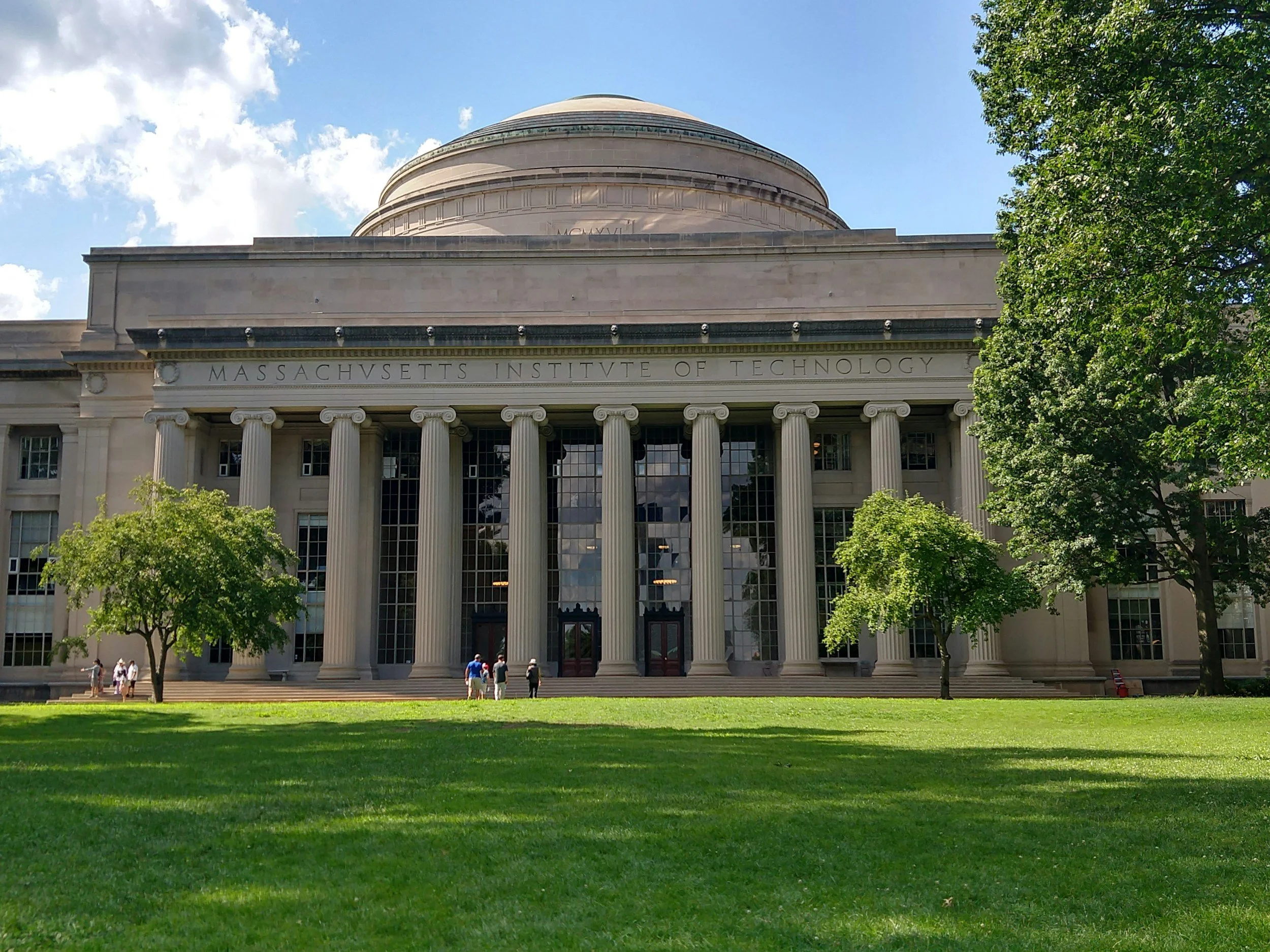
MIT's culture makes this priority easy to see. Students who complete physical education classes in archery, fencing, pistol, and sailing receive an official MIT Pirate Certificate, a long-running student joke the Institute made formal in 2011. Students have fielded their own quidditch team, playing the sport adapted from the Harry Potter novels that now goes by the name quadball. MIT is famous for hacks, elaborate and harmless pranks such as the police car that appeared on top of the Great Dome, and every January students take on the MIT Mystery Hunt, a marathon puzzle competition that the admissions office cites as an example of the intensity its students bring to shared traditions.
Each of these traditions rewards the same traits, which are building something elaborate for its own sake, doing it with other people, and having fun along the way. MIT's application asks about these traits directly. For the 2026-2027 cycle, one of MIT's short-response questions asks what you do just for fun, and another asks whether you see yourself as a generalist with varied interests or a specialist who goes deep on a few passions. A specific, genuine answer to either one shows the admissions office a person who will add to that culture.
How to Show MIT Your Match
Start with your activities list. MIT's application gives you room for only four activities, and it asks you to choose the four that mean the most to you. If all four slots are competitions, your list tells a single story. Give at least one slot to something you built, organized, or led alongside other people.
Put your mathematics to work on something tangible. Write software that simulates a problem you love, design a mechanical puzzle, build a sensor or a robot that depends on the mathematics you know, or write and run a puzzle hunt for students at your school. If your projects are substantial and original, MIT's optional Maker Portfolio lets you submit documentation of engineering or crafting work for review by MIT faculty and alumni with deep maker experience. MIT says those reviewers care more about your build process than your finished product, so photograph and record your work as you go. If you have done serious research, MIT's Research Supplement lets your research mentor submit a recommendation directly.
Show that you work well with others. Team competitions such as the American Regions Mathematics League (ARML) and the Harvard-MIT Mathematics Tournament (HMMT), a math circle you run for younger students, or a research group where you contributed to shared results all give admissions officers evidence of collaboration. A teacher or mentor who has watched you work through problems with classmates can describe exactly how you contribute to a group in a recommendation letter.
Let your personality show. MIT lists balance among the qualities it looks for and tells applicants plainly that life there extends well beyond work. If you juggle, cook elaborate meals, compose music, restore old bicycles, or build absurd contraptions in your garage, those details belong in your short responses and your interview. They are the evidence that you will thrive on a campus where students earn pirate certificates and play quidditch.
Finally, connect your theory to the world. One of MIT's essays asks how your experiences have shaped the problems you want to tackle and the impact you hope to have on your community. MIT's admissions office points out that tutoring a single student in math counts as changing the world. Use that essay to show where your mathematics leads, whether that is cryptography that protects people's data, algorithms that make a system fairer, or teaching the next group of students who love problem solving.
If you want to do everything in your power to maximize your competitiveness for MIT, schedule a free consultation with a college admissions expert today.