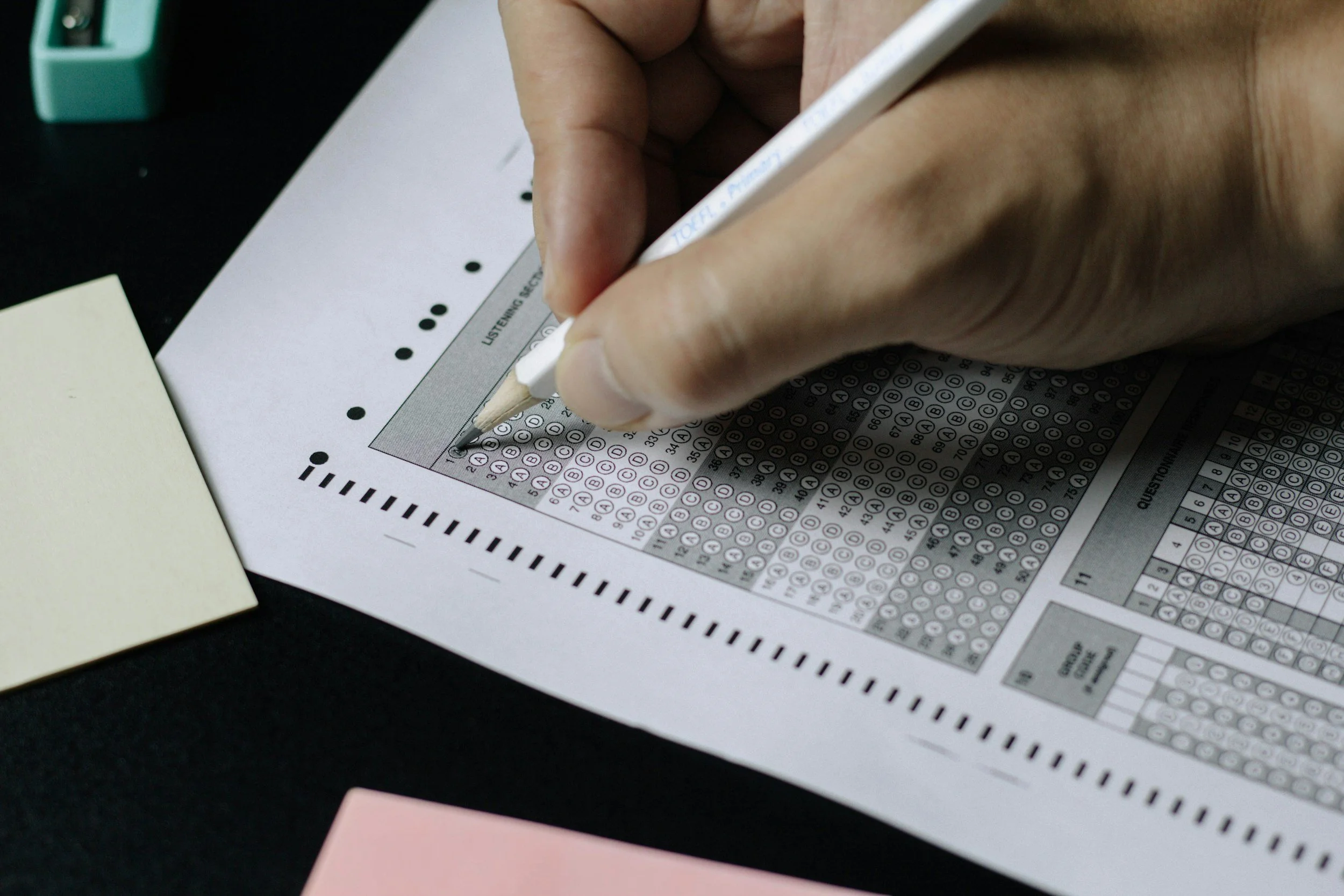
Should Parents Edit Their Child’s College Essay?

Many parents learned to write from an English teacher who circled every contraction and wrote "awkward" next to every sentence fragment. If that was your teacher, editing your child's college essay by the same standards will usually make it weaker.
Admissions officers today read for the student's own voice. Today's English teachers, meanwhile, train students to write in ways your old teacher would have marked down. An essay corrected to the standards you were graded on sounds like the work of someone who learned to write when you did.
Parents who edit usually do it out of love, and often with real skill. You can see where a sentence could be tighter or a word more precise. Those improvements are measured against a standard admissions officers no longer use, and each one moves the essay further from the teenager who is supposed to have written it.
The Standards Your English Teacher Graded You On
For most parents of today's applicants, high school English meant the five-paragraph essay, with a thesis up front, a topic sentence atop every body paragraph, and transitions like "Furthermore," "Moreover," and "In conclusion" holding it together.
The rules were strict. Formal writing meant no first person, no contractions, no sentence fragments, no one-sentence paragraphs, and no sentences starting with "And" or "But." If you used the same word twice in a paragraph, the margin said "repetitive," and you reached for a thesaurus.
Your teacher also rewarded writing that sounded elevated and flowed without a bump. A vocabulary word from SAT prep, a long sentence balanced with semicolons, or a closing line about learning "the true meaning of perseverance" earned praise. Grammar and mechanics made up a large share of the grade.
Those rules served a purpose. They taught a generation to organize an argument and write cleanly under time pressure, and that training is a big part of why you can spot a weak sentence today.
How English Teachers Teach Writing Now
Writing instruction has changed a great deal since you graduated. The Common Core standards most states adopted around 2010, and the state standards modeled on them, call for narrative writing about real experiences in every grade through senior year. Your child has been writing about their own life, in the first person, since elementary school.
Many classrooms teach this through a workshop model. Students study published personal essays as examples, draft in class, trade drafts with classmates, and revise after short one-on-one conferences with the teacher. Voice is taught and graded as a skill of its own, alongside organization and grammar.
The choices your teacher circled in red are now taught on purpose. A fragment can land a punchline. A one-sentence paragraph can mark a turning point. Contractions, plain words, dialogue, and the present tense make a scene feel immediate, and many senior English classes now include a college essay unit built on these techniques.
Your child also writes at a time when teen and adult language overlap far more than they did when you were a teenager. Slang moves from group chats into Saturday Night Live sketches and South Park episodes quickly, so the words your child uses every day are often words admissions officers already know. When slang is genuinely how your child talks, it can belong in the essay.
What Admissions Officers Read For
An admissions officer spends roughly six minutes on an application, and the personal statement is the longest piece in it written entirely in your child's voice. In that time, the reader wants to see a perspective your child holds that real life has tested, how your child treats the people around them, or the experiences that shaped goals your child intends to pursue.
Specific detail carries that weight. The name your child's robotics team gave the robot that caught fire at regionals, the exact words a younger sibling used, the smell of a grandparent's restaurant kitchen at 6 a.m. Details like these belong to one applicant, and the strongest essays are built almost entirely from sentences no one else could have written.
Grammar matters to the extent that it affects clarity. A typo or a confusing sentence makes the reader work, so it costs something. A contraction, a fragment, or a sentence that starts with "And" costs nothing, because admissions officers see those choices in essays from strong applicants every day.
Admissions officers also read the essay next to everything else in the file. The activities list, the supplemental essays, and the teacher recommendations all give the reader a sense of how your child writes and talks. A personal statement that sounds like a much older writer than everything around it stands out immediately.
How Your Edits Show Up on the Page
Admissions officers read hundreds of essays from current high school seniors every year. They know how today's students write, so edits that follow the conventions you learned stand out against the conventions your child learned.
Vocabulary is the first giveaway. Words like "myriad," "plethora," "instilled," "fostered," and "a testament to" rarely show up in a teenager's first draft and often show up after an adult revises it. Transitions like "Furthermore" and "Moreover" stand out the same way, since your child's teachers have spent years steering students away from them in personal writing.
The rules you learned erase your child's choices. Expanding every contraction, attaching a fragment to the sentence before it, folding a one-line paragraph into its neighbor, and replacing a repeated word with a synonym each make the essay more correct by your old teacher's standard and less like your child. Across 650 words, those changes flatten the rhythm into an even, formal cadence that students today almost never write in.
The perspective shifts from your child's to yours. Parents tend to add the lessons they hope their child learned, such as perseverance, gratitude, or the value of hard work, stated outright as conclusions. Parents also add memories from early childhood, like a fascination with building blocks at age three, that the student does not remember and would rarely choose as an opening.
The rough edges disappear. A parent's instinct is to cut the project that failed, the argument that never fully resolved, the slang, the video game, or the oddly specific obsession. Those are often the details that made the essay worth reading, and the safer version could belong to any applicant.
Polish itself has also become a signal. Any applicant can now ask a chatbot for smooth, error-free prose full of sophisticated vocabulary, and the result sounds a lot like an essay graded to your old teacher's standard. When a formal, perfectly balanced personal statement sits next to a plainspoken activities list, the reader starts to wonder who, or what, wrote it.
Expert Help That Keeps Your Child's Voice Intact
The essays that succeed today sound like the student at their most thoughtful and specific. Your child can write that essay, and your questions and encouragement can help them get there.
At Cosmic College Consulting, our admissions consultants guide students through brainstorming, outlining, and revision with that goal in mind. When a draft needs to come down to 650 words, we trim it while keeping your child's own vocabulary and phrasing, so the final essay still sounds like them. Book a free 30-minute consultation to talk through your child's essays and the rest of their application.