How Hard Is It To Get Into Duke
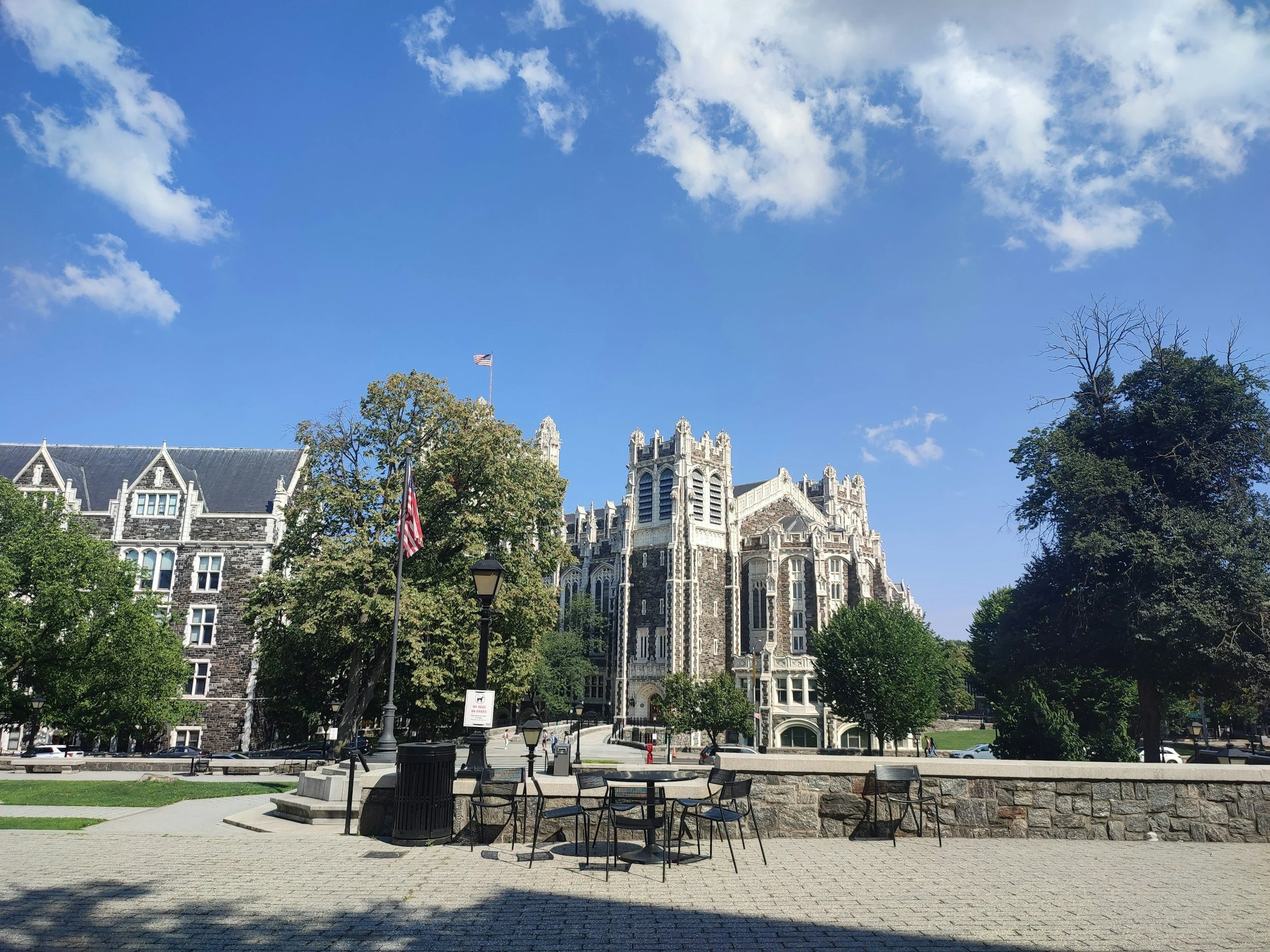
For the Class of 2030, Duke received 61,935 applications and admitted 2,930 students, an overall acceptance rate of 4.7 percent. Early decision produced 847 of those offers out of 6,159 applicants, a rate of 13.8 percent. Regular decision produced the other 2,083 out of a record 55,776 applicants, a rate of 3.7 percent. Duke enrolls roughly 1,740 first year students, so the binding early round fills close to half the class before regular decision reading begins. Of those early admits, 674 planned to enroll in Trinity College of Arts and Sciences and 173 in the Pratt School of Engineering.
That is the size of the field. It says nothing about what the students who cleared it actually did, and that is the question families are really asking when they ask how hard Duke is.
What The 4.7 Percent Is Actually Measuring
The first thing to understand about Duke is the distance between 13.8 percent and 3.7 percent. Applying early moves the published odds by close to a factor of four. Part of that distance comes from who sits in the early pool, which carries recruited athletes, children of alumni, and QuestBridge matches, a program that pairs high achieving students from lower income households with partner colleges through a binding match. Duke matched 116 students that way in the most recent early round, the highest total in its history. The rest comes from the binding commitment itself, which protects yield the way every early decision program is designed to.
Read from the other side, 55,776 students competed for 2,083 regular decision offers. That makes the single largest strategic decision in a Duke application the question of where the binding early card gets spent, and it is a decision that has to be made by the November 1 deadline of senior year.
Duke also remains test optional for the 2026-2027 cycle, for first year and transfer applicants alike, and is now one of a small group of highly selective universities where that choice is still real. The policy changes what the headline rate measures. At a test required peer, the applicant pool filters itself before anyone submits. At Duke, the denominator holds a far wider range of preparation, which makes 4.7 percent a poor guide to any individual student's position. The better guide is the set of four numbers Duke assigns to every file it reads.
The Level Of Achievement That Clears The Bar
Duke's admissions site says it appreciates well rounded and well lopsided students who will make an impact on campus and in the community. Admitted files tend to contain both halves at once. There is one field carried far past anything the high school could supply, and there is a second life running alongside it that has nothing to do with the first. Duke admits a laboratory scientist and a student of languages in the same cycle, and their applications look nothing alike on the page. Underneath the subject matter they share a shape, and the shape is more demanding than most families expect. These dimensions describe it.
Academics Past The End Of The High School Sequence
Duke expects five academic courses a year and four years in each core subject, with an equally rigorous substitute where a fourth year is unavailable. Competitive applicants finish the standard high school sequence early and keep going, into multivariable calculus, linear algebra, and differential equations at a college when the high school runs out.
This holds across intended majors, which is where families are most often surprised. The record of a student admitted to study a language reaches the same mathematical ceiling as the record of a student admitted to study physics, and the physicist carries four years of a foreign language. Duke's academic rating rewards the student who kept taking the harder course in the subject they were less obliged to take.
Those college courses frequently cost a student weighted grade points relative to a schedule padded with lower rigor Advanced Placement classes. Admitted applicants take the hit, because rigor is rated against what was available to you.
One Field Carried For Four Years
The strongest applications show one interest climbing a ladder of institutions. Ninth grade is work you do on your own, with whatever equipment or library or software you can reach. Tenth grade adds a local organization that gives you access to something better and an audience beyond your family. Eleventh grade is a university lab, a selective program, or a professional placement. Twelfth grade produces something that carries an institution's name alongside yours.
Four years of that progression reads as a person. Two years of it reads as a project, and the difference is visible on the activities list because the grade levels are printed next to every entry.
Output That Leaves The Building
Participation is common at this level and output is rare. Admitted files contain things that exist in the world once the student stops working on them. A paper submitted or published. A finding entered into a catalog or a database that researchers use. An organization with a legal existence and a bank account. A product a store agreed to stock. Findings presented to a town council, a school board, or a state agency that then acted on them. A performance on a stage that auditions the people who stand on it.
Any one of these is worth more than a year of meetings attended, and each of them is available to a motivated student who starts early enough.
Selection Into Something National
Admitted applications almost always contain at least one credential awarded by a body that turns most people down. In the sciences that means a residential research program such as the Research Science Institute, the Summer Science Program, or the Simons Summer Research Program, or a placement in a university lab that leads to a science fair with real judging weight. In the humanities it means a program like the Telluride Association Summer Seminar, a free five week college level seminar in the humanities and social sciences that is among the most selective summer programs open to high school students, or publication in The Concord Review, the quarterly journal of history research written by secondary students, which prints roughly one in twenty of the papers submitted to it. In government and public affairs it means something on the order of the United States Senate Youth Program, which sends two students from each state to Washington for a week of meetings with senators, cabinet officials, and a justice of the Supreme Court. In economics it means the national finals of the National Economics Challenge, the main economics competition for high school teams in the country. In the arts and in writing it means national juried selection, such as a national medal in the Scholastic Art and Writing Awards.
These credentials do a specific job in a file. They tell an admissions officer that someone outside your school, with no stake in your happiness, looked at your work against a national field and chose you.
Organizations With Other People Inside Them
Every leadership line in an admitted application answers one question, which is what changed for other people because that student held the role. Staff recruited and managed. Students taught, and what they could do afterward that they could not do before. Members added. Money raised and the specific thing it paid for. Partner organizations brought in. Countries or towns reached.
The numbers are what make the claim legible, and they should describe outcomes for other people rather than hours logged by the applicant. A founder with forty volunteers and three hundred students served has written something an admissions officer can picture. A president of a club with no such numbers has written a title.
A Second Domain Taken Seriously
Alongside the specialty there is usually a pursuit with no connection to it, carried to a competitive level for four years. A varsity sport with a captaincy. An instrument played at a level that requires an audition. A paid job held through the school year. A studio practice that wins juried awards.
This is what Duke means by well rounded and well lopsided, and the second domain has to be real. It is rated as an extracurricular like everything else, and four years of it tells the committee how the applicant spends the hours when nobody is watching the specialty.
Service That Grows Out Of The Specialty
Service appears in nearly every admitted file, and the versions that carry weight grow out of what the student already knows. The researcher runs public workshops in their subject. The musician performs where people cannot easily travel to concerts. The student who learned a language teaches it, or uses it to connect two communities that were not talking to each other.
Duke's admissions mission statement says it seeks students who make things better and treat others well. Service braided into the specialty answers that sentence, and it also solves a practical problem, since it produces hours that reinforce the central story rather than competing with it for time.
Years, Not Semesters
The commitments in an admitted file run long. The central activity absorbs ten to twenty hours a week, forty or more weeks a year, sustained for three or four years, with two or three secondary commitments running year round alongside it. Aggregate school year loads of twenty five to thirty hours a week outside class are ordinary in this population, and the summers are full.
This is the dimension that cannot be built late. Hours per week and weeks per year appear on every line of the activities list, and a record assembled in eleventh and twelfth grade shows its seams no matter how strong the individual entries are.
How To Read This Standard Honestly
You do not need to be exceptional in all of these dimensions. You need to be strong on most of them, exceptional on at least one, and coherent across all of them, meaning the courses, the output, the leadership, the service, and the second domain all point toward a recognizable person.
Coherence is what most near miss applications lack. They hold impressive individual entries that add up to nothing in particular. The files that succeed read as one long argument about who this student is and what they will do on campus.
Building Toward It On A Four Year Timeline
Ninth and tenth grade are for acceleration and entry. Get onto the fastest math and science tracks available and plan where you will go when the high school runs out. Start the interest that will carry the application, on your own if necessary. Find the local organization that gives you access to better tools or a real audience. Begin the teacher relationships that will produce your recommendations three years later.
Eleventh grade is where output happens. Applications to selective summer programs are due in the winter and early spring of this year, and those programs supply a large share of what admitted applications rest on. Research turns into something submittable. Leadership acquires numbers. Cold outreach to professors starts early, because reply rates are low and placements take months to arrange.
Twelfth grade is execution. The binding early decision application is due November 1 with decisions in mid December, which means the summer before senior year is the last window for anything that needs to appear on the activities list. The short answers get researched properly rather than assembled in October, and the teachers who agreed to write for you get the materials they need in September.
Working With Cosmic On Your Duke Application
Cosmic's consultants hold PhDs in the fields our students are applying to enter, which matters at Duke because the work that distinguishes an application is substantive. Judging whether a research direction is publishable, whether a course sequence reads as genuine rigor, or whether a Duke professor's actual research connects to what a student has already built takes someone who has done that work.
We start by mapping where a student stands against the standard described in this article, then build the missing pieces in the order they have to be built. That covers course sequencing, research placement and professor outreach, summer program applications, competition selection, the activities list, the early decision strategy, the Common Application essay, and the Duke short answers.
If Duke is your goal, whether you are entering ninth grade or submitting on November 1, schedule a complimentary consultation with an admissions expert today.