How Hard Is It To Get Into UC Berkeley
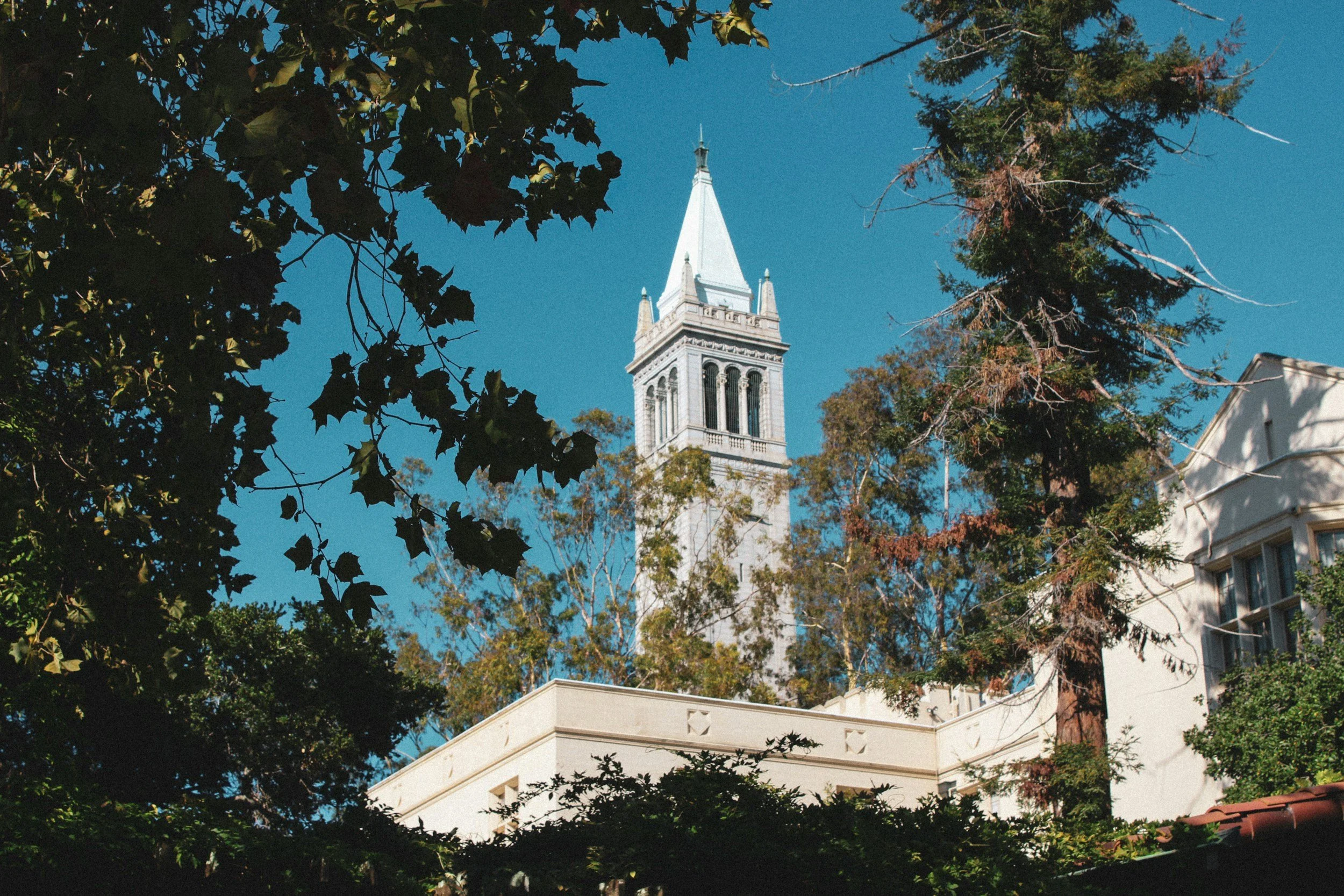
For the fall 2026 entering class, UC Berkeley offered first-year admission to roughly 14,000 students out of more than 133,000 applicants, a rate of 10.5 percent. That made Berkeley the most selective campus in the University of California system, narrowly ahead of UCLA at 10.8 percent. More than 150,000 people applied for first-year and transfer seats combined. About 9,400 of the first-year offers went to Californians, roughly 68 percent of the admitted class, and close to 10 percent of admitted students came from outside the United States.
Those admitted students carried an average unweighted GPA of 3.93 on a four point scale and an average weighted GPA of 4.52. Ninety-seven percent of them had a weighted GPA of at least 4.0.
That last figure is the one worth sitting with. At most universities the grade profile of the admitted class describes a range. At Berkeley it describes a floor, and the floor is high enough that a 4.0 gets you read rather than admitted. What happens after that is the actual question families are asking when they ask how hard Berkeley is.
What The 10.5 Percent Is Actually Measuring
Berkeley's overall rate averages across colleges and majors that behave like separate institutions. In the fall 2025 cycle, according to University of California data reported by the San Francisco Chronicle, Berkeley admitted about 6 percent of applicants to computer science and about 25 percent of applicants to arts and humanities majors. Same campus, same reading staff, a fourfold difference in the outcome.
The structural reason is that Berkeley admits you to a college rather than to the university. The College of Letters and Science admits to the college and lets you declare later. The College of Engineering admits directly to the major you named, and computer science now sits in its own College of Computing, Data Science, and Society. Moving between colleges after you enroll goes through a review that Berkeley describes as potentially as demanding as admission itself, so the box you check in November is close to binding.
Residency moves the number too. California residents are admitted at a higher rate than domestic nonresidents, and international applicants face the lowest rate of the three, which reverses the pattern families expect from private universities. Berkeley is a public campus with a state mandate to serve Californians, and the enrollment agreements that govern its class size are written with that mandate in them. An applicant from Texas or Singapore is competing for a smaller pool of seats than the headline rate suggests.
The transfer route runs on different math entirely. Berkeley extended more than 5,000 transfer offers for fall 2026, admitting roughly one in five applicants, most of them from California community colleges. For a California student, that pathway is a genuine second entrance rather than a consolation.
Nine Of The Thirteen Factors Are About Your Transcript
UC faculty publish the list of factors campuses may use to select a class. There are thirteen of them, and the shape of the list tells you where the weight sits.
Nine concern the academic record. Your grade point average across A-G courses, which are the fifteen year-long college preparatory courses UC requires in seven subject areas. The number, content, and performance in A-G subjects beyond the minimum. Performance in UC-approved honors and Advanced Placement courses. Identification in the top nine percent of your high school class, which UC calls Eligible in the Local Context. The quality of your senior year program, measured by the academic courses you have in progress or planned. The quality of your academic performance relative to the opportunities your high school actually offered. Outstanding performance in one or more academic subjects. Outstanding work on special projects in an academic field. And recent marked improvement in performance.
Four factors sit outside the transcript. Special talents, achievements, and awards in a field such as visual and performing arts, communication, or athletics, along with special skills such as demonstrated proficiency in another language and experiences that show promise for leadership. Special projects completed within your high school curriculum or school programs. Academic accomplishment read in light of your life experiences and circumstances. And the location of your secondary school and your home.
Read that list next to the fact that 97 percent of admitted students hold a weighted GPA of at least 4.0 and the picture resolves. Nine factors decide whether your file is competitive. The remaining four decide which competitive file gets the seat.
One mechanical point carries more weight than most families realize. The UC GPA is calculated from tenth and eleventh grade A-G courses only, with a capped number of extra points for approved honors courses. Ninth grade grades stay off the calculation, junior year carries half of the number outright, and senior year is judged by the rigor of the schedule you chose rather than by grades Berkeley will not see before deciding.
The File Berkeley Reads
Berkeley builds its decision from four things. Your self-reported coursework and grades. A list of up to twenty activities and awards, sorted into six categories, with roughly 350 characters to describe each one. Four responses of 350 words each to the Personal Insight Questions. And an additional comments box for context that fits nowhere else.
That is the file. Berkeley states that it does not review transcripts, portfolios, resumes, or other supporting materials at the application stage, and the UC application carries no letters of recommendation, no interview, and no test scores. Grades are self-reported and checked against official transcripts once a student enrolls, with discrepancies grounds for cancellation. Berkeley's own freshman admissions policy states that no preference is given to applicants whose relatives are alumni, employees, or donors of the university.
The consequence is straightforward. Everything that a teacher letter, an alumni interview, a maker portfolio, and a testing profile accomplish at a private university has to be accomplished at Berkeley inside twenty short activity entries and about 1,400 words of your own writing. Readers move through files in minutes. The twenty entries are doing far more work here than an activities list does anywhere else.
The Level Of Achievement That Clears The Bar
Admitted Berkeley files differ enormously in subject. A student building software for a social problem, a student cycling through national laboratories, and a student splitting time between university research and conservatory-level music can share a campus and share almost no vocabulary. Underneath that they share a shape, and these dimensions describe it.
Mathematics Past The End Of The High School Sequence
Competitive files finish the standard high school mathematics sequence early and continue into multivariable calculus, linear algebra, and differential equations, usually through dual enrollment at a community college or a nearby university. UC treats approved college coursework as part of the academic record, and the quality of the senior year program is one of the thirteen factors in its own right, which means the courses on a senior schedule are read before a single senior grade exists.
Taking those courses often costs weighted grade points relative to loading up on lower rigor Advanced Placement classes. Take them anyway. Berkeley rates performance against the opportunities available to you, and a schedule assembled to protect a weighted average reads as exactly that.
Research Selected From A Named Pool
Admitted files carry research placements that came with a selection process, and the strongest of them state the ratio. Thirty students from three hundred applicants. Six from about a hundred. Seven percent. A reader with a few minutes for your file registers that ratio instantly, and it converts a line that would otherwise read as a summer activity into evidence that a research institution chose you over a field.
The placements themselves come from national laboratories, university research centers, and faculty-run summer programs. Most students reach them through direct outreach to professors and program directors rather than through anything their high school arranges, and the process takes months of low reply rates before it works.
Building Something That Runs Without You
The most distinctive entries in these files describe things that exist independently of the student who made them. Software with users at named institutions. A summer academy with enrolled students and revenue. A nonprofit council with members in several states. An event with an audience. A club that grew from nothing to twenty-five people and still meets.
Berkeley's factor list names outstanding work on special projects twice, once in an academic field and once in the school context. Projects are what the readers are trained to look for, and a project with other people depending on it outranks a title in an existing organization.
Money Raised And Spent On Something Specific
Grants recur in these files at every scale, from a thousand dollars for a community program to several thousand for a technology training initiative, alongside stipends from research programs and revenue from a student's own venture. The amounts matter less than the pattern. A student who has persuaded a foundation, a school, or a customer to fund the work has demonstrated something no description of enthusiasm can demonstrate, and the sentence is short enough to fit in a 350 character box.
An Art Or A Sport Carried To A Judged Level
Berkeley's own admissions policy names extraordinary accomplishment in the performing arts, creative arts, and athletics as its own criterion, and admitted files take that literally. An instrument studied for a decade and examined for a formal diploma. A second instrument carried to state and international competition. A varsity sport played across four years with a measurable improvement curve. National level competitive debate.
This is not decoration around the technical record. It is one of the four non-transcript factors, and it is the one most often left thin in an otherwise strong application.
Teaching And Service Attached To What You Already Know
Service in these files grows out of the specialty rather than sitting beside it. The roboticist mentors the underclassmen on sensors and strategy. The debater founds the summer academy. The researcher runs workshops for students at schools that have none. The competitor works paid tournaments and moderates rounds for a thousand younger participants.
That pattern solves a practical problem as well as a substantive one. It produces hours that reinforce the central story instead of competing with it, which matters when the whole file is twenty entries long.
How To Read This Standard Honestly
You do not need to be exceptional in all of these dimensions. You need a transcript that clears the academic floor without argument, strength across most of the these dimensions, something genuinely exceptional in at least one, and a file that reads as a single person rather than a collection of impressive entries.
Coherence carries more weight at Berkeley than at schools that read letters and conduct interviews, because there is nobody else in the file to vouch for you. Twenty entries and four answers either describe a recognizable person with a direction, or they describe a resume. The files that succeed do the former, and they do it without any of the supporting cast that a Common App application gets to bring along.
Building Toward It On A Four Year Timeline
Ninth and tenth grade are for acceleration and entry. Get onto the fastest mathematics and science tracks your school offers and plan where you will go when it runs out. Start the project or the venture that will still be running in twelfth grade. Begin the outreach that produces a research placement, since the reply rate is low and the timeline is long. Ninth grade grades stay outside the UC GPA calculation, which makes ninth grade the cheapest year in which to try something difficult.
Eleventh grade carries the most weight of any single year. Junior grades are half of the UC GPA, applications to selective summer research programs are due in the winter and early spring, and the output that fills the activities list comes from this year. Grants get applied for here. Leadership acquires numbers here.
Twelfth grade is execution on a fixed schedule. The UC application filing window runs through the end of November with no early action or early decision round, so there is no strategic early card to play and no second chance in the same cycle. Decisions arrive in late March. The senior schedule you report is itself one of the thirteen factors, so the courses matter even though the grades will land after the decision.
Working With Cosmic On Your Berkeley Application
Cosmic's consultants hold PhDs in the fields our students are applying to enter, which matters at Berkeley because the file is so short. Twenty entries and 1,400 words leave no room for a description that misses what was actually hard about the work, and judging which research direction is worth pursuing, which college to apply to, and how to compress a two year project into 350 characters takes someone who has done the work.
We start by mapping where a student stands against the standard described in this article, then build the missing pieces in the order they have to be built. That covers course sequencing and dual enrollment planning, research placement and professor outreach, summer program applications, competition selection, the choice of college and major, the twenty activity entries, and all four Personal Insight Questions.
If Berkeley is your goal, whether you are entering ninth grade or filing in November, schedule a complimentary consultation with an admissions expert today.