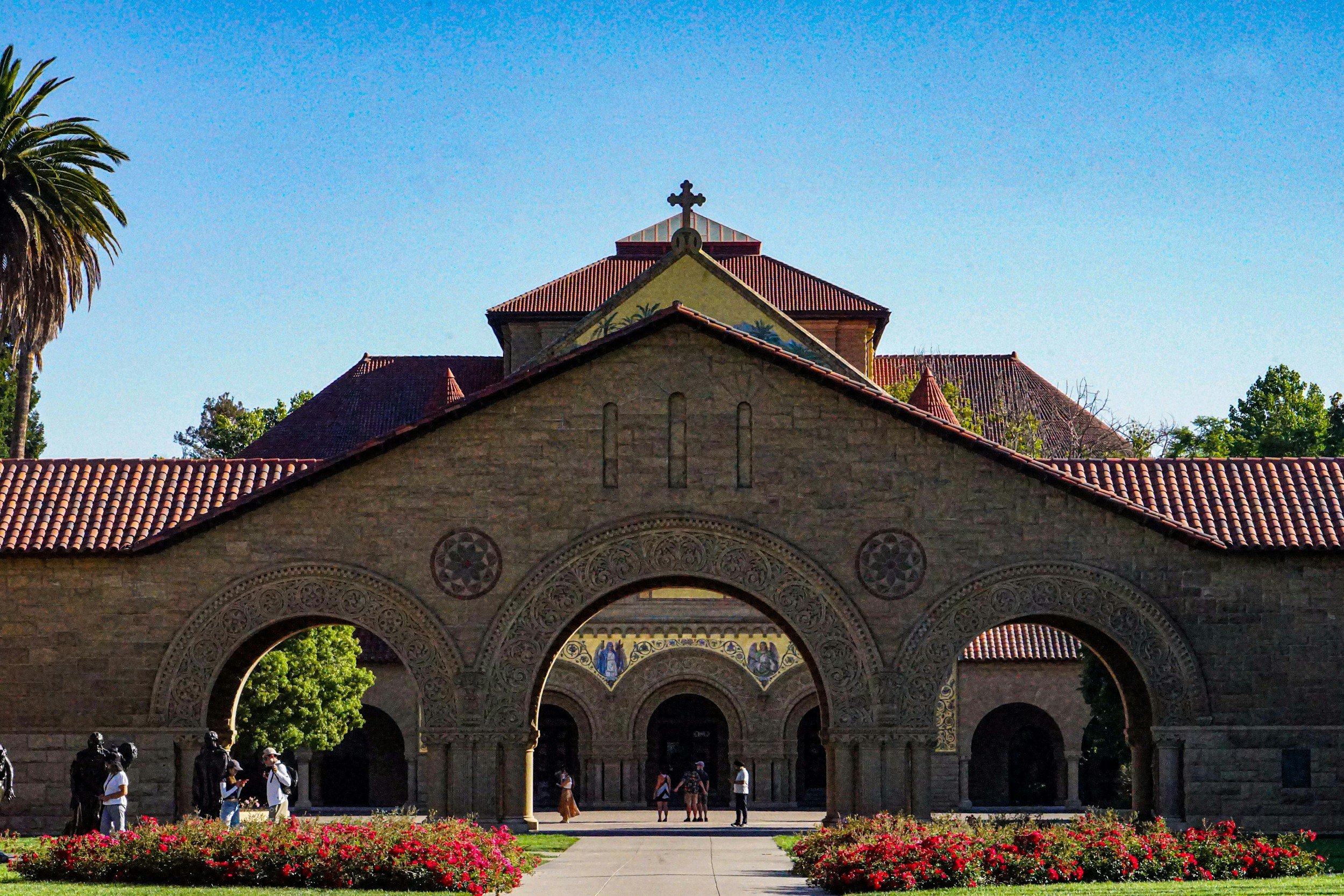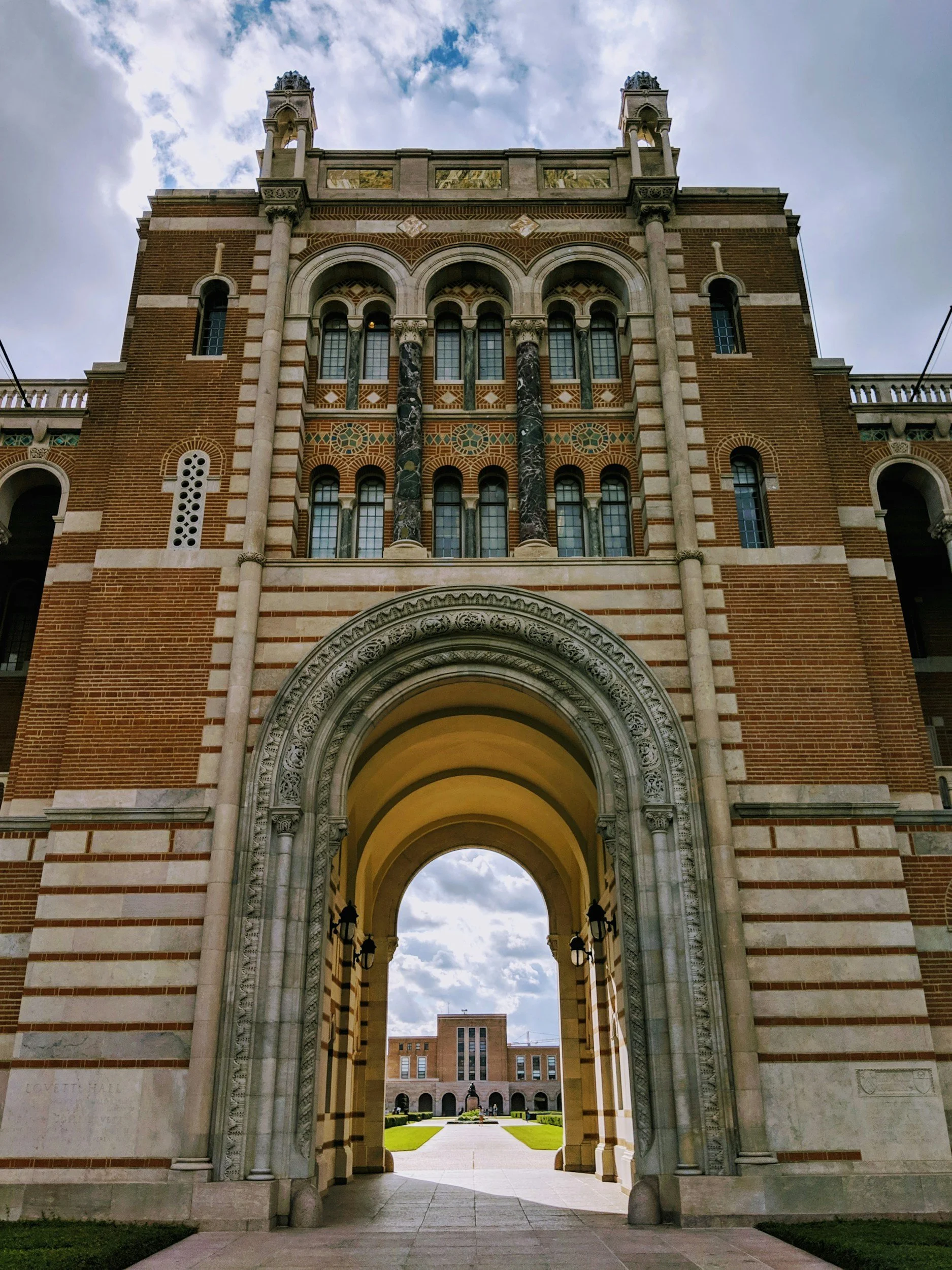
Tufts vs Boston College 2026

Tufts and Boston College sit in the same competitive tier in the Greater Boston market, and applicants often shortlist both. But once you look past the "elite Boston school" label, the two offer genuinely different undergraduate experiences. Tufts is smaller, more interdisciplinary, more secular, and has historically been the harder school to get into on paper. Boston College is larger, more structured around its Jesuit Catholic identity and Core Curriculum, more athletics centered, and has closed most of the admissions gap with Tufts since 2021.
This guide walks through where the two schools actually differ, where they're more alike than you'd expect, and what each fact means for how you build your application.
The one big similarity: neither school offers Early Action
Start here, because it's easy to miss and it matters more than almost any other admissions fact about these two schools. Neither Tufts nor Boston College offers Early Action or Restrictive Early Action, the non-binding early rounds you'll find at schools like Yale or Georgetown. Both instead run only binding Early Decision, split into an ED I round and an ED II round.
Binding means what it sounds like: if you're admitted, you're expected to withdraw your other applications and enroll. At Tufts, an ED admit is committed to attending. If you're deferred instead of admitted, your application simply moves into the regular applicant pool, and the binding commitment ends. Boston College works the same way. An admitted ED student withdraws other applications and enrolls, generally confirming shortly after the decision. BC does allow you to submit non-restrictive Early Action applications to other colleges alongside your BC ED application, but not another binding Early Decision application elsewhere. If another school's ED I denies or defers you, you're free to apply to BC's ED II round instead.
The practical difference between ED I and ED II at both schools is mostly timing, not commitment level. At Tufts, ED I has an early November deadline with decisions around mid-December, and ED II has an early January deadline with decisions around mid-February. Deferred applicants get a final answer by around April 1, alongside the regular decision pool.
How much of an edge Early Decision actually gives you
Both schools now lean on Early Decision to fill a large share of the class, and the gap between ED and regular admission rates is large enough that it should shape your strategy.
For the fall 2024 entering class, Tufts eventually disclosed 3,344 combined ED I and ED II applications with 1,071 admits, a 32.0% ED admit rate. That's against an 11.5% overall admit rate that year. Working backward, the estimated admit rate for applicants outside the ED pool that year was around 9.3%.
Boston College reports something similar for the cycle that produced its fall 2025 class: roughly 5,000 ED I and ED II applications with about 30% admitted, compared to an overall admit rate in the low double digits. Using BC's own spring figures, the estimated non-ED admit rate works out to around 10.1%.
Two things are worth holding onto here. First, these "residual" non-ED numbers are not official regular decision rates, because students who are deferred from ED get folded back into the regular pool, which makes the real regular decision denominator larger than a simple subtraction would suggest. Second, ED applicant pools aren't a random sample of the overall pool. They include students who are ready to commit early, and they can include a different mix of recruited athletes and other institutional priorities. A roughly three times higher ED admit rate doesn't mean the same student triples their odds by applying ED. It means both schools use ED to lock in a meaningful chunk of the class, and the visible gap between ED and regular admission rates is real and large at both.
Five years of overall admission rates
Tufts has been consistently competitive across this window. It received 31,198 applications and admitted 3,566 students (11.4%) for fall 2021, then 34,881 applications with 3,381 admits (9.7%) for fall 2022, its lowest rate in this stretch. The rate then moved back up: 10.1% in 2023 on 34,003 applications, 11.5% in 2024 on 34,432 applications, and 10.8% for fall 2025 on 33,415 applications with 3,613 admits and 1,762 students enrolling.
Boston College has moved much further in the same period. It admitted 18.9% of applicants for fall 2021, roughly 17% for fall 2022, and 15.1% for fall 2023 on 36,525 applications and 5,511 admits, a figure BC itself described at the time as a new institutional low. For fall 2025, BC's initial spring release reported about 5,000 admits from 39,681 applications, or 12.6%. Its later annual figures, which account for subsequent activity including the waitlist, report 5,497 admits from 39,686 applications, or 13.9%, with 2,479 students enrolling.
That waitlist distinction matters whenever you see an "acceptance rate" quoted for either school. Tufts admitted zero students off its waitlist for the 2021 cohort, then 183 in 2022, 200 in 2023, and 354 in 2024, all of which raise the final admit rate above what the original spring release showed. When you're comparing numbers from different sources, check whether you're looking at the initial release or the final, waitlist-inclusive figure. They can differ by more than a full percentage point.
Put together, Tufts is still the harder school to get into on the headline number, but the gap has narrowed considerably. In 2021, Tufts and BC were about 11.4% and 18.9%. By 2025, they were about 10.8% and somewhere between 12.6% and 13.9%, depending on which BC figure you're using.
Testing policies
Both schools remain test-optional for the 2026 admission cycle. Neither has followed Harvard, Dartmouth, Brown, MIT, or Yale back to a required SAT or ACT score.
Tufts says scores are optional for every first-year and transfer applicant, that no negative assumption is made about a student who doesn't submit one, and that a score functions as one additional piece of evidence rather than an essential component. Tufts does suggest that a score around 1300 SAT or 28 ACT or higher can add useful evidence to an application, though this is framed as a point where a score starts to help rather than a cutoff. Tufts superscores both tests, meaning it combines your best section scores across multiple sittings, and it allows self-reported scores during the application with verification required only if you enroll.
BC also remains test-optional and says applicants without scores get full consideration. But its language leans more toward encouraging submission: BC cites its own internal research finding that scores add predictive value when combined with grades, coursework rigor, and the rest of the application, so it encourages applicants who have already tested to submit their results. BC also superscores and allows self-reporting, but once you submit a score to BC, you can't switch your application back to test-optional afterward.
Submission behavior reflects that difference. Roughly 75% of BC's admitted students in the 2024–25 cycle submitted scores. At Tufts, roughly half of applicants in the most recent class profile submitted a score. If your scores are strong for a given school, submitting is still the better move at both, and it's a meaningfully more common choice at BC.
On the score ranges themselves: Tufts' Common Data Set reports the range covering the middle 50% of enrolled students who submitted a score, not the full class. In the most recent cycle, that range was 1460 to 1520 SAT with a median of 1500, and 33 to 35 ACT with a median of 34. Because submission is optional, these ranges reflect only the students who chose to submit, who tend to have stronger scores than the class as a whole. Only about 35% of Tufts' fall 2023 class submitted an SAT score and 18% submitted an ACT score, which is worth keeping in mind before treating any published range as representative. Tufts' separate admissions profile, describing admitted score submitters for the Class of 2029, shows a wider spread once you look past the middle 50%: SAT scores among admitted students ranged from 1240 to 1600, and ACT from 26 to 36. A middle-50 range is not a minimum threshold.
BC reports averages rather than the same kind of range: 1511 SAT and 34 ACT for its Class of 2027 announcement, and 1503 SAT and 34 ACT for its Class of 2029 announcement.
Campus and location
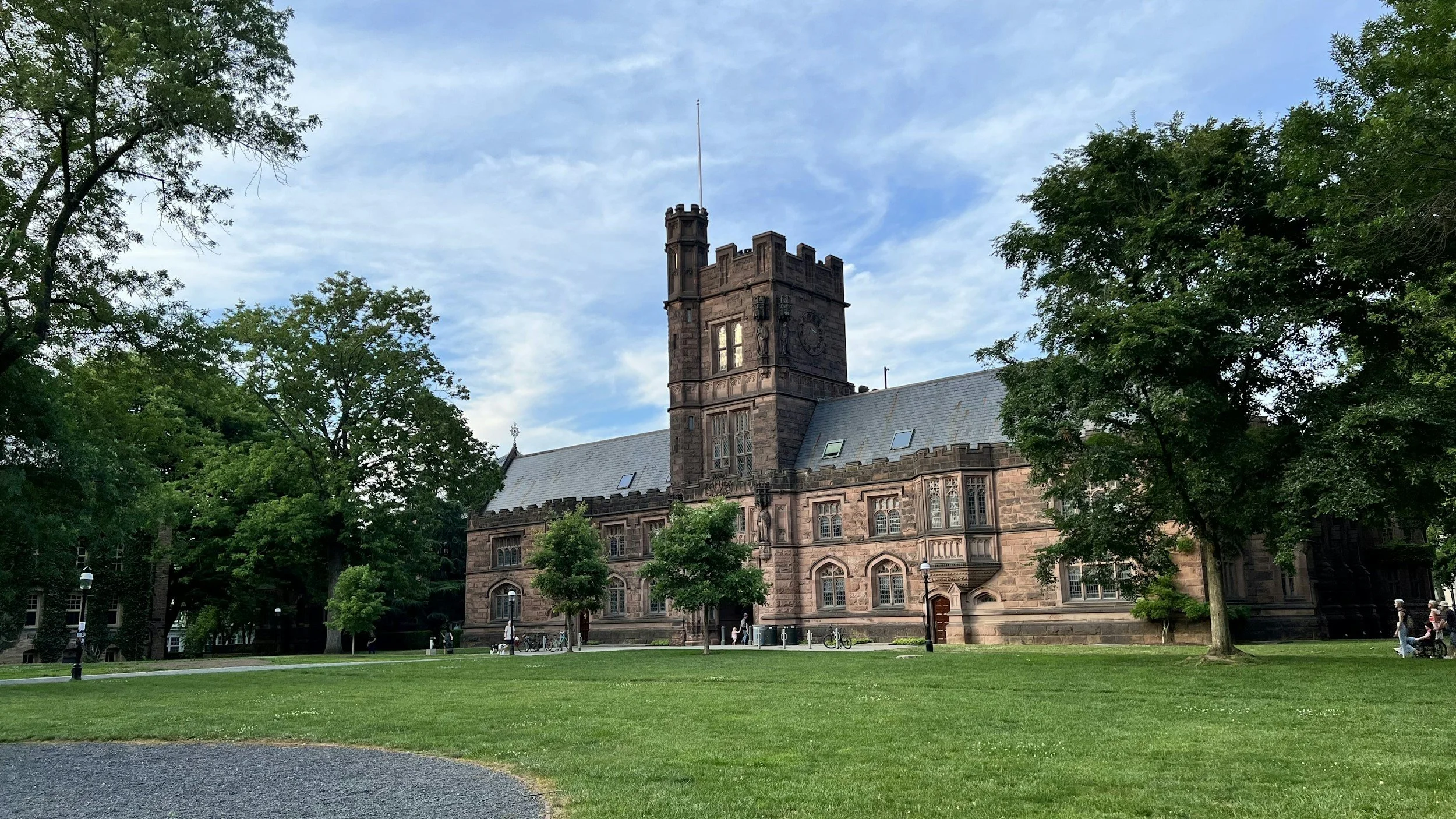
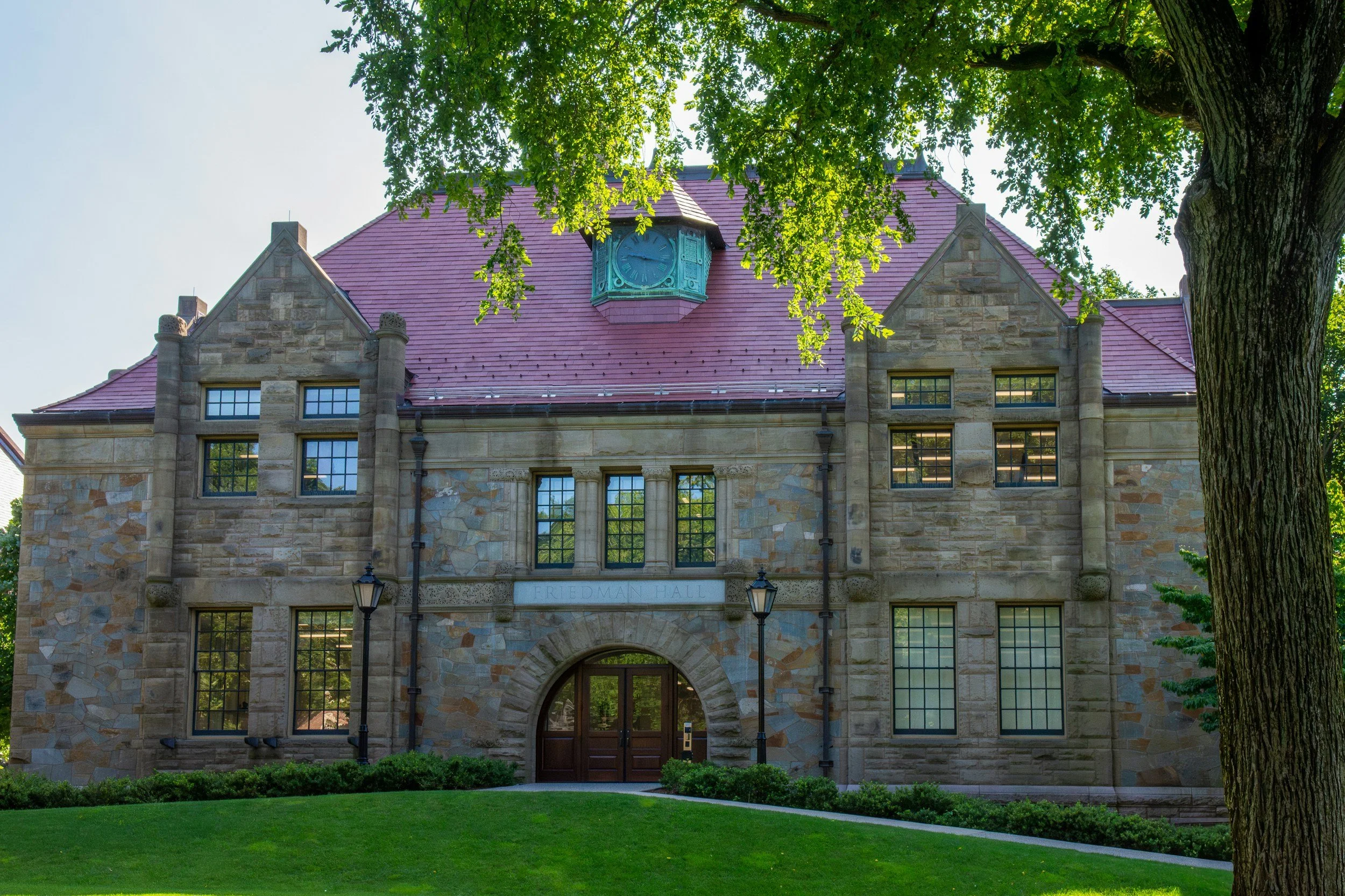
Neither school's main undergraduate campus sits in downtown Boston, despite how each is often described. Tufts' campus straddles Medford and Somerville, northwest of the city. Boston College's main campus is in Chestnut Hill, about six miles west of downtown.
The two have different relationships to Boston itself. Tufts sits immediately next to Somerville and close to Davis Square. The 2022 opening of the MBTA Green Line Extension's Medford/Tufts station put a direct rail connection at the edge of campus, and Davis Square's Red Line stop provides a second route in. Students can move among Somerville, Cambridge, and Boston without treating the trip as a special outing. Tufts' main campus covers about 150 acres and blends fairly quickly into the surrounding neighborhoods.
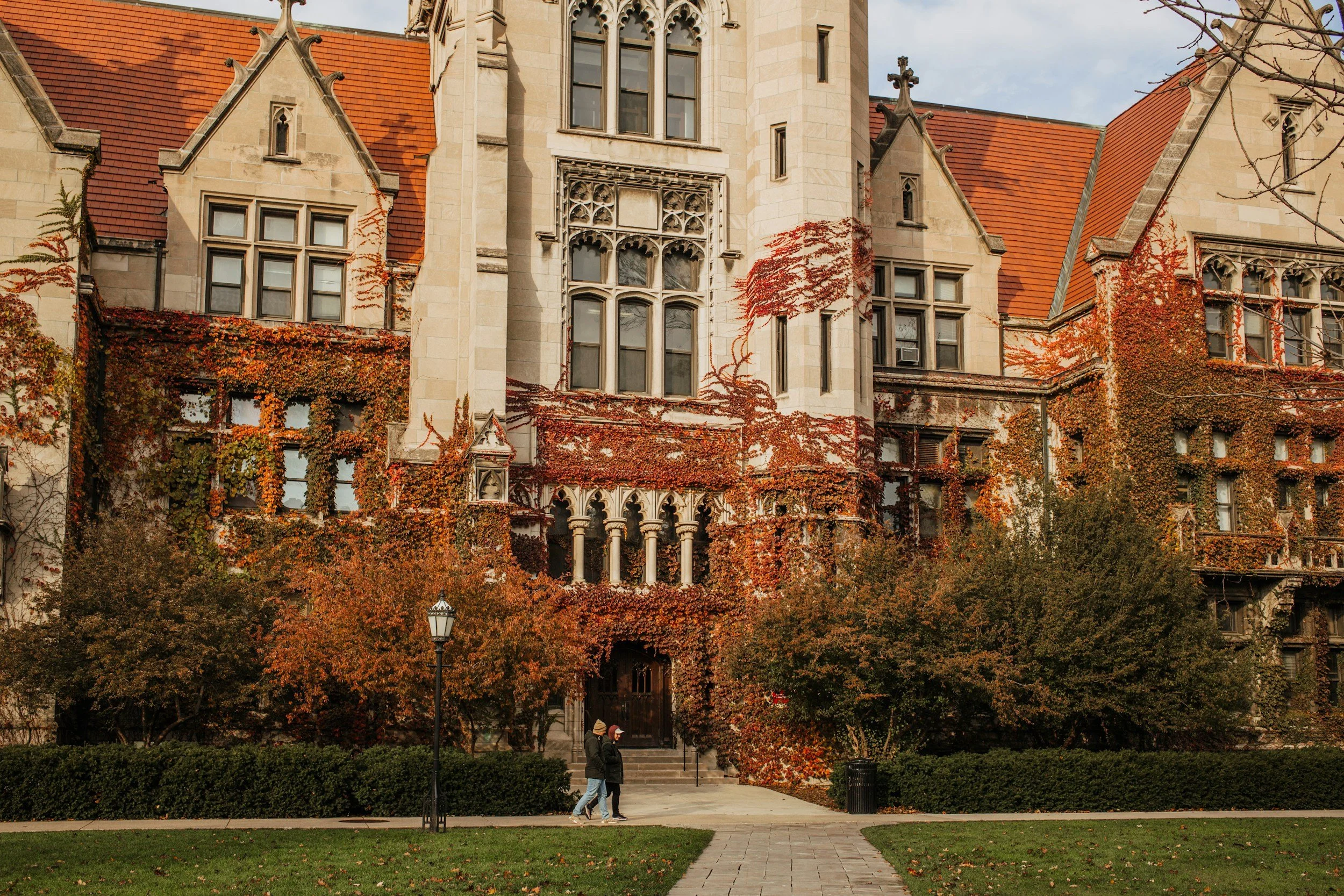
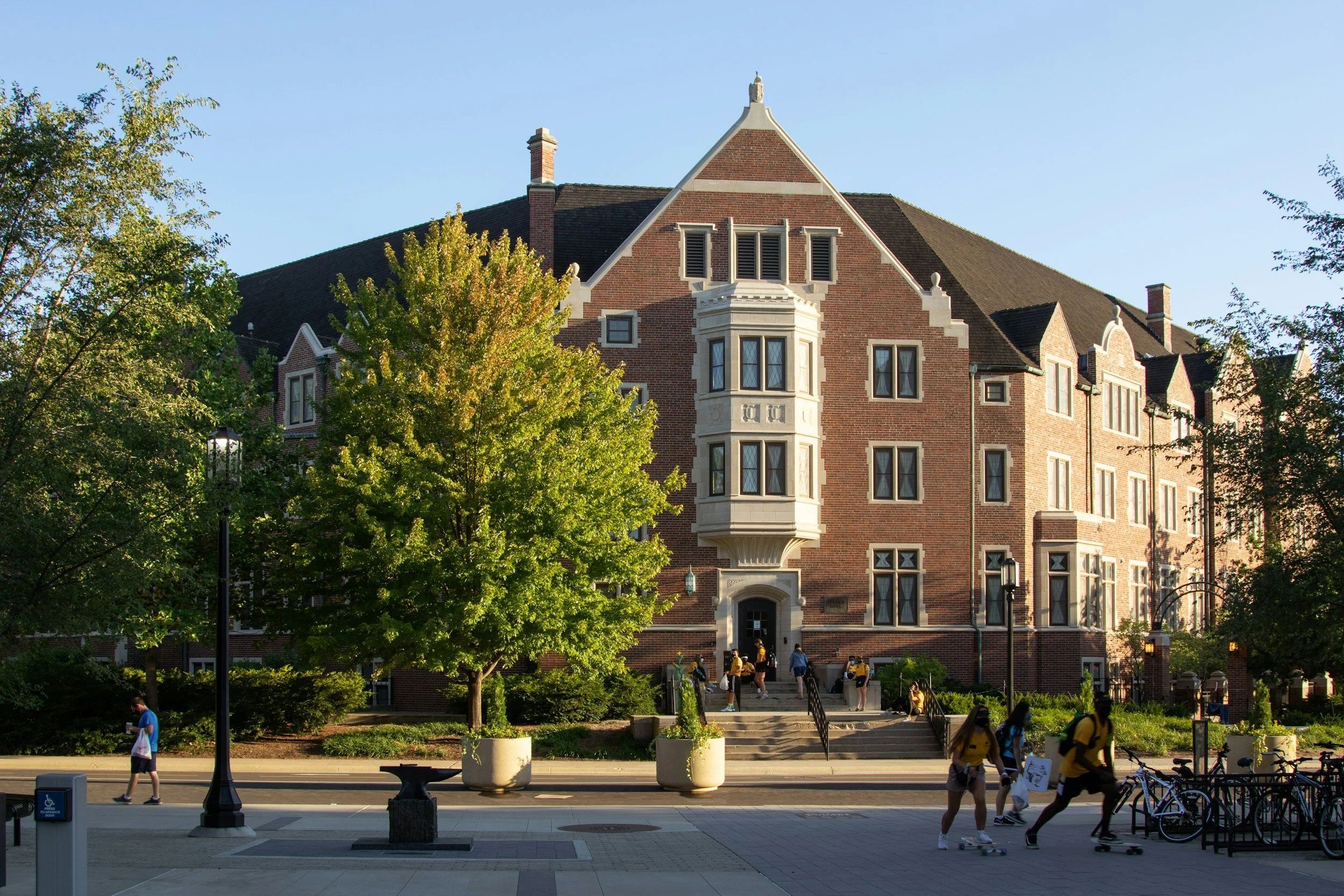
Boston College reads as more self-contained. Its 175-acre Chestnut Hill campus is built around large lawns, Collegiate Gothic architecture, and major athletic facilities, and BC also holds Newton, Brighton, and Brookline properties that add to its overall footprint. The Boston College T stop is the western terminus of the Green Line's B branch, so downtown is reachable without a car, though the surface-running B branch makes that trip feel slower than Tufts' access into Somerville and Cambridge.
If you want frequent, easy access to Cambridge, Somerville, and inner Boston as an extension of daily life, Tufts has the stronger position. If you want a visually unified, traditional residential campus while still keeping rail access to the city, BC has the stronger case. This is a difference in setting, not in whether Boston is reachable from either school.
Tufts currently enrolls about 7,031 undergraduates, out of roughly 13,650 students across all levels. BC currently reports about 9,677 undergraduates.
Cost
Tufts' 2024–25 Common Data Set lists 2025–26 tuition at $71,982, with $1,634 in required fees and a $19,566 allowance for on-campus food and housing. The following year's Common Data Set already shows tuition rising to $74,862, which gives you a sense of how quickly these figures move. Boston College's exact 2025–26 tuition wasn't confirmed in the sources used for this comparison, so it's left out here rather than pulled from a different year and presented as current.
Sticker price isn't a reliable stand-in for what you'd actually pay. BC states that it is need-blind in admission and meets full demonstrated financial need for admitted students, and Tufts operates a comparably substantial need-based aid program. Net price depends heavily on your family's specific financial situation, so it's worth running each school's net price calculator directly rather than comparing the published tuition figures.
BC also notes that if a family's financial circumstances change after an Early Decision admission, in consultation with the financial aid office, the binding commitment can be released. If your decision is likely to hinge on comparing merit aid offers across schools, that's worth factoring in before committing to ED at either school. BC's main merit award, the full-tuition Gabelli Presidential Scholarship, is highly competitive, and BC itself cautions that applicants counting on merit aid may not be well suited to a binding early application.
Academic structure
Tufts asks first-year applicants to apply directly to one of three undergraduate schools: the School of Arts and Sciences, the School of Engineering, or the School of the Museum of Fine Arts at Tufts, which also offers a five-year combined BFA plus BA or BS option. Which school you apply to affects how your application is reviewed, but once you're enrolled, you can take classes across all three. Arts and Sciences at Tufts runs on distribution requirements plus a major rather than a tightly prescribed core, which gives students real room to combine fields, whether that's economics and international relations, computer science and cognitive science, or engineering and entrepreneurship. Commonly prominent fields include computer science, economics, biological sciences, psychology, political science and international studies, and engineering, and Tufts' graduate schools in medicine, veterinary medicine, dental medicine, and the Fletcher School of Law and Diplomacy create research and speaker access beyond what you'd expect from an undergraduate population of about 7,000.
Boston College organizes its curriculum more explicitly around a Jesuit liberal arts Core, a set of required courses spanning the humanities, natural sciences, and other foundational disciplines that every undergraduate completes regardless of major. BC's undergraduate population is split mainly across four schools: the Morrissey College of Arts and Sciences, the Carroll School of Management, the Lynch School of Education and Human Development, and the Connell School of Nursing, within a university of nine schools and colleges overall. The Carroll School gives BC a stronger undergraduate business identity than Tufts, with finance, accounting, and economics carrying real weight in campus culture and recruiting. Connell gives BC a direct undergraduate nursing pathway that Tufts doesn't offer. Morrissey covers the standard arts and sciences fields, including economics, political science, communication, biology, psychology, history, English, philosophy, and theology.
If you want maximum elective freedom from day one, Tufts' distribution-based approach will likely feel more open. If you want a shared set of foundational questions in ethics, philosophy, theology, history, and writing built into your degree, BC's Core is doing that intentionally rather than getting in your way.
Both schools are genuine research universities rather than teaching-focused colleges, and undergraduates at both can join faculty research, complete independent studies or theses, and pursue funded summer research. Tufts' research strengths cluster around engineering, life sciences, health professions, veterinary science, international policy, and fine arts. BC's cluster around economics and business, social science, education, nursing and health, theology and philosophy, and a growing STEM research base. Both maintain substantial study abroad programs, though comparable year-by-year participation figures for both schools weren't available for this comparison.
Social life, athletics, and religious identity
Boston College's social identity is easy to describe: a large residential population, Division I athletics in the Atlantic Coast Conference, and school traditions like football at Alumni Stadium, hockey, basketball, and the Beanpot that organize weekends around campus events even for students who don't play a varsity sport.
Tufts competes in Division III, where varsity athletics matter to the athletes and their friends without dominating the school's public identity. Social life at Tufts is more spread across clubs, residence halls, performing arts groups, identity-based organizations, publications, and trips into Somerville, Cambridge, and Boston. Neither school runs a large, campus-defining Greek system. Tufts has recognized fraternities and sororities, but they don't shape the majority undergraduate experience, and BC doesn't have a traditional university-recognized Greek system at all.
Boston College's Catholic and Jesuit identity is a real, active part of the university rather than a historical label. BC describes formation, meaning the intellectual, social, and spiritual development of its students, as part of its educational mission, and philosophy and theology carry real weight in its Core. The university supports Catholic liturgy and campus ministry and puts service and ethical reflection near the center of how it talks about itself. Students of other faiths and no faith attend BC, and undergraduate life isn't a religious program, but Catholic institutional language is simply more visible at BC than at Tufts. Tufts is nonsectarian in practice: religion is something you can study academically or engage with through chaplaincy and student groups, but it doesn't shape the university's core educational identity the way it does at BC.
Diversity and campus demographics
The two schools land close together on several access measures in their latest first-year classes. Tufts' Class of 2029 profile reports 16% Pell Grant recipients, 12% first-generation students, 12% international students, and a 55% female to 45% male split. Among reported racial and ethnic categories, the profile lists 19% Asian, 6% Black, 12% Hispanic, 45% White, 9% two or more races, and 9% unknown.
BC's Class of 2029 figures show 396 Pell recipients and 308 first-generation students out of 2,479 enrolled students, which works out to roughly 16.0% Pell and 12.4% first-generation, and a 54% female to 46% male split. BC reports 35% of the class as AHANA, a BC-specific term historically covering African-American, Hispanic, Asian, and Native American students. Because Tufts and BC use different reporting frameworks, and because post-2023 legal restrictions on race-conscious admissions changed what colleges can directly consider, these figures aren't perfectly interchangeable across the two schools.
In 2024, BC opened Messina College on its former Pine Manor campus, a residential associate-degree pathway aimed at first-generation and economically disadvantaged students. Messina runs separately from BC's standard four-year first-year admission pool, so its students aren't included in the Carroll, Morrissey, Connell, or Lynch admissions statistics above, but it's part of BC's broader approach to access.
Political and social climate
Reducing either campus to a single political label would be inaccurate, but there's a real difference in texture. Tufts has a more visibly activist, secular-progressive public culture, with sustained student organizing around international issues, climate, racial justice, and Middle East politics. That environment drew national attention in 2025, when a Tufts graduate student, Rümeysa Öztürk, was detained by federal immigration authorities after the government cited concerns tied to her pro-Palestinian activity; a federal judge later said the case raised significant constitutional questions. That incident involved a graduate student, not undergraduate admissions, but it reflects the intensity of the political environment around the Tufts community.
BC's political life operates alongside its explicit religious identity. Catholic teaching, Jesuit social justice traditions, both conservative and progressive Catholic student groups, secular students, and mainstream partisan organizations all coexist on the same campus, producing overlapping debates about religion, sexuality, social justice, free expression, and foreign policy that look different from Tufts' more uniformly secular-progressive environment. BC's own student media includes both Catholic-oriented and progressive traditions, so a Catholic institutional identity doesn't mean a politically uniform student body.
The more accurate shorthand isn't "Tufts liberal, BC conservative." It's that Tufts runs a more conventionally secular-progressive and activist culture, while BC runs a more ideologically mixed culture inside a visibly Jesuit Catholic institutional framework.
If you want help figuring out which of these two fits your goals, and building an application strategy around whichever one you choose, schedule a free consultation with a college admissions expert today.