RSI vs Simons: Which One Is Right for You
RSI and the Simons Summer Research Program are the two summer research placements that every strong STEM junior hears about first, and they get compared constantly by people who have not looked closely at either one. On the surface they look almost interchangeable. Both run roughly six weeks in the same stretch of the same summer. Both charge no tuition. Both admit only students who are currently in eleventh grade, which means you get one attempt at each, in the same school year, with no option to try again as a senior.
Underneath that, they are built differently. They select on different evidence, they hand you a different kind of summer, and they leave you holding a different artifact at the end. Knowing which one you actually want changes what you spend your fall doing.
What the summer actually looks like at RSI
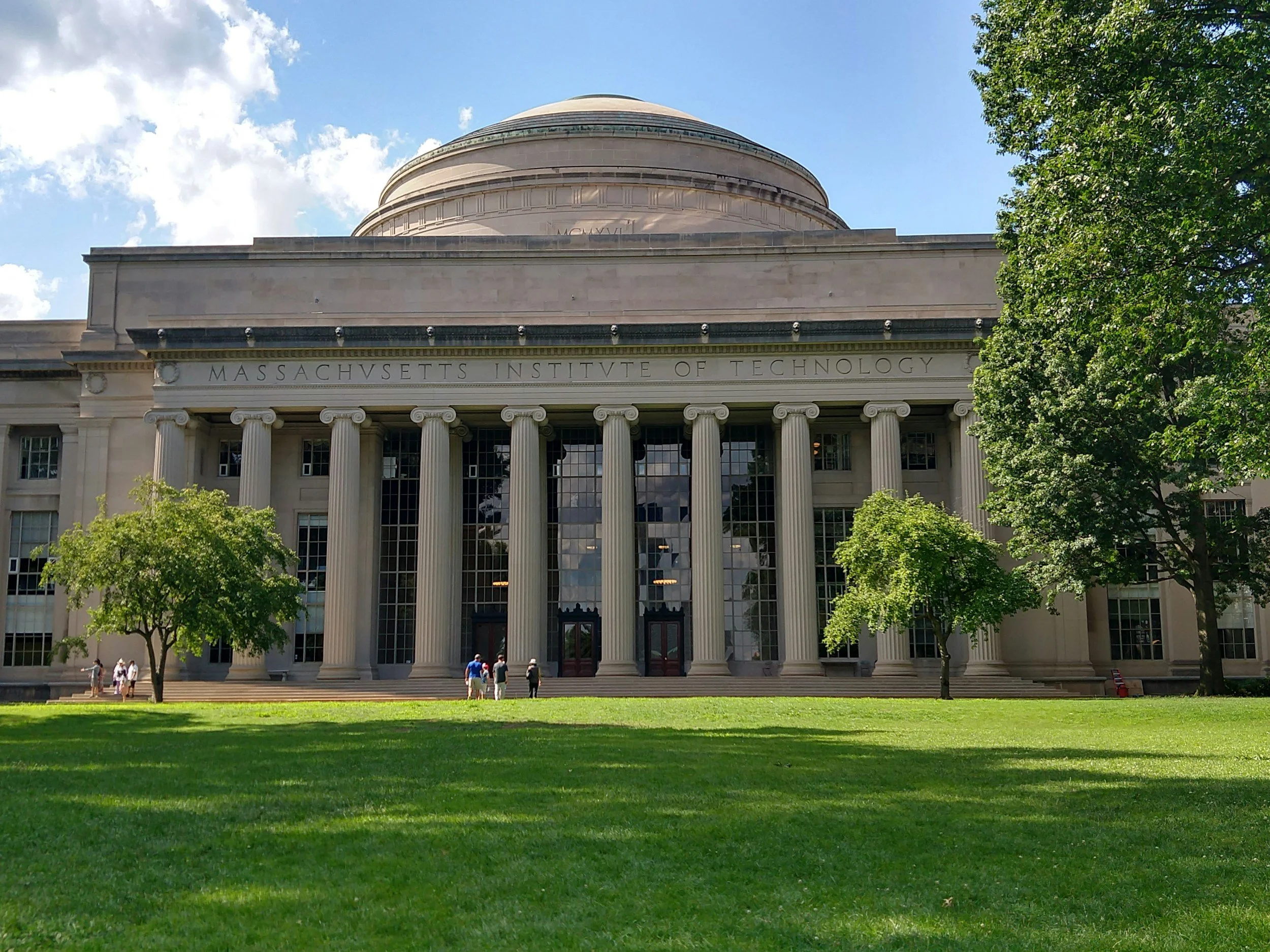
RSI runs at MIT and is fully residential. In 2026 it ran from June 28 to August 8. Everything is covered, including housing and meals, so the only money involved is a seventy five dollar application fee, and the Center for Excellence in Education, which runs the program, will consider waiving that for students with financial need.
Your first week is classroom time. You take intensive STEM seminars with professors across biology, chemistry, engineering, mathematics, physics and the humanities, and an evening lecture series starts that week and runs all summer, bringing in scientists and technology leaders including Nobel laureates. At the end of that first week your research mentor hands you your project. You do not bring a project to RSI, and you are not permitted to continue something you were already working on. Most students spend that first weekend reading the papers and textbooks they suddenly need.
Weeks two through five are the lab. The program describes the commitment as business hours plus, which is an honest description. You are in a working research environment for the bulk of every day, with an outside deadline pulling you forward the entire time.
The last week is writing and presenting. Every student produces a paper at the standard of an academic conference and gives a talk on it. A panel of academic and corporate scientists from the Boston area reads and watches all of it, then singles out five papers and five presentations for special commendation. That panel is external to the program, which is part of why the RSI paper carries weight later.
Around all of that there are field trips, science and technology site visits, and things like the July 4th celebration on the Boston Esplanade. The cohort is about 100 students drawn from across the United States and from participating countries abroad. After the summer, the RSI Director writes a college recommendation letter for every student in the class, and the alumni network, now past three thousand people, is active enough that the program will make introductions for you by email years later.
What the summer actually looks like at Simons
Simons runs at Stony Brook University and in 2026 ran from June 29 to August 7. There is no tuition here either, but the housing is on you. Stony Brook estimated the residential cost for summer 2026 at about $2,450, which covers a double room in a residence hall for the full program including weekends, plus a required $120 starter dining plan and a student health services fee. You can also commute, which costs you nothing beyond transportation and parking, and a meaningful share of each class does exactly that.
The structure is the real difference. Before you apply, you pick three faculty mentors from a published list of Stony Brook researchers and rank them. If you are admitted, you are matched to a lab and you join that lab as a working member of it, alongside the graduate students and postdocs already there. The floor is four hours a day with your mentor or your research group, and the actual hours get negotiated with your mentor, so the intensity varies a lot by lab. All of it is on campus, with no remote option.
Alongside the research you get weekly faculty research talks, workshops, tours and events. The summer ends with a poster symposium, where you present a research poster and a written abstract, and where each fellow receives a stipend award. The 2026 class ran to about sixty fellows.
A poster and an abstract are a smaller deliverable than a conference paper and a defended talk. That is not automatically worse. It reflects what the program is, which is an apprenticeship inside a real lab rather than a research course with a capstone.
How RSI selects its class
There is no gatekeeper between you and RSI. American students, including citizens studying overseas, apply directly to CEE with no school nomination involved. International applicants go through a selection agency in their own country, and those procedures and timelines vary, so you contact CEE first to find out whether your country participates in a given year.
Your application includes essay responses about your goals in science, technology, engineering or mathematics, your official transcript, a list of your honors and awards, up to three recommendation letters, and every standardized test score you have. That last item is load bearing. CEE asks for PSAT, SAT, ACT and AP results, and publishes recommended thresholds of 740 or higher on PSAT Math with 700 or higher on Evidence Based Reading and Writing, or 33 or higher on ACT math with 34 or higher on ACT verbal. Scores below that have to be carried by something else in the file, and the committee reads holistically, but the scores are in the room.
The recommendations should come from math and science teachers. If you have worked in a university or industry lab for four weeks or longer, CEE wants a letter from that supervisor specifically.
What CEE says it is looking for is worth reading literally. Successful applicants show superior achievement in mathematics, the sciences, and verbal arts, all three. Many have a long record in regional, state and national competitions. Some have completed university coursework or worked in a lab or run original research. Most have been leaders in their school and community. Prior research helps but is not required, and the program states that roughly ten percent of each class arrives without it. The committee also reads your record against the opportunities you actually had, so if you are in a place with few research options, you are expected to say so in the application.
The numbers are what you would expect. CEE reports more than 2,500 applications from the United States and around 600 from abroad each year for a class of 100, and an admit rate under two and a half percent.
Timing is the part that catches people. The deadline is in early to mid December, typically the Wednesday of the second full week of the month, which means your application is built from what you have accomplished by roughly Thanksgiving of junior year. Decisions go out to everyone at once in March. There is no rolling admission and no interview.
How Simons selects its class
Simons starts with a gate. Your high school has to nominate you, and a school may nominate at most two students. If a school submits more than two, every applicant from that school is disqualified, so the internal competition at a strong science high school is real and it happens before you have written anything. The nominator is usually a research coordinator, science teacher or counselor, and schools run their own process for choosing. Schools that have never nominated before can be added to the directory, so a school with no history here is not blocked.
Eligibility has no flexibility built into it. You must be in eleventh grade at the time you apply, you must be sixteen by the start of the program, and you must be a United States citizen or permanent resident. That citizenship requirement holds regardless of where you attend school, which is why the fellows list includes students at schools abroad. Students on long term visas are not eligible.
The application itself is short. You submit an online form with brief written responses, capped at 300 words each, upload your transcript, rank your three mentor choices, and arrange two teacher recommendations with math and science preferred. If you have done research before, a third letter from that supervisor is welcome.
Here is the part that reorients how you should think about it. Simons asks you to send nothing else. No test scores. No resume. No awards list. No publications. The program says plainly that unsolicited supplementary materials cannot be added to your file. Your case is made by your transcript, your two letters, your written responses, and the fit between your interests and the mentors you ranked. The program also prohibits using a large language model to generate or rewrite your application content, though grammar and spelling tools are fine.
Some applicants get an interview, by phone or in person, because certain labs screen for their own placements. An interview is not a signal about your odds, and the program says so directly. Prior research experience is not a prerequisite. The published admit rate is under five percent.
The calendar runs later than RSI and in three stages. In the 2026 cycle, nominations were due January 30, applications February 5, and recommendation letters February 13, with decisions promised in early April and delivered on March 11.
When RSI is the better fit
RSI rewards a profile that is legible on paper across several axes at once. If you have olympiad results, a high AIME score, a national competition record, strong scores, and writing ability alongside your math and science, RSI is the program built to read all of that. Simons will never see most of it.
RSI is also the right call when your school cannot nominate you, or when it can and you are the third best candidate in your year. Nothing stands between you and a CEE reader.
Choose RSI if you want the written artifact. A conference style paper that you drafted, defended in a talk, and had evaluated by an outside panel of working scientists is a stronger thing to carry into a college application and into a lab interview two years later than most summer outputs. The Director's recommendation letter and the alumni network compound on top of that.
If your family cannot absorb housing costs, RSI covers everything, and that is a clean answer.
And if you are an international student in a participating country, RSI is the program available to you.
When Simons is the better fit
Simons lets you steer. You read the mentor list, you find the three people whose work you actually want to be near, and you rank them. At RSI, your project arrives at the end of week one and the match is made for you. If you already know that you want computational neuroscience or marine geochemistry or hardware security specifically, that control is worth a lot.
Simons is also closer to what research employment actually feels like. You are embedded in an existing group with graduate students and postdocs around you for six weeks. You learn how a lab runs, who does what, how a project gets argued about at a group meeting. RSI gives you a superb research course with a capstone. Simons gives you a job.
The four hour daily floor, set by agreement with your mentor, makes Simons compatible with a summer that has other things in it. If you are commuting from Long Island or the city, you can hold a job, keep training, or keep building something of your own in the afternoons. RSI is residential and consumes the summer.
Simons also makes sense when your transcript and your teachers are your strongest evidence. A student with a near perfect record, two teachers who can write with real specificity about how they think, and a clear articulated research interest is exactly what this file format is designed to surface.
What each one does for a science competition run
If your plan runs through the Regeneron Science Talent Search or the International Science and Engineering Fair, which are the national research competitions most seniors target, read this carefully, because neither program hands you an entry.
Simons states directly that a six week project is generally too time constrained to meet the full eligibility requirements for those competitions unless you do considerable follow up work afterward, by mutual agreement with your faculty mentor. The program specifically asks students with competition ambitions to say so before the summer starts. That is an invitation. If you raise it early and your mentor agrees to keep you on through the fall, you have a path, and Simons publishes the evidence that this path works. Its own alumni pages list the fellows named Science Talent Search scholars each year, and in several recent years that number has been in double digits.
RSI produces a paper, which is the right shape of artifact, but you are assigned your project at the end of week one and you may not continue prior work, so what you finish is genuinely six weeks of results. Continuing it means staying in touch with a mentor whose lab may be anywhere in the Boston area.
The practical takeaway is the same at both. Raise the competition question with your mentor in the first week, in writing, and find out what fall access looks like before the summer ends.
Applying to both
The deadlines do not collide. RSI closes in December and Simons opens its nomination process in late January, so if you are eligible for both, apply to both. Because RSI notifies in March and Simons in early April, you will usually know your RSI outcome before Simons decides, which makes the actual choice cleaner than it looks on paper.
Two pieces of fall logistics matter. Your recommenders overlap, so approach your math and science teachers in September or early October and tell them both programs are coming, rather than going back to them twice. And if Simons is on your list, start the nomination conversation with your school in the fall as well, since the internal selection at a competitive high school is decided long before the January deadline.
Get the strategy right the first time
You have one junior year and one shot at each program. Which one you build your fall around depends on which evidence in your profile is strongest, what your school's nomination situation looks like, what you want to be holding in August, and where you want the summer to lead.
Our admissions consultants hold PhDs in the sciences and have placed students into the country's most selective summer research programs. We help you read your own profile accurately, target the programs where your case is strongest, and write applications that show a research mind at work.
If you need help applying to RSI or Simons, schedule a free consultation with a college admissions expert today.