Transfer Admissions Timeline

The timeline for transfer admissions starts the second you receive that rejection letter from your dream school. College dreams don't need to die the moment you open that email or that thin envelope. They just need a new route.
Most students treat the rejection as an ending. The students who eventually transfer to their dream school treat it as a starting gun. The difference between those two groups is not talent, it is not luck, and it is certainly not the schools they were admitted to out of high school. The difference is whether someone had the will to keep believing in their goal even after receiving the most inconvenient possible news, and whether they were willing to make that inconvenience work for them.
What follows is not a vague pep talk. It is a real timeline, with real steps, that you can begin executing immediately.
The Moment You Decide to Transfer
Before you do anything else, you need to make a decision: are you transferring to a specific school, or are you simply open to transferring somewhere better? These are different goals with different strategies. If you know exactly where you want to go, everything from this point forward should be engineered around what that school wants to see. If you are open to a range of T20 institutions, your strategy will be somewhat broader, but the fundamentals remain the same.
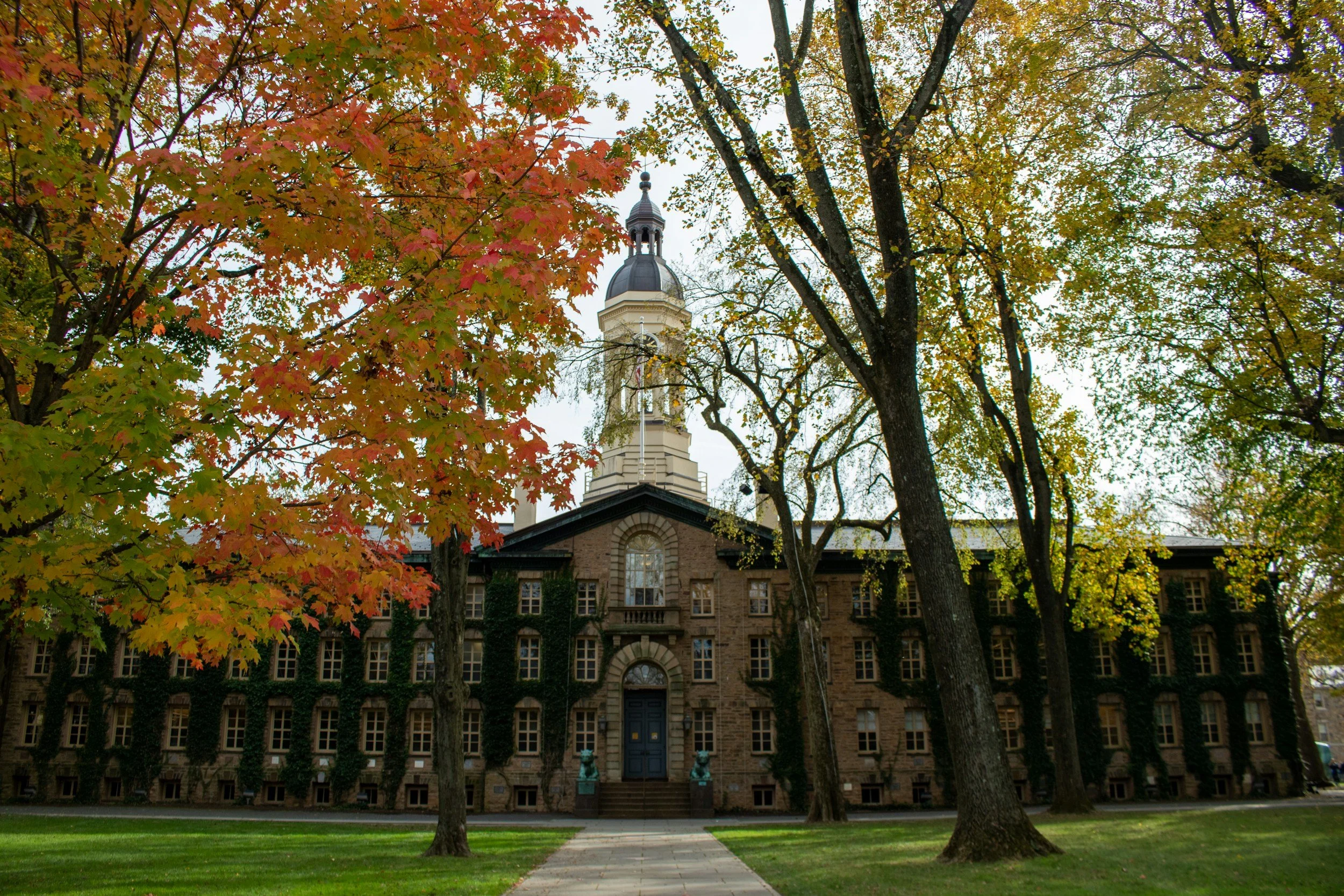
Once you have that clarity, research your target schools' transfer policies immediately. Some schools, like Harvard and Princeton, do not accept transfer students in a meaningful way. Others, like Columbia, Cornell, UChicago, and many other elite institutions, have robust transfer pipelines and genuinely want you as a student. Know the difference before you invest your time.
Spring Before Your First College Year (March to August)
This is where most students waste their biggest advantage: time.
The first thing you should do is look into summer courses at your incoming institution or at an accredited community college that your school will accept transfer credit from. Taking one or two rigorous courses over the summer serves two purposes. First, it accelerates your academic trajectory so that when the school year begins, you are not spending your first semester in introductory courses that every other freshman is taking. Second, it signals to a future transfer admissions office that you hit the ground running. You were not waiting to be told what to do. You sought out the curriculum and went toward it.
At the same time, review the course placement and credit waiver policies at your incoming school. Many institutions allow students to test out of or skip introductory sequences based on AP scores, SAT subject scores, or placement exams. Identify every single class you are eligible to skip and pursue the most rigorous course of study available to you from day one. Elite colleges evaluating your transfer application will look at your transcript and ask one question: did this student take the most challenging version of the curriculum available to them? Your answer needs to be yes.
Finally, find the research labs and faculty at your incoming school who are working in your areas of interest, and reach out to them now, before you are even a student there. Do not wait for orientation. Do not wait until you have a student email address. Email professors directly, introduce yourself, explain your interests, and ask if there is any way to get involved with their research even before the semester begins. Many professors will say no. Some will say yes. That yes is worth more to your transfer application than almost anything else you can put on it, because it demonstrates exactly what elite transfer programs are looking for: a student who does not wait to be handed opportunities, but creates them. The same goes for student organizations. Reach out to club leadership before you arrive, attend any virtual events or pre-orientation programming your school offers, and establish yourself as someone who is already present and purposeful. The goal of doing all of this early is not just to get a head start. It is to give yourself something to double down on once you are actually on campus. When orientation week ends and other freshmen are still figuring out which clubs to try, you should already be embedded in a lab, contributing to an organization, and building a track record that the vast majority of transfer applicants will never be able to match because they waited too long to begin.
Fall of Your First Year (September to December)
This is the most important semester of your transfer strategy. Your GPA here will set the foundation of your entire case. Every school you apply to transfer into will see these grades. A 3.9 or higher is the standard you should be aiming for. Anything below a 3.7 will make the most selective schools a genuine uphill battle.
But grades alone are not enough. Elite transfer programs want to see that you integrated into your current institution with depth and intentionality. This semester, you should be doing three things simultaneously.
First, take the most advanced courses available to you given your standing. If you placed out of introductory sequences, take the intermediate and advanced courses in your field. If you are in STEM, pursue upper-level coursework as aggressively as your preparation allows. Do not coast through courses designed to ease you into college life. That is not what you are here for.
Second, double down on the relationships and commitments you established before the semester started. You are not arriving as a blank slate scrambling to find your place. You already have one. Now the work is to go deeper, take on more responsibility, and make your contributions impossible to ignore. A research lab, a competitive club, a student publication, an applied project team. Something where the work is concrete, the stakes are real, and the impact is visible. What separates strong transfer applicants from exceptional ones is not the variety of what they did, but the depth. You are building depth from day one because you started before day one.
Third, deepen the relationships you began building with faculty before the semester started. Attend office hours. Go beyond the coursework. Ask real questions about their research. This is not networking in a hollow sense. It is the continuation of what will eventually become your letters of recommendation, and the professors who write the most compelling letters are those who have observed you doing serious intellectual work over a sustained period of time. A professor who has watched you grow from an ambitious email in the spring to a genuine contributor in the fall has a story to tell about you. That story is what distinguishes your application.
Spring of Your First Year (January to April)
This is when you begin assembling your transfer application in earnest, even if you are not submitting for another full cycle.
Most transfer applications are due between February and April for fall enrollment. If you are aiming to transfer after one year of college, this is your window. Use January to draft your transfer essay and identify your recommenders. The transfer essay is different from the Common App personal statement you wrote in high school. Admissions officers reviewing transfer applications are not looking for a coming-of-age narrative. They want to know three things: why you are intellectually ready for their institution, what you have done to demonstrate that readiness at your current school, and why their institution specifically is the environment where you will thrive. Your answer to the third question needs to be specific enough that it could not be copied and pasted to any other school.
If you are not ready to transfer after one year and are aiming for a sophomore-to-junior transfer, use this spring to double down on depth at your current institution. Get deeper into research. Take on a leadership role in an organization. Do not switch directions. Your narrative should be one of accelerating commitment, not scattered exploration.
Summer After Your First Year (May to August)
If your transfer applications are submitted, this period is about maximizing the strength of any remaining impressions before you potentially enroll in the fall. Pursue a meaningful internship, research experience, or independent project. If you are admitted and enrolling in the fall, this summer is your opportunity to hit the ground running at your new institution by reviewing their curriculum and understanding the social and academic landscape before you arrive.
If your applications have not yet been submitted because you are pursuing a two-year transfer track, use this summer the same way you used the first one: take challenging coursework, deepen your research, and begin the second year with the kind of momentum that makes your transcript unmistakable.
The Second Year (September to April for Late Applicants)
If you are pursuing a two-year transfer track, your second year needs to reflect the full arc of what you have built. Your transcript should show consistent rigor, not a single strong semester. Your activities should demonstrate sustained impact, not a last-minute scramble. Your relationships with faculty should be deep enough that recommenders can speak to your intellectual character, not just your attendance record.
By the time you submit your application for transfer after your second year, the case you are making is this: you have spent every available month at your current institution becoming exactly the kind of student your target school is looking for. You have taken every opportunity available to you. And despite that effort and growth, the resources, the community, and the intellectual environment you need to reach your full potential are only available at the institution to which you are applying.
That is a compelling case. That is the case that gets students into Cornell, Columbia, UChicago, and schools they were rejected from the first time around.
Why an Experienced Admissions Consultant Makes All the Difference
Reading a timeline like this one is one thing. Executing it without ambiguity is another.
Every step outlined above comes with questions that are easy to get wrong if you have never navigated this process before. Which professors are actually open to working with incoming freshmen, and how do you write a cold email that gets a response instead of being ignored? Which summer courses will genuinely impress a transfer admissions office, and which ones will look like you were padding your transcript? Which clubs and organizations at your school will give you the kind of depth and impact that shows up meaningfully in an application, and which ones will blend into the background? How do you structure an activity list that tells a coherent story rather than a list of things you did? And how do you write a transfer essay that makes a specific, compelling case for why you belong at a particular institution without sounding like every other applicant who visited the school's website and copied down its mission statement?
These are not small questions. Getting them wrong costs you months of effort that could have been spent building the right profile. Getting them right is the difference between a transfer application that reads like a student who made the best of their situation and one that reads like someone who was always destined to be at that school.
An experienced admissions consultant removes that ambiguity entirely. They know which professors at your incoming school are receptive to undergraduate researchers at the introductory level. They know how to position your course selection to demonstrate the kind of intellectual ambition that transfer admissions offices at Cornell, Columbia, and UChicago are specifically looking for. They know how to shape your activity list so that every entry reinforces a single, unmistakable narrative about who you are and what you will contribute. And they know how to help you write a transfer essay that is specific enough to be convincing, personal enough to be authentic, and strategic enough to give you a genuine edge in one of the most competitive applicant pools in higher education.
The transfer process is already difficult. There is no reason to navigate it with uncertainty when the guidance exists to eliminate it.
Ready to take the next step toward your dream college? Schedule your complimentary consultation with a transfer admissions expert today.