Timeline for US Students Applying to Oxford 2026
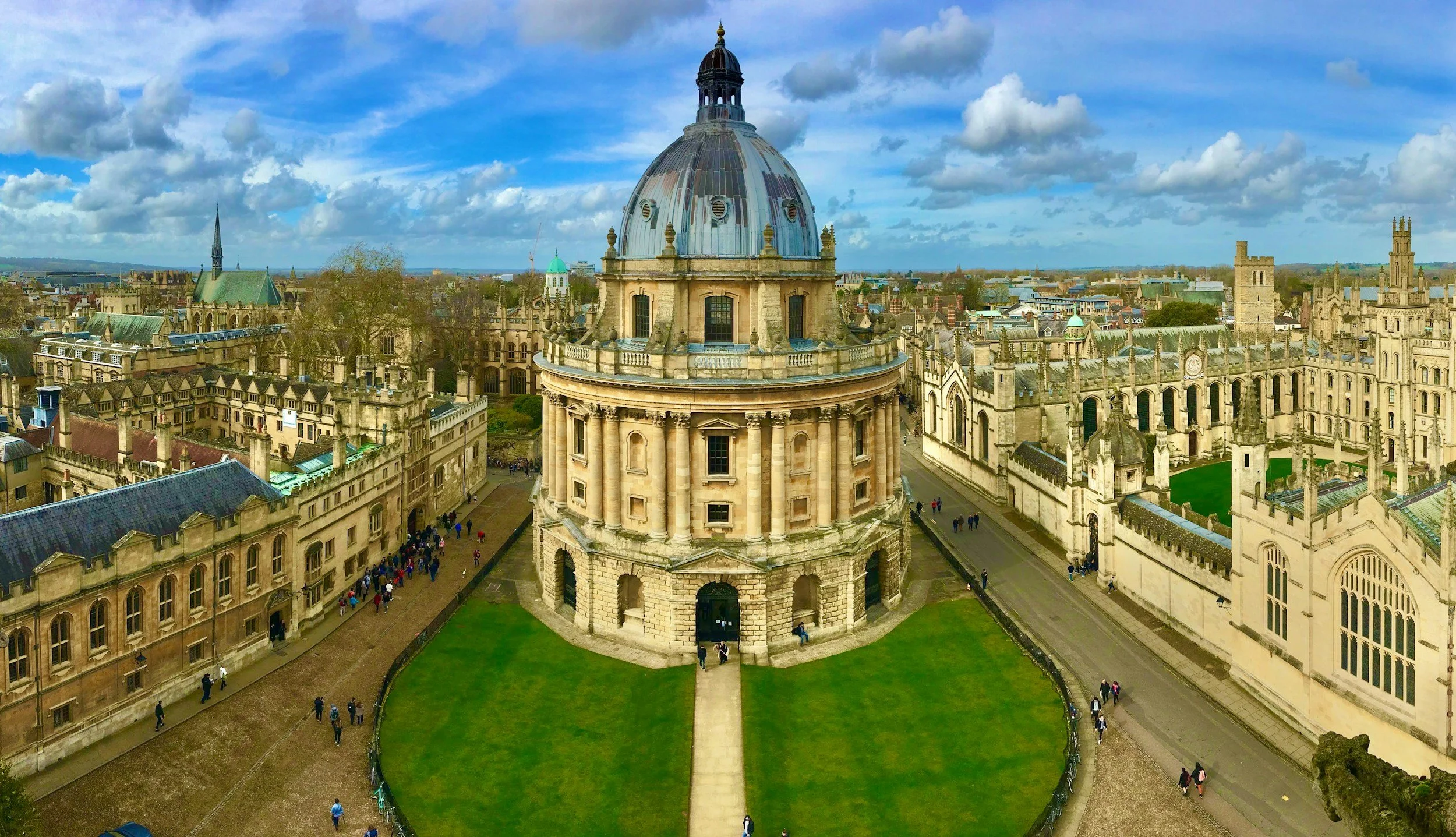
Applying to Oxford as a US high school student is unlike anything in the American college admissions process. The deadlines are earlier, the subject focus is more intense, and a single mistake, a missed deadline, an incomplete reference, a wrong test date, can end your application for that entire cycle. If you are targeting Oxford for a 2027 start, arriving in time for Michaelmas Term on October 10, 2027, the work begins right now, in March 2026.
This guide walks you through every step you need to take, month by month, from today through your arrival in Oxford. It covers UCAS mechanics, admissions testing, written work requirements, college choice, financial documentation, and the UK student visa, everything a US high schooler needs to know to put together a competitive application.
Month-by-Month Timeline
March 2026
This is your starting point. Lock in the one Oxford course you plan to apply to and confirm you meet Oxford's US qualification requirements for it. Identify whether your course requires an admissions test, and if so, which one. If your course requires an ESAT, TARA, or TMUA, begin building a preparation plan now so you are ready to act immediately when UAT-UK publishes its official guidance in April.
Start a reading and annotation log. Oxford expects applicants to demonstrate genuine intellectual engagement with their subject, not just grades and activities. Keep a short log where each entry connects a book or article you have read to a question it raised, what changed in your thinking, and where the argument could go further. This becomes the raw material for your UCAS personal statement and for interview preparation.
April 2026
UAT-UK will publish its guidance for the ESAT, TARA, and TMUA, including test dates, registration windows, and booking procedures, in April 2026. If your course requires one of these tests, review this guidance immediately and build a preparation schedule around the October sitting.
Begin organizing your evidence file: your current AP plans and projected scores, any school essays or marked papers that could serve as written work for courses that require it, and your growing reading log. For courses requiring written work, you want to identify candidate pieces now so you are not scrambling in November.
May 2026
UCAS opens for 2027 entry on May 12, 2026. You can begin building your application, but you cannot submit until September. Use this time to work through the structured personal statement format, three prompted sections, and draft each one with your specific course in mind. Show that you understand what the subject involves at university level, not just what you have studied in high school.
If you are applying to Medicine or Graduate-entry Medicine, UCAT registration also opens May 12. Register immediately.
June 2026
For Medicine applicants, UCAT booking opens June 23. Schedule your test date as early in the testing window as possible, July is the target. If you still need SAT or ACT scores to meet Oxford's US requirements for your course, June is your last realistic window to sit those tests and receive results before UCAS submission. Check the College Board and ACT's published 2026 test schedules and registration deadlines.
July 2026
UCAT testing begins July 13. If you are applying to Medicine, sit your UCAT this month. For Law applicants, begin building your LNAT preparation plan in earnest, the registration deadline comes in September and you want to be test-ready well before then.
For all applicants, July is a good month to revisit your reading log and identify two or three ideas or arguments that genuinely surprised or challenged you. Oxford interviews are academic conversations, and the best preparation is having real intellectual material to draw on.
August 2026
Decide whether to express a college preference or apply open. Make this decision based on honest research about the college's culture, size, and location within Oxford, not on the belief that picking the right college will improve your odds.
If your course requires an ESAT, TARA, or TMUA, August is your core preparation month. Use the UAT-UK guidance from April to ensure you are ready for the October sitting. Begin coordinating the reference logistics with your school counselor or the teacher writing on your behalf, they must submit the reference through UCAS alongside your application, and you cannot submit without it.
September 2026
You can submit your UCAS application from September 1. Before you do, confirm that your academic reference is fully ready to got, the reference must be submitted as part of the application by the October 15 deadline, and it is your referee who submits it. Coordinate the timing carefully so there are no gaps.
For Law applicants, Oxford requires LNAT registration by September 15 and the test must be completed by October 15. Book your LNAT date now.
For Medicine applicants, the UCAT access arrangements deadline is September 10, the booking deadline is September 16, and the last test date is September 24. If you have not sat the UCAT yet, this is your final window.
October 2026
The most important deadline in this guide: UCAS must be submitted by October 15, 2026, at 6pm UK time, with your academic reference included. There are no extensions and no exceptions. Late applications are not accepted.
If your course requires an ESAT, TARA, or TMUA, you must sit the October sitting. Check UAT-UK for the exact date. Law applicants must also complete the LNAT by October 15.
November 2026
If your course requires written work, you must submit it by November 10. Fine Art portfolio applicants face an earlier deadline, check your college's specific instructions when they contact you. Make sure what you submit is original, previously marked, within the 2,000-word cap, and accompanied by a cover sheet. Review your submission carefully, because Oxford interviewers may ask you about it directly.
December 2026
Oxford undergraduate interviews take place in December for shortlisted candidates. Oxford interviews are academic discussions, not personality assessments, not a review of your activities. You should be able to discuss the ideas in your personal statement and written work rigorously, follow an argument in real time, and engage with material you have never seen before. Prepare by rereading your submitted work and by practicing the kind of extended intellectual conversation your subject requires.
January 2027
Oxford undergraduate decisions for shortlisted candidates are released on January 12, 2027, via UCAS. After decisions are released, monitor your UCAS offer reply deadline, your personal deadline depends on when you receive your last decision across all the universities you have applied to.
What Makes Oxford Different
Before getting into the timeline, it helps to understand the structural rules that catch US students off guard.
You can only apply to one Oxford course. Not two, not a backup within Oxford — one. You build your entire application around that single subject, including your personal statement and any written work. Choose carefully, because there is no hedging.
You also cannot apply to both Oxford and Cambridge in the same year.
The UCAS deadline for Oxford is October 15, 2026, at 6pm UK time. This is earlier than the standard UCAS deadline for most other UK universities, and it is absolute. Oxford does not accept late applications, and it does not participate in UCAS Extra or Clearing. If you miss the deadline or receive a rejection, your next opportunity is to reapply the following cycle.
Oxford now uses a structured personal statement format through UCAS with three prompted sections within the overall character cap. Your statement must focus on the course, your intellectual engagement with the subject, not on Oxford specifically or your general high school resume.
US Academic Requirements
Oxford's published requirements for US students are built around AP scores, with SAT and ACT scores as supplemental options depending on your course's standard offer level.
If your target course has a standard offer of A*A*A, which includes subjects like Mathematics, Physics, and Computer Science, Oxford requires either four AP scores of 5 in subjects relevant to the course, or three AP scores of 5 plus an SAT total of at least 1480 or an ACT composite of at least 33.
If the standard offer is A*AA, Oxford requires four APs at grade 5, or three APs at 5 plus an SAT of at least 1470 or an ACT of at least 32.
If the standard offer is AAA, the requirement is four APs at grade 5, or three APs at 5 plus an SAT of at least 1460 or an ACT of at least 31.
Oxford also applies superscoring rules across SAT sittings within its published framework. If you still need SAT or ACT scores after March 2026, prioritize spring and summer 2026 sittings so your results are in hand well before you submit your UCAS application in the fall.
Admissions Tests by Course
Oxford's testing requirements for 2027 entry have changed significantly. Beginning with this cycle, Oxford uses assessments owned and managed by UAT-UK, a collaboration between Imperial College London and the University of Cambridge, delivered through Pearson VUE test centers. Detailed guidance on test dates, registration, and booking will be published by UAT-UK in April 2026, and all required tests must be taken at the October 2026 sitting.
The courses that require UAT-UK tests are as follows. Biomedical Sciences requires the ESAT. Computer Science requires the TMUA. Computer Science and Philosophy requires the TMUA. Economics and Management requires the TARA. Engineering Science requires the ESAT. History and Economics requires the TARA. History and Politics requires the TARA. Human Sciences requires the TARA. Mathematics and Mathematics and Statistics require the TMUA. Mathematics and Computer Science requires the TMUA. Mathematics and Philosophy requires the TMUA. Physics requires the ESAT. Physics and Philosophy requires the ESAT. Politics, Philosophy and Economics requires the TARA. Psychology (Experimental) requires the TARA. Psychology, Philosophy and Linguistics requires the TARA.
Medicine and Graduate-entry Medicine continue to use the UCAT. Law continues to use the LNAT. No other Oxford undergraduate courses require an admissions test for 2027 entry.
For UCAT, the 2026 registration cycle opens May 12, booking opens June 23, and testing runs from July 13 through September 24. The access arrangements deadline is September 10 and the general booking deadline is September 16. If you are applying to Medicine, aim to sit the UCAT in July or August, September is crowded and sits uncomfortably close to the October UCAS deadline.
For LNAT, Oxford's Law admissions page requires registration by September 15, 2026, and testing must be completed between September 1 and October 15. Because the UCAS deadline also falls on October 15, you should plan your LNAT date well in advance to avoid test center availability issues.
The following Oxford undergraduate courses have no admissions test requirement for 2027 entry: Archaeology and Anthropology, Asian and Middle Eastern Studies, Biochemistry, Biology, Chemistry, Classical Archaeology and Ancient History, Classics, Classics and Asian and Middle Eastern Studies, Classics and English, Classics and Modern Languages, Earth Sciences, English Language and Literature, English and Modern Languages, European and Middle Eastern Languages, Fine Art, Geography, History, History (Ancient and Modern), History and English, History and Modern Languages, History of Art, Materials Science, Modern Languages, Modern Languages and Linguistics, Music, Philosophy and Modern Languages, Philosophy and Theology, Religion and Asian and Middle Eastern Studies, and Theology and Religion.
Written Work Requirements
Certain Oxford courses require you to submit a piece of written work after your UCAS application is submitted, but before a secondary deadline of November 10, 2026. Fine Art applicants face an earlier portfolio deadline. Your assigned college will contact you with submission instructions after UCAS processes your application. Each piece is typically capped at 2,000 words and must include a cover sheet. Oxford expects original school work that has already been marked by a teacher, not something written fresh for the application. Oxford also uses written work as material for your interview, so know what you submitted inside and out.
The courses requiring written work are: Archaeology and Anthropology, Asian and Middle Eastern Studies, Classical Archaeology and Ancient History, Classics, Classics and Asian and Middle Eastern Studies, Classics and English, Classics and Modern Languages, English and Modern Languages, English Language and Literature, Fine Art (portfolio, earlier deadline), History, History (Ancient and Modern), History and Economics, History and English, History and Modern Languages, History and Politics, History of Art, Music, Philosophy and Theology, Religion and Asian and Middle Eastern Studies, and Theology and Religion.
All remaining Oxford undergraduate courses, including Biochemistry, Biology, Chemistry, Computer Science, Earth Sciences, Economics and Management, Engineering Science, Geography, Human Sciences, Law, Mathematics, Medicine, Modern Languages, Physics, PPE, Psychology, and others, do not require written work.
Oxford rewards students who have thought deeply about a subject, not students who have accumulated the most activities or the longest resume. If you are a high schooler seriously considering Oxford, the best thing you can do starting in March 2026 is pick your course, understand what it demands, and start engaging with it at a level that goes beyond your coursework.
For more guidance on building a competitive Oxford application, including how to approach the personal statement, how to prepare for Oxford-style interviews, and which courses are the strongest fit for academically driven students, schedule a free consultation with an admissions expert today.