Best Physics Programs 2026

If you are a high school student with your sights set on physics, the ranking question you are probably asking is simpler than any global methodology can answer: where will you get the best preparation, the most meaningful research experience, and the strongest launchpad for graduate school or a career?
Existing rankings from QS, U.S. News, and the Shanghai Rankings are built primarily around research metrics like citations per paper, faculty awards, and bibliometric performance. They are excellent for measuring the research power of a department, but they do not tell you how easy it will be for a first- or second-year student to get into a real lab, write a thesis, find a mentor, or afford the degree.
This guide takes a different approach. The best undergraduate physics program for you is the one that combines genuine research strength with undergraduate access, a curriculum that pushes you to develop as a scientist, and a financial reality that actually makes attendance possible. With those criteria in mind, here is how the leading U.S. programs stack up in 2026.
What Makes a Physics Program Truly Great for Undergraduates
Before getting to the programs, it is worth establishing what the criteria actually are. A defensible definition of "best" for a four-year physics student should weight the following: research output and faculty distinction, actual undergraduate research pathways, curriculum breadth and specialization depth, graduate school and career outcomes, proximity to national labs and industry, and financial accessibility.
Research prestige still matters in this framework because it predicts the density of active research groups, visiting scholars, advanced instrumentation, and thesis topics available to you as an undergraduate. But prestige without undergraduate access is a much weaker proposition than most published rankings imply. The best programs are ones where you can enter a real research group early, not ones where the faculty are famous but the undergraduates are largely invisible.
The American Institute of Physics provides useful national context. Among recent physics bachelor's degree recipients, 48 percent entered graduate school, 46 percent were employed, and 6 percent were still seeking employment one year after graduation. Graduates of PhD-granting departments entered physics or astronomy graduate programs at a rate of 35 percent, compared to 23 percent for graduates of bachelor's-only programs. That is not a knock on smaller or teaching-focused programs, but it is worth knowing as you build your college list.
One more piece of national context: U.S. institutions awarded 7,776 physics bachelor's degrees in 2023-24, down 16 percent from the 2019-20 peak, though junior-level enrollments had risen 7 percent over the two prior years. The pipeline shows both recent contraction and signs of stabilization.
The Best Overall Programs
1. Caltech
If you are looking for one program that best combines elite research prestige with a genuine undergraduate scale, direct research access, and strong financial aid, Caltech is the answer for 2026.
Physics at Caltech sits inside a tightly coupled physical and mathematical sciences ecosystem that links seamlessly to astronomy and applied physics. Every student in the Physics Option receives deep preparation specifically aimed at research careers, and the department is exceptionally small by research-university standards, which means you are not competing with thousands of peers for advisor attention.
The Summer Undergraduate Research Fellowships program has operated since 1979 and provides one of the most well-established paid undergraduate research pipelines in the country. The Times Higher Education 2026 rankings place Caltech first among U.S. institutions in physical sciences. Acceptance is extremely selective at around 3 percent, but the financial aid model is one of the most generous available anywhere: no-loan, full-need coverage with unusually strong thresholds for lower- and middle-income families, resulting in an average annual net cost of approximately $16,000 for those who receive aid.
2. MIT
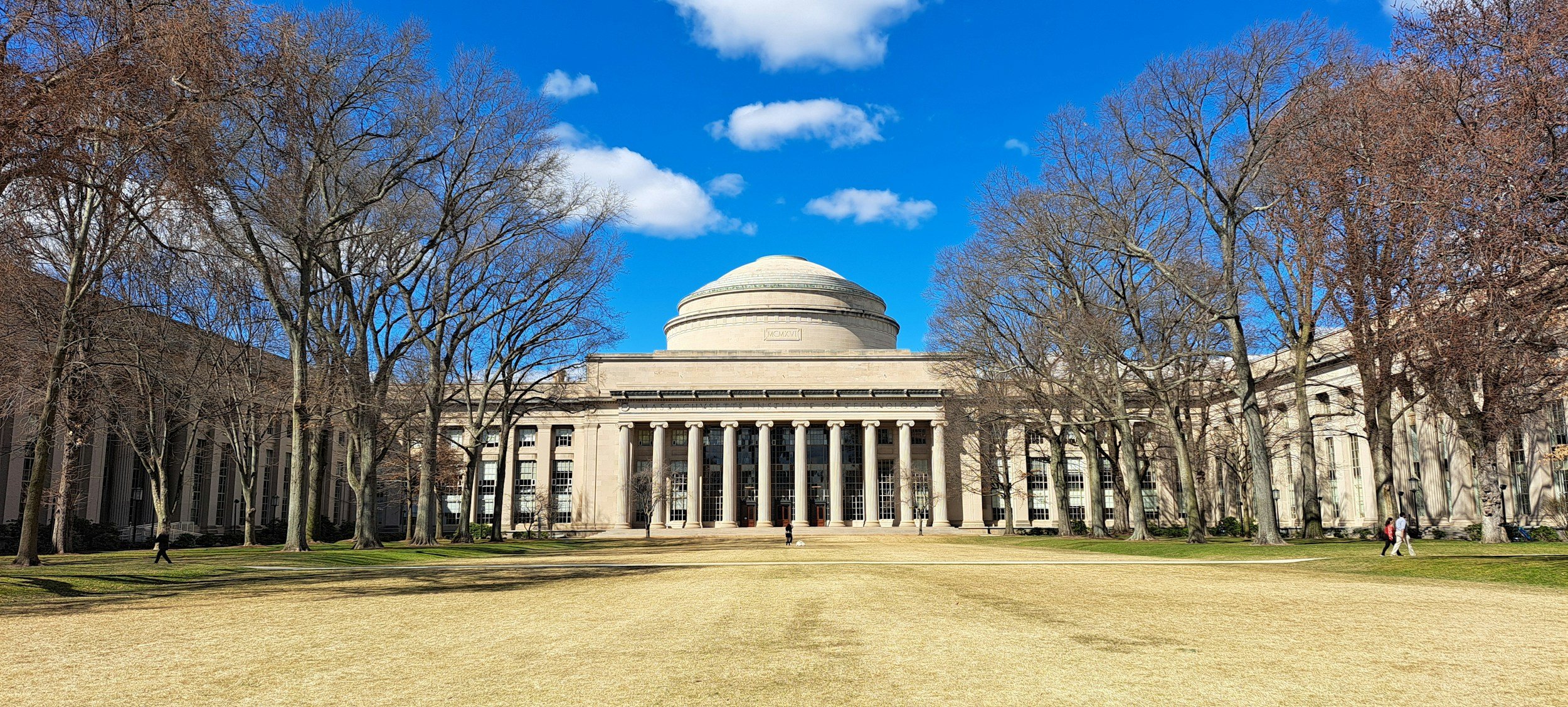
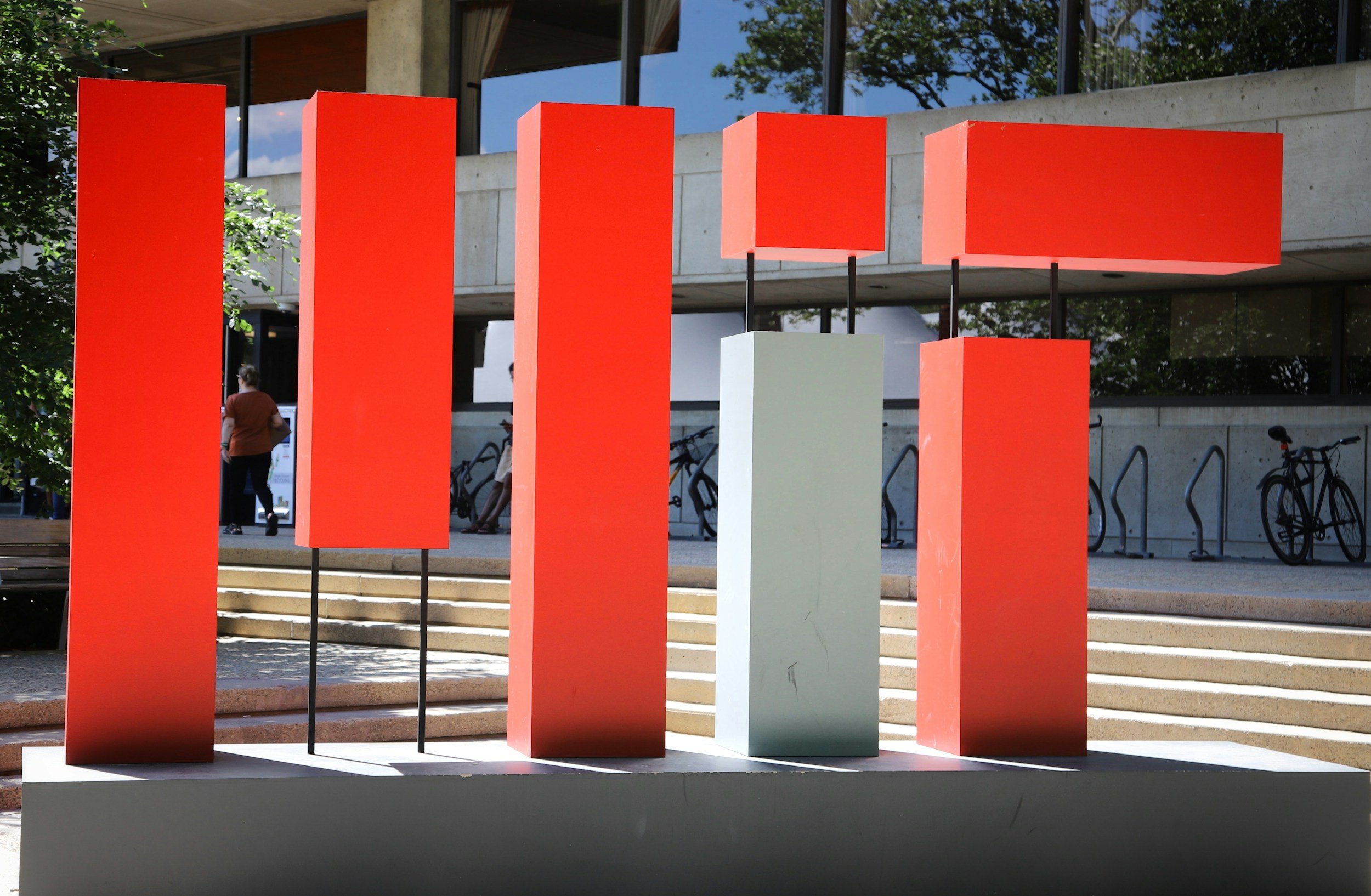
For students who want the most powerful large-scale undergraduate research machine in the country, MIT is the strongest answer. QS 2026 ranks MIT first globally in Physics and Astronomy. The degree offers both a Flexible track and a Focus track; the Focus track requires two terms of experimental physics and a senior thesis, making it the most rigorous structured option at any research university.
The Undergraduate Research Opportunities Program is the defining institutional feature. In the Class of 2025, 93 percent of undergraduates participated in UROP, with more than 3,200 students involved across the university and over $16.9 million allocated to paid positions. Fifty-eight percent of MIT faculty mentored undergraduate researchers. That is not a selective program reserved for a few top students: it is a functioning culture of undergraduate science. Acceptance is around 5 percent, and the average annual net cost is approximately $20,000.
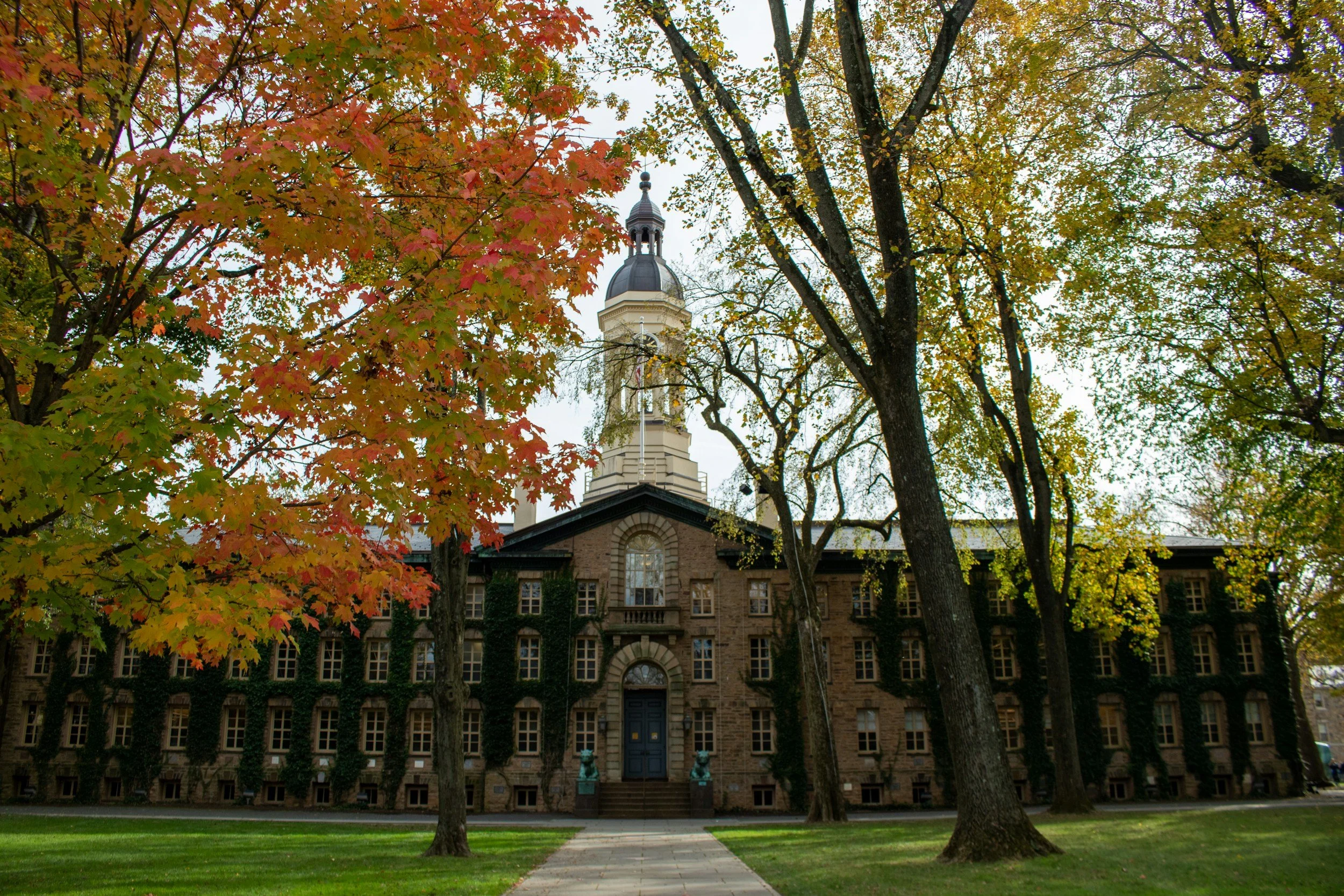
3. Princeton
Princeton is the strongest choice if you already know you want to pursue theoretical physics. Its undergraduate major is unusually research-intensive by design: every physics concentrator completes two junior papers and then a yearlong senior thesis. That structure forces early engagement with scientific literature, independent thinking, advising relationships, and open-ended questions that most undergraduates at other institutions never encounter until graduate school.
The department covers an exceptionally broad range of theoretical areas including high-energy theory, cosmology and gravity theory, mathematical physics, particle phenomenology, and condensed matter theory. Princeton is also arguably the best financial value among elite private research universities for physics: the average annual net cost in current data is around $6,100, reflecting one of the most aggressive need-based aid programs in the country. Acceptance is approximately 5 percent.
4. Harvard
Harvard offers what may be the broadest elite physics platform in the United States. QS 2026 places Harvard second globally in Physics and Astronomy, and the department frames the concentration explicitly as preparation not only for physics careers but also for biophysics, astrophysics, computer science, and engineering applications. Every undergraduate physics and ChemPhys concentrator has access to original research. Acceptance is around 4 percent, and the average annual net cost is approximately $19,000.
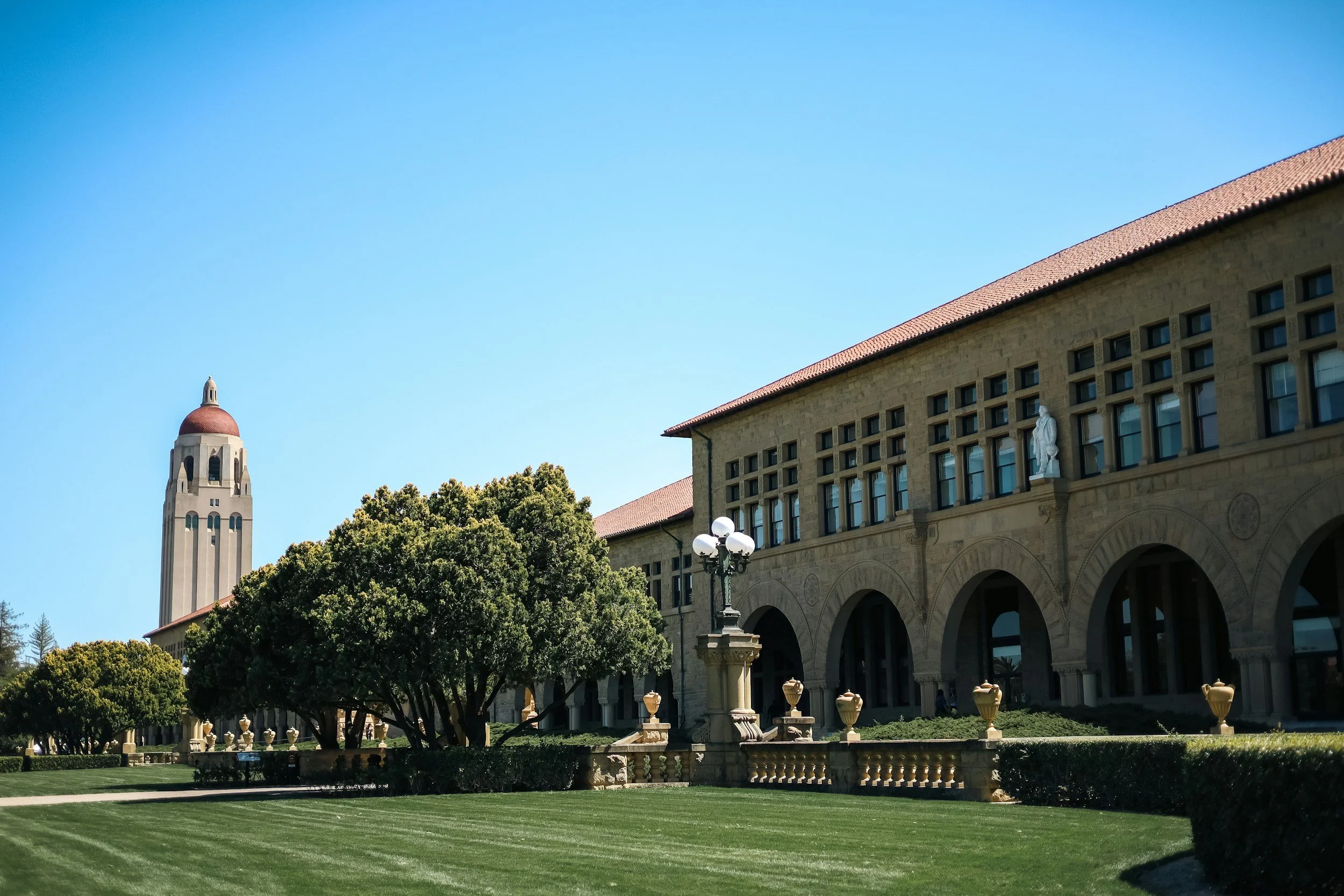
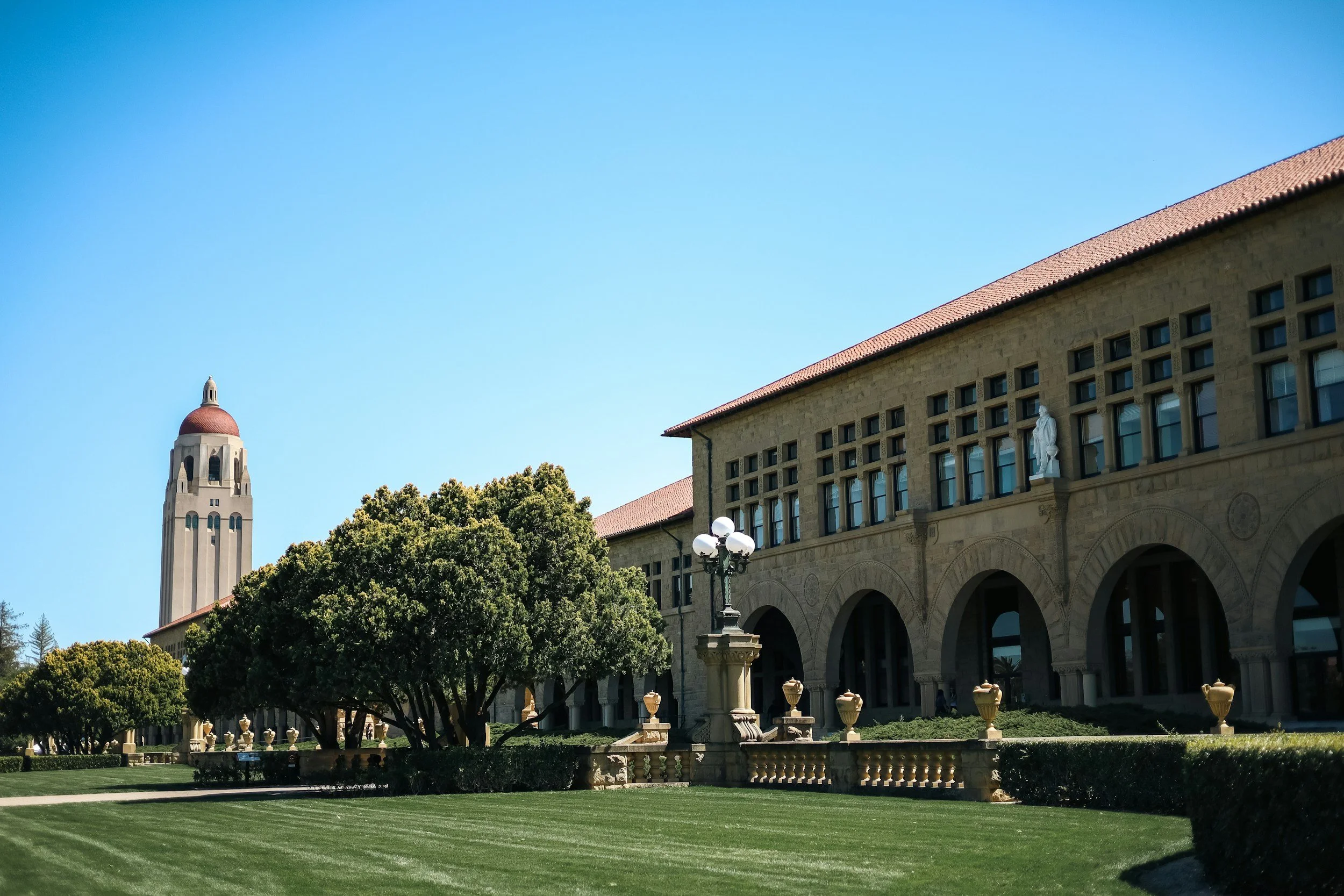
5. Stanford
Stanford is the strongest choice for students who want to keep their options open across physics, engineering, and life sciences while still working within a top-ranked physics department. The department spans AMO physics, biophysics, condensed matter, particle physics, and astrophysics and cosmology. A summer undergraduate research program across Physics, Applied Physics, and SLAC supported roughly 50 students in 2023, with approximately 40 percent of those participants being first-years, which means early access is a real and intentional part of the program.
Stanford's financial aid model is also excellent: no loans are expected to meet demonstrated need, and families below certain income thresholds pay little or no tuition. Acceptance is approximately 4 percent.
6. UC Berkeley
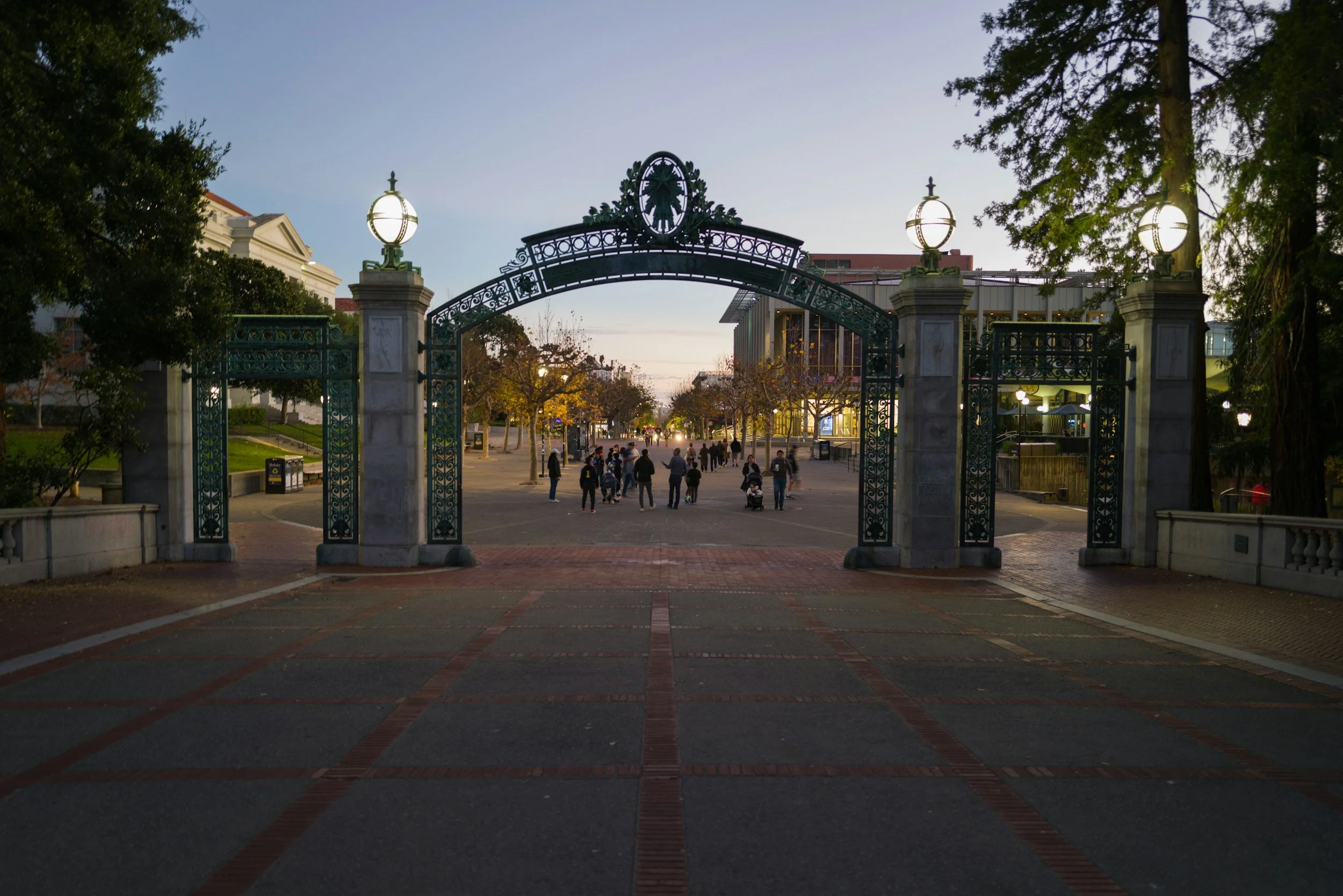
For students who want research-university prestige without a private-university price, Berkeley is the strongest case in the country. The undergraduate physics program explicitly connects interested majors with active research through multiple channels, including dedicated research programs and department research fairs. The department is one of the most research-active in the world, and the concentration of national labs and industry in the Bay Area makes professional exposure unusually accessible. Acceptance is around 11 percent for out-of-state applicants, and the average annual net cost is approximately $13,500.
7. UChicago
UChicago offers one of the most experiment-forward undergraduate physics curricula outside MIT. The department states explicitly that the major carries a strong emphasis on experiment, and students have access to the Enrico Fermi Institute, which supports major particle-physics research including active undergraduate work on detector upgrades for the High-Luminosity Large Hadron Collider. UChicago also maintains unusually visible professional development programming for physics students through recurring career events.
8. Cornell
Cornell emphasizes first-class research facilities and genuine undergraduate participation in world-leading research. The department has more than 40 active faculty members spanning theory and experiment, making it one of the better choices if you want a classic physics major with real depth on both sides. Cornell is especially compelling for students who want a traditional research-university experience with strong advising and a large, active departmental community.
9. Rice
Rice stands out among smaller research universities for the specialization flexibility it offers undergraduates. The department explicitly supports advising across general physics, applied physics, biological physics, and computational physics. Its relatively small size means you are more likely to find a direct and meaningful research relationship than at a larger program, while still operating inside a research-active department that spans most active areas of the field.
10. Harvey Mudd
Harvey Mudd represents a genuinely different model of physics excellence, one centered on undergraduate teaching and mentorship rather than research scale. The program offers options in standard physics, applied physics, astrophysics, and biophysics. All students complete and present substantial research, Clinic, or independent project work in both written and oral form. If your goal is deep mentorship, close faculty contact, and a program that treats undergraduate development as its primary mission rather than a secondary one, Harvey Mudd belongs at the top of your list alongside the R1 giants.
Best Programs by Subfield
The overall list above is useful as a first filter. But many serious physics students already have a sense of where their interests lie. Here is where to look if you have a specific subfield in mind.
Theoretical physics: Princeton. The required independent work structure and breadth of theoretical coverage make Princeton uniquely well-suited to students who want to think deeply about physics before they finish their bachelor's degree.
Experimental physics: MIT. The UROP culture, the Focus track's required laboratory sequence, and the density of active experimental groups across virtually every subfield give MIT an edge that is hard to match at this scale.
Astrophysics and cosmology: Caltech. Physics, astronomy, and astrophysics are unusually tightly integrated at Caltech, SURF provides paid early-entry research, and the astrophysics option is explicitly designed to prepare students for graduate research.
Condensed matter physics: University of Illinois Urbana-Champaign. Illinois is home to multiple major condensed-matter institutes including the Illinois Materials Research Science and Engineering Center and the Institute for Condensed Matter Theory, and the physics department reports more than $29 million in annual external research support. The ecosystem is unusually dense for undergraduates who want to enter this subfield.
Atomic, molecular, and optical physics: University of Colorado Boulder. The combination of the CU physics department and JILA, one of the defining AMO institutions in the world, gives undergraduates a direct line into Nobel-level research. JILA alumni include Nobel laureates Eric Cornell and John Hall, both of whom did their foundational work there.
Particle and high-energy physics: UChicago. The Enrico Fermi Institute and proximity to Fermilab make UChicago the strongest undergraduate home for high-energy work. Undergraduates there have independently contributed to ATLAS detector upgrades for the High-Luminosity LHC, which is a remarkable level of access for a bachelor's student.
Nuclear physics: Michigan State. MSU is the national leader here by a significant margin because of the Facility for Rare Isotope Beams, a $730 million Department of Energy user facility on campus that is the world's most powerful rare-isotope accelerator. Undergraduates can access summer internships, REU-linked programs, and accelerator science training that exist nowhere else at the undergraduate level in the United States.
Biophysics: Stanford. Stanford offers the strongest blend of a top physics department with broader applied-physics and SLAC infrastructure, giving biophysics students room to develop in multiple directions at once.
Computational physics and quantum information: Caltech. Undergraduate physics at Caltech sits directly adjacent to the Institute for Quantum Information and Matter, an NSF Physics Frontiers Center, and to an AWS Quantum Computing facility on campus. Students can pursue SURF research in quantum information systems and take dedicated coursework on quantum error correction and cryptography.
Applied and engineering physics: Stanford. Stanford's undergraduates can move between physics, engineering physics, applied physics, and SLAC-linked research with minimal institutional friction, and the engineering physics pathway is explicitly designed to train students at the intersection of both disciplines.
Two Things Most Rankings Get Wrong
The first is underrating public specialists. UIUC, CU Boulder, Michigan State, Maryland, Stony Brook, Washington, UC Santa Barbara, and Michigan are not consolation prizes. For students who already know what subfield they want to pursue, these programs can be more valuable than several of the elite private institutions on the overall list. A prestige-only ranking obscures this, and a good application strategy should not.
The second is conflating prestige with undergraduate access. A physics department where undergraduates are largely invisible until their senior year is a very different experience from one that builds research into the structure of the degree from the beginning. As you evaluate programs, ask specifically: can you get into a real research group by your second year? Does the curriculum require a thesis or offer a strong pathway to one? Is there a funded undergraduate research program, or are opportunities informal and variable?
The Bottom Line
The right "best" answer in physics depends on what you are actually optimizing for. Caltech is the best one-word answer for students who want the combination of elite prestige, small-school intimacy, and direct research access. MIT is the best answer for students who want the most powerful large-scale research pipeline. Princeton is the best answer for students already committed to theory. UIUC, CU Boulder, and Michigan State are the most important answers for students who know their subfield and want to be in exactly the right place for it.
Financial aid should also reorder your list. Princeton's average annual net cost of around $6,100, Caltech's no-loan full-need structure, and Berkeley's public-university value can make the financial reality look very different from what a prestige table suggests.
Work With a Cosmic Advisor
Physics is one of the most competitive and most consequential fields to apply to at the undergraduate level, and the application strategy for a student targeting Caltech versus UIUC versus Princeton looks very different in practice. Subfield interests, research background, transcript strength, and financial situation all shape which programs belong on your list and how to present yourself to them.
If you want to build a physics college list that actually reflects where you want to go and how to get there, schedule a free consultation with a college admissions expert today.