What Are The T10 or The Top 10 U.S. Colleges?

There is no universally agreed-upon definition of what constitutes the T10, but this list will suffice for practically everyone. We are excluding liberal arts colleges because they should not be compared to research universities. When these colleges release their supplemental essays, we will link our guide for them below. So stay tuned!
The Class of 2029 by the Numbers
The 2025 admissions cycle was the most selective on record at several of these schools. Overall admit rates ranged from roughly 3.78% at Caltech to 4.87% at UPenn, and yet those two numbers represent a difference of barely one percentage point. That should tell you something important: at every school on this list, you are in extraordinary competition regardless of where the rate sits. Understanding what each school actually looked for, and what the data reveals about the admitted class, is far more useful than fixating on raw odds.
Below you will find a school-by-school breakdown of the Class of 2029 cycle, covering admit rates, early round data, testing policies, what the Common Data Set identifies as the most heavily weighted factors, and what distinguishes each school from the others. Use this section to build an accurate picture of each institution before you decide where to invest your application energy.
Harvard University
Harvard admitted 2,003 students from 47,893 applicants for the Class of 2029, an overall admit rate of 4.18%. That applicant pool was about 10% larger than the most recent prior test-required cycle, driven in part by Harvard's reinstatement of standardized testing requirements starting with this class. Of those admitted, 1,675 enrolled.
Harvard no longer publicly breaks out its Restrictive Early Action rate for the Class of 2029 as a matter of updated disclosure policy. Based on the Class of 2028 cycle, the REA rate was 8.74%, and estimates for the Class of 2029 put it in a similar range, somewhere between 8% and 9%. Regular Decision admits faced odds closer to 2.7% to 2.8%. The REA advantage is real, but it is partly driven by recruited athletes, legacy applicants, and QuestBridge matches, so you should not treat it as a simple multiplier on your own odds.
On the academic profile side, the middle 50% SAT composite for enrolled students (from the most recent published Common Data Set) was approximately 1510 to 1580, with the Math section running 770 to 800. Harvard's ACT middle 50% was 34 to 36. Near-universal top-decile class rank characterizes the enrolled class. Harvard does not publish a GPA distribution in its CDS.
The factors Harvard marks as "Very Important" in its CDS include rigor of secondary school record, academic GPA, standardized test scores, the application essay, recommendations, character and personal qualities, extracurricular activities, and talent and ability. That is a long list, and it means Harvard is genuinely evaluating every dimension of your application rather than weighting a single factor above all others.
One practical note for families thinking about cost: Harvard expanded its financial aid program so that families earning under $200,000 pay no tuition. Roughly 45% of the Class of 2029 pays nothing. Harvard's endowment stood at $56.9 billion as of June 30, 2025, the largest in the world, and that resource base is what makes that commitment sustainable.
Yale University
Yale admitted 2,308 students from 50,227 applicants, for an overall admit rate of 4.59%. That rate was actually a slight improvement over the prior cycle's 3.87%, not because Yale became less selective, but because applications fell by about 12.6% after Yale reinstated testing requirements under a "test-flexible" policy. Fewer applicants with weaker testing profiles opted in, which compressed the pool. Yale's enrolled class size expanded by 100 seats to roughly 1,650 starting with the Class of 2029.
Yale's Single Choice Early Action admitted 728 students from 6,729 early applicants, a rate of 10.82%, plus 66 additional admits through QuestBridge. About 17% to 18% of early applicants were deferred. The Regular Decision pool produced approximately 1,580 admits at a rate of about 3.63% to 3.65%.
Yale's "test-flexible" policy is unique among the T10: you can satisfy the testing requirement with SAT or ACT scores, or with AP and IB scores, but if you choose the AP or IB route, you must submit all of your subject scores, not a curated selection. The middle 50% SAT composite for enrolled students was approximately 1500 to 1560, with sections running 740 to 780 on EBRW and 760 to 790 on Math. ACT middle 50% was 34 to 36. About 96% of enrolled first-years placed in the top decile of their high school class.
Yale's CDS marks rigor of secondary school record, academic GPA, the application essay, recommendations, extracurricular activities, talent and ability, and character and personal qualities as "Very Important." Notably, Yale does not mark standardized test scores as "Very Important" even under its reinstated testing policy, which reflects the test-flexible framing of the requirement.
Yale's endowment reached $44.1 billion as of June 30, 2025. The school meets 100% of demonstrated financial need and the average scholarship for Class of 2029 financial aid recipients was $75,854.
Princeton University
Princeton's Class of 2029 saw a record 42,303 applicants, and the university admitted approximately 4.4% of them, about 1,861 students total. Princeton has not announced official admit rates publicly since 2021; this figure was reconstructed from a faculty memo reported by The Daily Princetonian. The enrolled class of 1,408 was the final year of a planned four-year expansion toward a 1,425-student target.
Princeton no longer publishes Early Action breakdowns for the public. The last fully published figure, from the Class of 2024, showed a rate around 14% to 15%. Princeton has extended its test-optional policy through the 2025 to 2026 cycle, meaning the Class of 2030 can still apply without submitting scores.
For the enrolled Class of 2028 (the most recent Common Data Set), the middle 50% SAT composite was 1500 to 1560, with Math running 770 to 800. ACT middle 50% was 34 to 35. About 56% of enrolled students submitted SAT scores and 21% submitted ACT scores. The GPA distribution is unusually detailed: 68.5% of enrolled students had a 4.0 unweighted GPA, another 25.5% had a 3.75 to 3.99, and only about 4.4% were in the 3.50 to 3.74 range. If your unweighted GPA is below 3.75, you are in a small minority of the enrolled class and your application needs to make an exceptional contextual case.
Princeton's CDS marks rigor of secondary school record, academic GPA, standardized test scores, the application essay, and recommendations as "Very Important." Princeton has held the number one position in U.S. News national university rankings for 15 consecutive years. It is also the smallest of the T10 by undergraduate enrollment and arguably runs the most generous financial aid program in the Ivy League, with one-quarter of the Class of 2029 qualifying as Pell-eligible. Princeton's endowment was $36.4 billion as of June 30, 2025. A senior thesis is required of every undergraduate, which is worth knowing before you apply.
Stanford University
Stanford did not officially release an admit rate or total application count for the Class of 2029. The Stanford Daily reported that the university admitted roughly 150 more students than the prior cycle, and Stanford's November 2025 press release confirmed that 196 more first-year and transfer students enrolled. The implied overall admit rate, assuming applications held near the 57,000 to 60,000 range, is roughly 3.7% to 3.9%. The incoming enrolled class was approximately 1,890, up from 1,693 for the Class of 2028.
Stanford has not published its Restrictive Early Action rate since 2018. Regular Decision is not reported separately. Stanford reinstated its SAT and ACT requirement effective with the Class of 2030, meaning the Class of 2029 was the last cycle under test-optional policy. For the enrolled Class of 2028, the middle 50% SAT composite was 1510 to 1570, with Math running 770 to 800, and about 50% of enrolled students submitted SAT scores. The GPA distribution is stark: 73.3% of enrolled students had a 4.0 unweighted GPA, and 16.5% had a 3.75 to 3.99. If you are applying in a future cycle, standardized test scores will now be required, which is a meaningful shift.
Stanford's CDS marks rigor of secondary school record, class rank, academic GPA, the application essay, recommendations, extracurricular activities, talent and ability, and character and personal qualities as "Very Important." It lists standardized test scores only as "Considered," a designation that will likely change in future CDS filings now that testing is required again.
Stanford's endowment was $40.8 billion as of August 31, 2025. It maintains a 6:1 student-to-faculty ratio and a 98% first-year retention rate. Its strongest draw for many applicants is its relationship with the tech and entrepreneurship ecosystem in Silicon Valley, a connection that no other T10 school can replicate.
Massachusetts Institute of Technology (MIT)
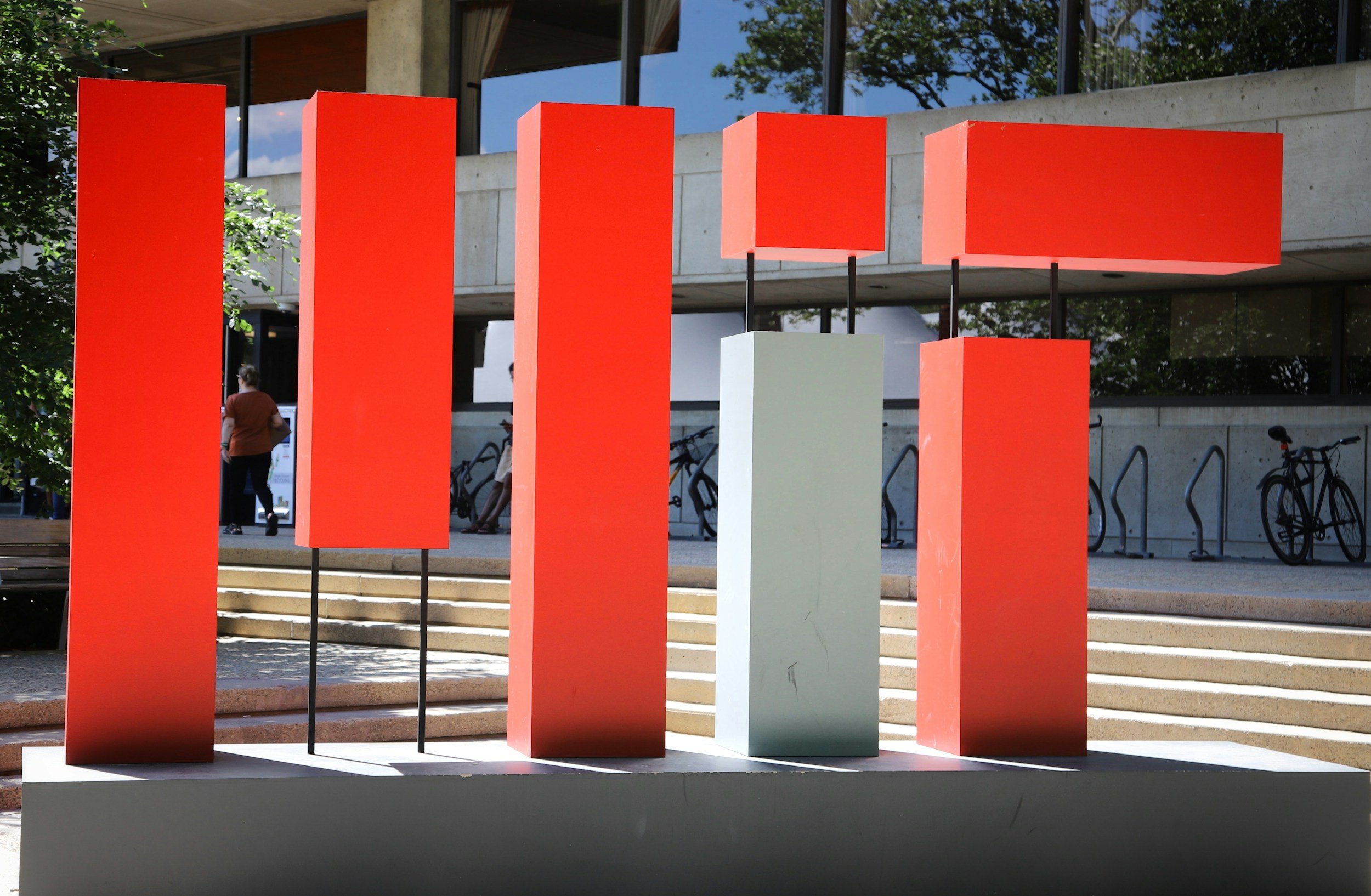
MIT admitted 1,324 students from 29,282 total applicants for the Class of 2029, an overall admit rate of approximately 4.52% to 4.56%. MIT's applicant pool is much smaller than Harvard's, Yale's, or Columbia's, which reflects a self-selection dynamic: students who apply to MIT know what they are getting into. The enrolled class target is approximately 1,100.
MIT's Early Action round admitted 721 students from 12,053 applicants, a rate of 5.98%. An additional 100 students were admitted through QuestBridge. About 7,486 EA applicants were deferred to Regular Decision, where approximately 603 additional students were admitted at a rate of roughly 3.50% to 3.56%.
MIT requires the SAT or ACT. The middle 50% SAT composite for enrolled students was 1520 to 1570, with the Math section running 780 to 800; the median Math score is a perfect 800. ACT middle 50% was 34 to 36. About 83% of enrolled students submitted SAT scores and 29% submitted ACT scores.
MIT's CDS "Very Important" factors are unusual among the T10: the only factor marked "Very Important" is character and personal qualities. Every other factor, including rigor of secondary school record, GPA, test scores, essays, recommendations, extracurriculars, and talent and ability, is marked as "Important." What this means in practice is that MIT is looking for genuine intellectual curiosity and collaborative character, not just perfect academic credentials. You will need a very high score floor to be competitive, but excellent scores alone will not get you admitted.
MIT phased out legacy preferences earlier than most of its peers. Families earning under $200,000 pay no tuition. Of the T10 schools, MIT may offer the most distinctive undergraduate culture: small, intensely collaborative, and unified by a hands-on research and engineering ethos.
California Institute of Technology (Caltech)
Caltech admitted 427 students from 11,285 applicants for the Class of 2029, an overall admit rate of 3.78%. That makes Caltech the most selective school on this list by raw admit rate for the Class of 2029. Caltech's class is also by far the smallest, with an enrolled class of approximately 230 to 235 students. That combination of extreme selectivity and tiny class size means the margins are unlike anything you will encounter anywhere else.
Caltech does not break out REA and Regular Decision rates separately but states publicly that both rounds produce admit rates under 5% with negligible differences between them. That is a departure from the pattern at most other T10 schools, where early round admit rates are two to three times the regular decision rate.
Caltech was test-blind for the Class of 2028 but reinstated SAT and ACT requirements starting with the Class of 2029, after research showed that 95% or more of applicants submitted scores anyway. Historical score ranges before the test-blind period ran 1540 to 1590 on the SAT and 35 to 36 on the ACT. About 86% of enrolled students placed in the top decile of their high school class.
Caltech's CDS "Very Important" factors include rigor of secondary school record, academic GPA, the application essay, recommendations, extracurricular activities, talent and ability, and character and personal qualities. Because Caltech is so heavily STEM-concentrated, the definition of meaningful extracurriculars skews sharply toward research, competition, and technical project work. If you are an aspiring scientist or engineer who wants to be surrounded by people with the same intensity, Caltech is the peer group you are looking for. Its JPL and NASA partnerships, per-capita Nobel Prize density, and honor code culture are institutional features that no other T10 school offers.
Columbia University
Columbia admitted 2,557 students from 59,616 applicants on Ivy Day for an initial admit rate of 4.29%. After extending waitlist offers and filling its largest-ever incoming class of 1,806 students, total admitted students reached 2,946, for a final admit rate of approximately 4.94%.
Columbia received 5,872 Early Decision applications, a 2.28% decrease from the prior cycle. It does not publicly disclose ED admit rates for the Class of 2029. For the Class of 2028, the ED admit rate was 13.23%. The Regular Decision admit rate for the Class of 2028 was 2.82%, and there is no reason to believe the Class of 2029 figure was significantly different.
Columbia is the only Ivy League school to have made its test-optional policy permanent. The middle 50% SAT composite for enrolled students was 1510 to 1560, with Math running 770 to 800, and ACT middle 50% was 34 to 36. About 94% of enrolled students placed in the top decile of their high school class.
Columbia's CDS marks rigor of secondary school record, academic GPA, standardized test scores, the application essay, recommendations, extracurricular activities, talent and ability, and character and personal qualities as "Very Important." Columbia is need-blind for U.S. citizens and meets 100% of demonstrated financial need without loans. Its endowment and New York City location combine to give students access to internship and cultural opportunities that no other T10 campus can match.
University of Pennsylvania
Penn admitted 3,530 students from a record 72,544 applicants for the Class of 2029, a record-low overall admit rate of 4.87%. The incoming enrolled class was 2,420. Penn was test-optional for the Class of 2029 cycle but reinstated its SAT and ACT requirement starting with the Class of 2030, and its total application pool dropped to roughly 61,000 for that subsequent cycle, a predictable consequence of reinstating testing.
Penn received a record approximately 9,500 Early Decision applications. The school does not officially disclose ED admit counts, but about 51% of the Class of 2029 was admitted through ED. The implied ED admit rate sits in the 13% to 14% range. Regular Decision odds were approximately 3.6%.
The middle 50% SAT for enrolled students ran 740 to 770 on EBRW and 770 to 800 on Math. ACT middle 50% was 34 to 36. About 52% of enrolled first-years reported a 4.0 GPA, and 93% placed in the top 10% of their high school class.
Penn's CDS marks rigor of secondary school record, academic GPA, the application essay, and recommendations as "Very Important." Penn moved standardized test scores from "Important" to "Considered" in its most recent CDS, reflecting its test-optional stance for that cycle. Penn's most distinctive undergraduate feature is Wharton, the nation's top undergraduate business program, but its interdisciplinary dual-degree programs, including Huntsman (international studies and business), M&T (engineering and business), Vagelos (chemistry and business), and NETS (networked systems), give Penn unusual flexibility for students whose interests cross traditional boundaries. Legacy admits accounted for 13.6% of the Class of 2029.
Duke University
Duke admitted 2,818 students from 58,712 applicants for the Class of 2029, a record-low overall admit rate of 4.8%. The enrolled class was 1,750, after Duke reopened its waitlist in late July to fill out the class.
Duke's Early Decision round received a record-high 6,627 applications and admitted 849 students, a record-low ED admit rate of 12.81%. An additional 113 students were admitted through QuestBridge. Regular Decision produced 1,953 admits from 53,223 applications, a record-low RD rate of 3.67%. About 220 of those RD admits had originally been deferred from ED.
Duke is test-optional and remains so through the Class of 2030. The middle 50% SAT for enrolled students ran 740 to 770 on EBRW and 760 to 800 on Math. ACT middle 50% was 34 to 35. About 92% of enrolled students placed in the top decile of their high school class.
Duke's CDS marks rigor of secondary school record, academic GPA, the application essay, recommendations, and talent and ability as "Very Important." The inclusion of talent and ability as a standalone top-tier factor reflects Duke's culture around athletics, performing arts, and demonstrated domain excellence, not just academic credentials. Duke has been diversifying its socioeconomic profile rapidly; 22% of the Class of 2028 qualified as Pell-eligible, double the rate of the Class of 2026. Its Pratt School of Engineering, Sanford School of Public Policy, and medical and research enterprise make it a genuinely competitive option for students interested in science, policy, and medicine in a residential setting.
University of Chicago
UChicago did not officially release its Class of 2029 admit rate or application totals. For context, the Class of 2028 saw 43,612 applicants and 1,955 admits, a rate of 4.48%. The incoming class is approximately 1,800 students. UChicago's yield rate is above 88%, the highest among non-HYS schools on this list, which reflects unusually strong self-selection: the students who commit to UChicago really want to be there.
UChicago offers a distinctive array of early application options: non-binding Early Action, two rounds of binding Early Decision (ED I and ED II), and a newer Summer Session Early Notification program that functions as an early admit pathway for students who commit before the fall semester. None of these rounds have publicly disclosed admit rates.
UChicago has been test-optional since 2018 and remains so. The middle 50% SAT composite for enrolled students was 1510 to 1560, with Math running 770 to 800. ACT middle 50% was 34 to 35. The GPA distribution is available from the CDS: 58.46% of enrolled students had a 4.0 GPA, 30.07% had a 3.75 to 3.99, and 6.85% were in the 3.50 to 3.74 range.
UChicago's CDS marks rigor of secondary school record, academic GPA, the application essay, recommendations, extracurricular activities, and character and personal qualities as "Very Important." The application essay matters enormously here. UChicago's supplemental essay prompts are famously unconventional, and the admissions office uses them as a genuine filter for intellectual personality. If you are the kind of student who loves thinking about strange questions for their own sake, UChicago rewards that. If you are applying primarily for prestige, that tends to show.
What the Class of 2029 Data Tells You About Applying
The most important strategic takeaway from the Class of 2029 cycle is that every T10 school is a reach for nearly every applicant. The marginal difference between a 3.78% admit rate and a 4.87% rate should not drive your application decisions. What should drive them is fit, strategy, and honest self-assessment.
Early Decision or binding Early Action is the most reliable statistical lever you have at schools where it is available. At Duke, Columbia, UPenn, and UChicago, Early Decision admit rates are roughly two to three times the Regular Decision rate. That is a real advantage, but it only benefits you if the school is genuinely your first choice, since you are committing to enroll if admitted. At REA schools like Harvard, Yale, Princeton, and Stanford, the early advantage is smaller and partly driven by recruited athletes and legacy applicants.
Testing policy is in flux across the T10 and will continue to shift. Harvard, MIT, and Caltech all require the SAT or ACT. Yale requires testing but accepts AP or IB scores in place of the SAT or ACT. Stanford reinstated testing for the Class of 2030. Princeton remains test-optional through the 2025 to 2026 cycle. Columbia has made test-optional permanent. Duke and UChicago remain test-optional. If you have strong scores, you should submit them at every test-optional school on this list: between 44% and 85% of enrolled students at these schools submitted scores, and the reported ranges sit at the 98th to 99th percentile.
GPA matters more than most students realize, particularly because the distribution at schools like Princeton and Stanford is so compressed. At Princeton, roughly 94% of enrolled students had a 3.75 or higher unweighted GPA. At Stanford, nearly 90% did. If you are below 3.75 unweighted, your application needs to make a compelling case that your transcript reflects the hardest available curriculum, an upward trend, or extraordinary circumstances, ideally all three.
Finally, remember that your goal is not simply to get into a T10 school. Your goal is to get into the right school for your interests, your learning style, and your career ambitions. A student who flourishes at MIT might struggle at UChicago's Core Curriculum. A student who would thrive in New York City might not be happy in Princeton, New Jersey. The data in this article is a map, not a verdict.
If you wish to learn which 3 types of extracurriculars are most effective for gaining admission to these schools, check out: The Only 3 Extracurriculars You Need to Get Into an Ivy League School.
If you need help writing a Common App essay for these schools, check out these two articles: Read This Before Writing That Sob Story and Common App Essays That Work.
If you want help getting into a T10 college, schedule a consultation with an admissions expert today.