Harvard VS Yale 2026
If you're choosing between Harvard and Yale, you're in an enviable position. Both institutions recruit the nation's highest-achieving students, deliver world-class liberal arts education within major research universities, and offer exceptional financial aid. But beneath the surface similarities lie meaningful structural differences that will shape your undergraduate experience in distinct ways.
This analysis draws exclusively on institutional research data, Common Data Sets, official admissions profiles, and campus resources to help you understand what actually differentiates these two elite institutions, not in terms of prestige (both are elite), but in how undergraduate life is organized, experienced, and remembered.
The Fundamental Cultural Divide: How You'll Live
The single most important difference between Harvard and Yale isn't academic, it's architectural and social. Both schools use residential systems, but they work completely differently.
Harvard's Two-Stage Model: You'll spend your first year in the Yard, living in dorms adjacent to Harvard's historic center with your entryway network and proctor. Then comes Housing Day in your second semester, Harvard's signature tradition, when you discover your House assignment for sophomore through senior year. You'll join one of 12 Houses (350-500 students each), led by Faculty Deans who live in the House. This creates distinct phases: broad first-year bonding in the Yard, then House-centered identity for your remaining three years.
Yale's Four-Year College Identity: Before you even arrive on campus, you're randomly assigned to one of 14 residential colleges (400-500 students each). That's your community from day one through graduation. Your college has its own dining hall, library, gym, studios, courtyards, and traditions. College heads and deans live in your college. You'll compete in intramurals for the Tyng Cup, attend college teas, grab late-night snacks at your college's buttery, and quickly become convinced (as Yale explicitly acknowledges) that your residential college is the best.
The cultural implication: Harvard gives you a two-stage residential identity; Yale bakes your primary social identity in from arrival and maintains it for four years.
Admissions: Virtually Identical Selectivity, Different Transparency
Both institutions are absurdly selective, but they report their composition differently.
Harvard (Class of 2029):
47,893 applicants
2,003 admitted (4.2% admit rate)
1,675 enrolled
20% first-generation, 21% Pell-eligible
Legacy share: not publicly specified in class profile
Test scores (enrolled, Fall 2024): SAT EBRW 740-780, Math 770-800; ACT 34-36
54% submitted SAT, 19% submitted ACT
Yale (Class of 2029:
Total applicant figures not published
Admitted student figures not published
Admission rate: 4.8%
1,640 enrolled
18% first-generation, 23% Pell recipients
11% legacy affiliation (uniquely published)
Test scores (enrolled, Fall 2024): SAT composite 1480-1560 (EBRW 730-780, Math 740-790); ACT 33-35
61% submitted SAT, 25% submitted ACT
The methodological note: Harvard publishes race/ethnicity data for U.S. citizens/permanent residents who self-reported (students can select multiple categories), while Yale uses IPEDS categories that count multi-race students once. Direct percentage comparisons require caution.
For applicants: Both schools are selecting students who thrive in environments of intense credential density. The difference isn't who gets in, it's what each institution chooses to make public about that composition.
What You'll Actually Study
The "Harvard is preprofessional, Yale is intellectual" stereotype needs nuance. Both have Economics and Computer Science dominance, but with different supporting casts.
Harvard's degree concentrations (AY 2024-25):
Economics: 278 degrees (largest)
Computer Science: 224
Government: 141
Applied Mathematics: 137
Neuroscience: 129
By division: Social Sciences (771) and Sciences (561) dominate, with a large Engineering & Applied Sciences block (459) and smaller Arts & Humanities (229)
Yale's most popular majors (Fall 2024 juniors/seniors):
Economics: 11%
History: 7%
Computer Science: 6%
Political Science: 6%
Global Affairs: 4%
The pattern: Both schools are anchored by Economics and CS. Harvard shows a particularly large applied sciences/engineering footprint alongside social sciences. Yale more explicitly foregrounds history/politics/global affairs among its top-tier majors.
If you're a STEM student targeting elite CS or engineering programs, Harvard's recent degree data suggests a larger peer cohort in those fields. If you're drawn to policy, international relations, or political science, Yale's visible emphasis on Global Affairs and Political Science alongside Economics may signal a slightly different intellectual center of gravity.
Teaching Style: Small Seminars vs. Very Small Seminars
Both schools deliver primarily small-group instruction, but the distributions differ in subtle, meaningful ways.
Class section sizes (Fall 2024, undergraduate-enrolled sections):
Harvard:
2-9 students: 465 sections (~43% of all sections)
10-19 students: 304 sections (~28%)
100+ students: 52 sections (~5%)
Student-to-faculty ratio: 7:1
Yale:
2-9 students: 342 sections (~26%)
10-19 students: 622 sections (~47%)
100+ students: 45 sections (~3%)
Student-to-faculty ratio: 5:1
What this means: At Harvard, you're statistically more likely to encounter extremely small tutorial-style sections (2-9 students) as a major component of your education. At Yale, the modal classroom experience concentrates more in classic seminar size (10-19 students). Yale's lower student-to-faculty ratio (5:1 vs 7:1) and its residential college structure, where heads and deans live and dine with students, means faculty interaction happens both in seminars and in daily residential life, not just office hours.
The Intellectual Climate Question
Academic competitiveness at both schools is fierce, but manifests differently in campus discourse.
Harvard's recent senior survey reporting describes undergraduates as "sharply divided" over campus protests and major controversies. Harvard College-adjacent analysis notes that only about one-third of a recent graduating class felt comfortable expressing controversial opinions in class. The climate around speech, protest, and political identity has been particularly salient in Harvard's recent undergraduate discourse.
Yale structures faculty-student interaction differently: because residential college heads and deans live in the colleges and participate in daily life (teas, dinners, study breaks), intellectual engagement isn't confined to classroom performance. The architecture creates more varied contexts for faculty-student interaction.
For applicants: If you value environments where you can test controversial ideas in seminar without social cost, investigate how each campus currently handles intellectual disagreement. If you prefer faculty relationships that extend beyond transactional office-hour visits, Yale's embedded residential model may offer structural advantages.
Career Outcomes: Similar Destinations, Different Reporting
Both institutions send graduates to elite first destinations. The difference is in public reporting transparency.
Yale (Class of 2024 official first-destination report):
Knowledge rate: 91.4%
77.2% employed
19.2% attending graduate/professional school immediately
2.0% independent research
0.7% military service
6.5% seeking opportunities six months post-graduation
Key trajectory note: Among employed graduates, 66.8% indicated plans to pursue graduate school within five years
Harvard (based on student survey reporting, Class of 2024):
58% immediately enter workforce (surveyed seniors)
~21% pursue graduate/professional school immediately
Finance, tech, and consulting remain the three most popular industries
The methodological note: Yale publishes a formal Yale College first-destination report with standardized metrics. Harvard's most detailed undergraduate outcomes picture is reconstructed through student survey reporting captured in campus media. This is a difference in public reporting format, not necessarily in actual outcomes.
For applicants: Both schools feed into the same elite early-career pipelines. If transparency and data-driven career planning matter to you, Yale's formal outcome reporting provides more granular sector/function breakdowns in a single official document.
Mental Health Infrastructure: Similar Resources, Different Models
Both institutions offer 24/7 urgent mental health access and extensive counseling resources. The architectural difference matters.
Harvard: Same-business-day initial consult appointments, urgent care pathways, and a 24/7 phone support line (CAMHS Cares). Student reporting suggests that despite abundant resources, some students experience navigation and trust barriers, "resource availability" and "felt accessibility" can diverge.
Yale: 24/7 on-call clinician access through Yale Health's mental health counseling department, plus residential-college-embedded wellness specialists through YC³ (Community Wellness Specialists who meet students in their colleges as part of the integrated support team alongside heads, deans, and peer counselors).
The difference: Yale explicitly embeds wellness infrastructure into the residential college system, creating multiple entry points within your daily living environment. Harvard's resources are similarly extensive but more centralized.
Both systems face demand pressures, but if you value wellness support that's integrated into where you already eat, sleep, and socialize, Yale's YC³ model offers structural integration Harvard doesn't replicate.
Prestige Subcultures: Final Clubs vs. Secret Societies
Neither of these fully defines undergraduate life, but they shape status narratives differently.
Harvard: Social prestige historically centered on final clubs and unrecognized single-gender social organizations. Harvard announced in 2020 it would no longer enforce sanctions related to these organizations, formally shifting (though not eliminating) the final clubs' relationship to official college life.
Yale: Social prestige narratives often involve secret societies, long-standing, socially meaningful selective organizations that many undergraduates know only fragments about. These function as a different kind of mythology.
For applicants: If you're sensitive to exclusionary social hierarchies, both exist at both schools. The difference is in dominant mythologies: Harvard's discourse centers on final clubs, Yale's on secret societies. Neither institution has eliminated prestige-seeking; they've just channeled it through different historical structures.
Financial Aid: Both Generous, Slightly Different Structures
Harvard (Class of 2029):
45% attending tuition-free
26% attending for free (full cost of attendance)
Typical scholarship-holder example provided in class profile
Yale (enrolled first-year class):
54% receive need-based aid
Both schools meet 100% of demonstrated need. The reported percentages differ partly because of what's being measured (tuition-free vs. need-based aid recipients). For families making under $85,000, both schools typically cover full cost of attendance. The practical takeaway: run the net price calculator at both schools. The differences for your specific family income are likely minor.
Geography and Campus Feel
Harvard: Urban-adjacent collegiate core in Cambridge with explicit marketing around proximity to Boston (subway ride to museums, neighborhoods, professional opportunities). The Yard anchors first-year life, then Houses distribute along the Charles River and into Cambridge.
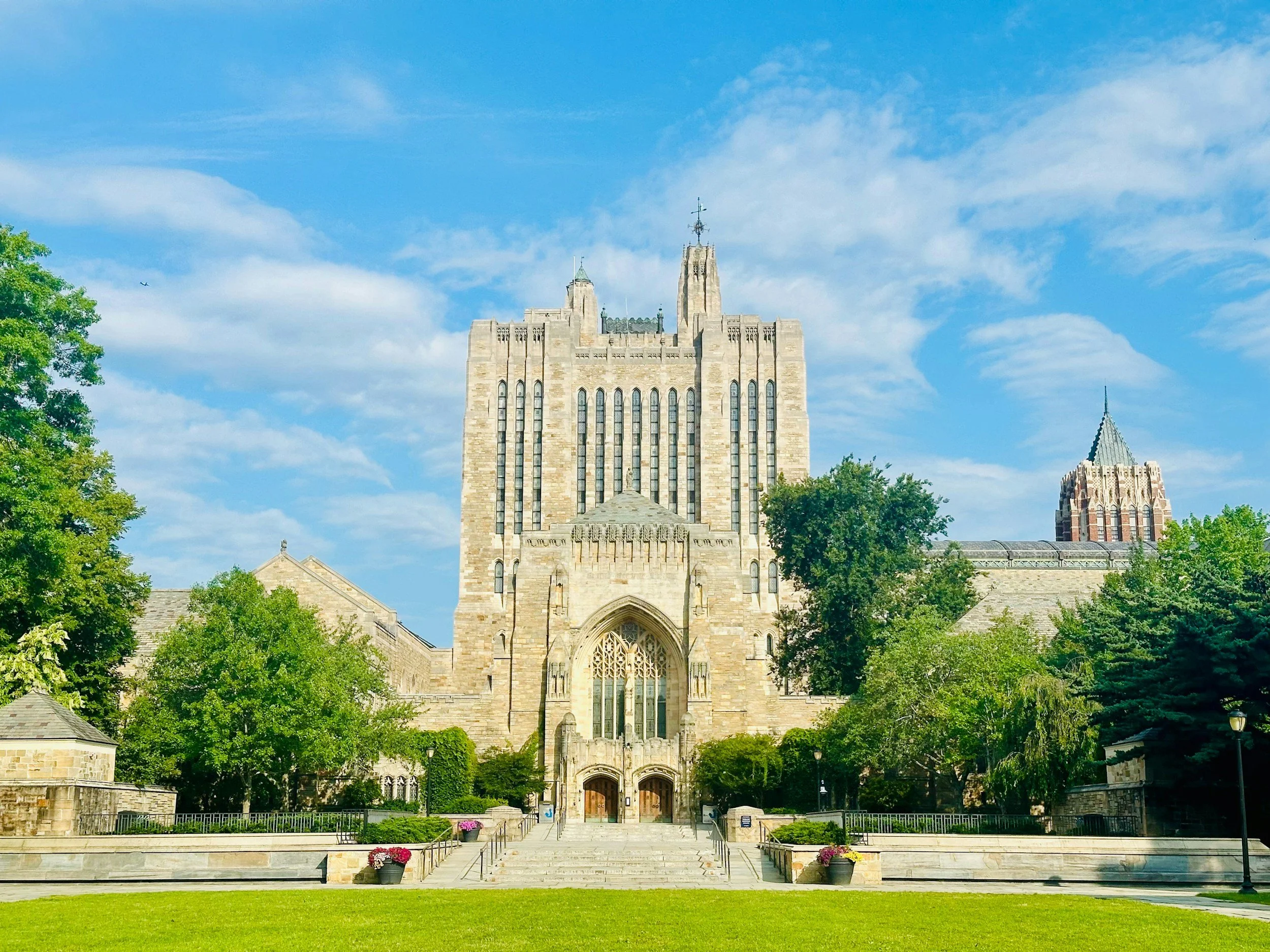
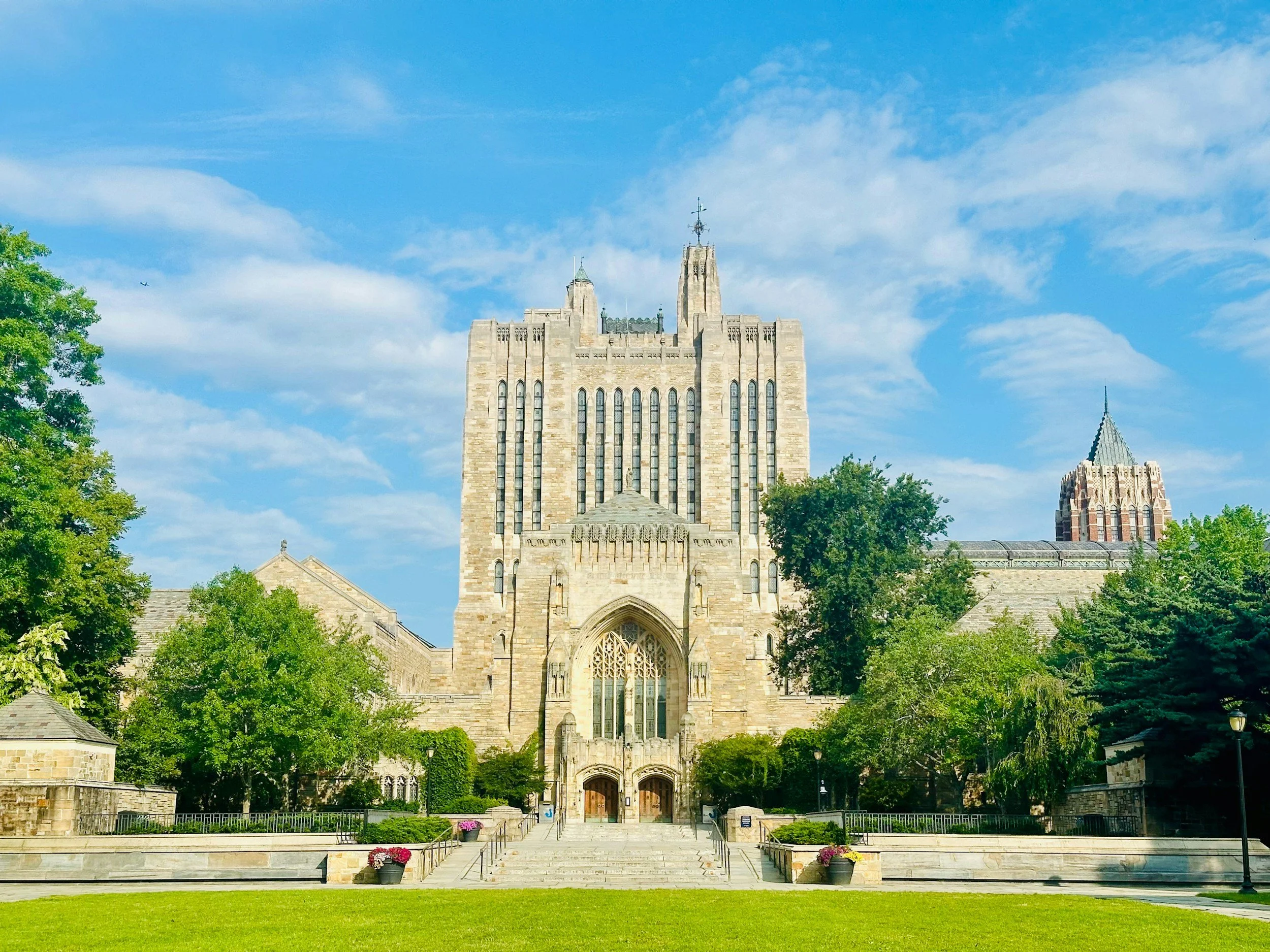
Yale: Compact collegiate-gothic campus centered in New Haven. Residential colleges organized around courtyards with extensive in-college facilities (dining halls, libraries, gyms, studios). The architectural narrative emphasizes "magnificent architecture" and colleges as self-contained microcosms.
For applicants: Harvard sells Cambridge/Boston access as an extension of undergraduate life. Yale sells residential college architecture and in-college community as the heart of daily experience. If you want regular access to a major city's professional/cultural ecosystem, Harvard's geography offers more. If you prefer a self-contained campus where most of life happens within your residential college's courtyard, Yale's design delivers that more fully.
Test Policies: Subtle But Real Differences
Harvard: SAT/ACT required, but in exceptional cases where tests are inaccessible, alternate exams (AP/IB/A-levels) can satisfy the requirement.
Yale: Structured "test-flexible" policy, SAT/ACT or approved alternatives (AP/IB).
For applicants: Both schools expect strong standardized testing from most admits. If you have legitimate barriers to SAT/ACT access, Yale's test-flexible framing may be slightly more accommodating. For the vast majority of competitive applicants, this distinction won't matter, you'll submit strong SAT/ACT scores regardless.
Decision Framework: Which School Fits Your Priorities?
Choose Harvard if you:
Want exposure to a very large applied sciences/engineering peer cohort
Value extremely small tutorial-style sections (2-9 students) as a major component of coursework
Prefer a two-stage residential identity (Yard immersion, then House assignment)
Want regular access to Boston/Cambridge professional and cultural opportunities
Prioritize institutions with massive recent degree counts in CS and applied math
Choose Yale if you:
Want a residential college identity from day one that persists for four years
Value faculty interaction that happens in dining halls and college teas, not just seminars
Prefer a lower student-to-faculty ratio (5:1) and higher concentration of classic seminar sizes (10-19)
Want transparent, published first-destination outcome reporting with detailed breakdowns
Value embedded wellness infrastructure integrated into your residential community
Are drawn to visible emphasis on history/politics/global affairs alongside economics and CS
Both schools offer if you:
Are among the nation's highest-achieving students and can thrive in credential-dense environments
Want need-based financial aid that typically covers full cost for families under $85,000
Seek elite postgraduate outcomes in finance/tech/consulting/graduate school
Value small-group liberal arts instruction within a major research university
The Bottom Line for Cosmic Clients
If you're one of our clients, a highly driven STEM student targeting elite universities, here's the tactical takeaway:
Both Harvard and Yale will prepare you superbly for top graduate programs, elite industry roles, and competitive fellowships. The "wrong choice" between them is nearly impossible. The right choice depends on which structural features matter most to your undergraduate priorities:
Social architecture: Two-stage identity shift (Harvard) vs. four-year embedded college community (Yale)
Faculty interaction: High-touch seminars plus House Faculty Deans (Harvard) vs. lower student-faculty ratio plus residential-college-embedded heads/deans (Yale)
Academic peer cohort: Particularly large engineering/applied sciences presence (Harvard) vs. more visible politics/history/global affairs axis (Yale)
Campus geography: Cambridge/Boston urban adjacency (Harvard) vs. self-contained collegiate-gothic campus (Yale)
The selectivity, academic rigor, postgraduate outcomes, and financial aid are essentially equivalent. Choose based on which daily-life structure will make you happiest for four years, because at this level, happiness and productivity are inseparable.
If you want to learn what you can do right now to optimize your application for either Harvard or Yale, schedule a free consultation with an admissions expert today.