How Hard Is It To Get Into MIT
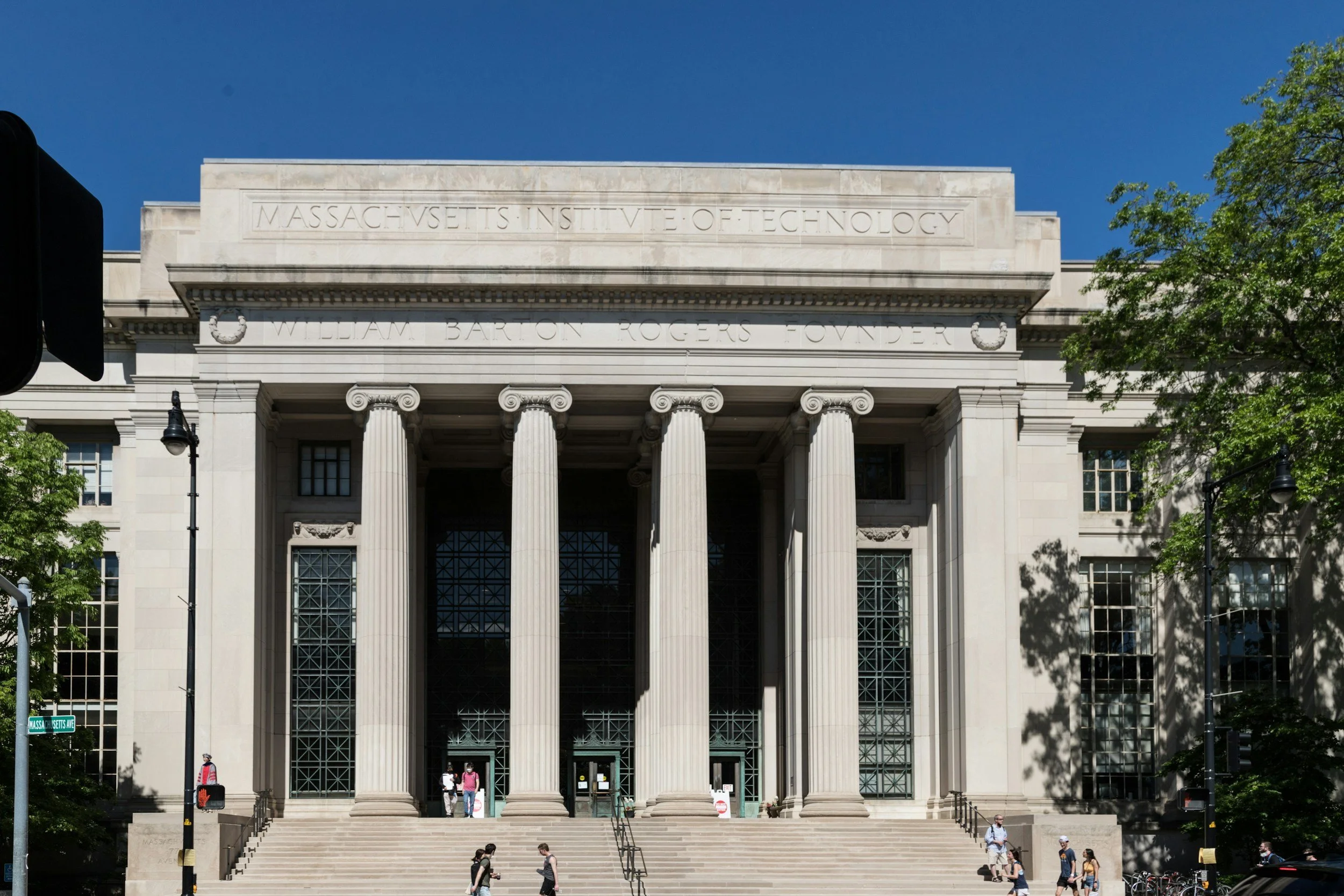
For the Class of 2030, MIT received 28,349 applications and admitted 1,299 students, an acceptance rate of 4.58 percent. Early action produced 655 of those offers out of 11,883 applicants, a rate of 5.51 percent. Regular action (what MIT calls regular decision) added the other 644, a rate closer to 3.9 percent. The overall rate has now held between roughly 4.5 and 4.7 percent for four consecutive cycles, and the number of offers has barely moved, staying near 1,300 whether the applicant pool grew or shrank by thousands.
That is the size of the field. It tells you nothing about what the students who cleared it actually did, and that is the question families are really asking when they ask how hard MIT is.
What The 4.58 Percent Is Actually Measuring
Every published acceptance rate divides admitted students by everyone who applied. At most colleges that denominator holds a wide range of preparation. At MIT it does not. MIT was among the first selective universities to bring back its SAT and ACT requirement after the pandemic, and the middle half of enrolled students score between 1530 and 1580 on the SAT or between 35 and 36 on the ACT. Applicants know this before they apply, and the pool filters itself accordingly.
So the working odds for a student with a 4.0 and a 1560 are not 4.58 percent measured against American high school seniors. They are the odds inside a pool of tens of thousands of students who also have a 4.0 and a 1560. At that point, grades and scores no longer separate anyone. They qualify you to be read.
The early action results say the same thing from another angle. Of the 11,883 students who applied early for the Class of 2030, MIT denied 2,703 outright, deferred 7,738 into the regular pool, and saw another 787 withdraw. Roughly two thirds of the early round was deferred rather than rejected, which means most early applicants get a second full read in March. MIT's early action is non-binding and non-restrictive, so applying early costs you nothing anywhere else. For a student who is genuinely ready by November, it is close to a free second look.
Mind And Hand
MIT's motto, mens et manus, translates to mind and hand, and it is the single most useful thing to understand about the Institute's preferences. MIT is skeptical of applicants who only think about problems on paper. It wants students who build.
Three parts of the application exist to test this. The optional Maker Portfolio lets you submit projects you engineered yourself, and admissions officers do look at them closely, including the process rather than only the finished object. The evaluative interview invites you to bring a physical artifact, something you made, as a starting point for a conversation that tends to run intellectual and open-ended rather than technical. And MIT asks for one recommendation from a STEM teacher and one from a humanities teacher, which is not a request for a well-rounded student so much as a check on whether you understand science in its historical and philosophical context.
The Level Of Achievement That Clears The Bar
Admitted MIT applications differ enormously from one another in subject and personality. Underneath that variation they share a shape, and the shape is more demanding than most families expect. Seven dimensions describe it.
Academics Past The End Of The High School Sequence
Finishing AP Calculus BC is not acceleration at this level. It is the baseline that a competitive MIT applicant reaches early, usually by tenth or eleventh grade, and then moves past into multivariable calculus, linear algebra, differential equations, and in strong cases into proof-based college coursework such as abstract algebra or real analysis. The same pattern holds in science, where AP Physics C and AP Chemistry lead into further university-level work rather than ending the sequence.
When a high school runs out of courses, admitted students go elsewhere for them, to a community college, a nearby four-year university, or an accredited online program. Taking those courses often costs a student weighted grade points compared to loading up on lower-rigor Advanced Placement classes. Admitted applicants take the hit, because MIT reads course rigor against what was actually available to you and is unmoved by a padded weighted average.
Research That Produces Something Outside The School
Joining a lab is common. Producing output is not. The applications that succeed at MIT show research that reached an audience beyond the teacher who supervised it, in the form of a published or submitted paper, a conference poster or presentation, a patent filing, or a placement at a science fair that carries real judging weight, such as a regional feeder to the international fair, the Junior Science and Humanities Symposium, or Regeneron.
This normally requires two or three years in one line of inquiry rather than a summer in a lab. It also requires the student to find the placement, which for most families means cold outreach to professors, since selective summer research programs alone cannot supply enough seats. Programs such as the Summer Science Program, RSI, Simons, and university-run summer internships appear constantly in admitted files, and their own acceptance rates are comparable to MIT's.
Evidence That You Build Things
Admitted applications almost always contain physical artifacts. Robots, drones, instruments, prototypes, devices, working software that other people use. This is where mens et manus becomes concrete, and it is the dimension most often missing from an otherwise strong theoretical profile. A student whose entire record is olympiad scores and problem sets reads to MIT as incomplete in a way that the same student would not at a peer institution.
Standing In A National Competition Ladder
Competitive achievement at MIT's level means climbing a national ladder rather than collecting participation. In mathematics that means qualifying for the American Invitational Mathematics Examination and pushing toward the USA Mathematical Olympiad. In physics it means the F equals ma exam, then the USAPhO exam, and for the strongest applicants selection to the national team that trains for the international olympiad. In computing it means reaching the Gold or Platinum divisions of the USA Computing Olympiad. In biology, chemistry, and linguistics the equivalent national exams and invitational rounds serve the same function. In engineering it means world-level robotics competition. One ladder climbed seriously does more than five entered casually.
Leadership Measured In Other People
Titles carry no weight on their own. Every leadership line in an admitted application answers the question of what changed for other people because that student held the role. Members added to a club, students trained to qualify for a national exam, research projects mentored, funds raised and spent on a specific need, a program founded where none existed. The numbers are what make the claim legible to an admissions officer, and they should describe outcomes for others rather than hours logged by the applicant.
Years, Not Semesters
The commitments in an admitted file run long. The central activity typically absorbs ten to fifteen hours a week, forty or more weeks a year, sustained for three or four years, with two or three secondary commitments running alongside it year-round. Aggregate school-year loads of thirty hours a week outside class are ordinary in this population.
This is the dimension that cannot be manufactured late. A record assembled in eleventh and twelfth grade shows its seams no matter how impressive the individual entries are, because the hours and the progression are visible on the activities list.
A Serious Life Outside The Specialty
Admitted students are rarely monomaniacs on paper. Alongside the technical record there is usually a sustained pursuit with nothing to do with it, a varsity sport played for four years, a chair in a competitive orchestra, a language studied to fluency, a craft practiced seriously. MIT lists balancing hard work with downtime among its stated criteria, and the pattern in admitted files suggests it is applied rather than decorative.
What Test Scores Actually Do
Strong scores are necessary and they are not the story. A very large number of rejected MIT applicants hold scores at or above the median of the admitted class. Scores establish that you can handle the academic environment, and then the decision turns entirely on the seven dimensions above. Conversely, a score slightly below the median does not end an application whose research, building, competition, and leadership record is genuinely at this level.
How To Read This Standard Honestly
You do not need to be exceptional on all seven dimensions. You need to be strong on most of them, exceptional on at least one, and coherent across all of them, meaning the courses, the research, the projects, the competitions, and the leadership all point in a recognizable direction and describe a person an admissions officer can picture in a lab and a dorm.
Coherence is what most near-miss applications lack. They contain impressive individual entries that add up to nothing in particular. The files that succeed read as one long argument.
Building Toward It On A Four Year Timeline
Ninth and tenth grade are for acceleration and entry. Get onto the fastest available math track and plan where you will go when the high school runs out. Enter the first rung of the competition ladder in your field. Join the robotics or research team you intend to be leading three years later. Start the outreach that produces a research placement, because the reply rate is low and the process is slow.
Eleventh grade is where output happens. Research turns into something submittable. Competition results move up a division. Leadership acquires numbers. Applications to selective summer programs are due during this year, and those programs supply a large share of what admitted applications rest on.
Twelfth grade is execution. The summer research program or internship happens, the early action application goes in by November, the Maker Portfolio gets assembled, and the interview gets prepared with an artifact worth discussing.
Working With Cosmic On Your MIT Application
Cosmic has guided over a dozen students through MIT applications, and our consultants hold PhDs in the fields these students are trying to enter. That matters at MIT specifically, because the work that distinguishes an application is technical. Judging whether a research direction is publishable, whether a project belongs in a Maker Portfolio, or whether a course sequence reads as genuine rigor takes someone who has done the work.
We start by mapping where a student stands against the standard described in this article, then build the missing pieces in the order they have to be built. That covers course sequencing, competition selection, research placement and professor outreach, summer program applications, the activities list, the essays, the Maker Portfolio, and interview preparation.
If MIT is your goal, whether you are entering ninth grade or submitting in November, schedule a complimentary consultation with an admissions expert today.