RSI vs MIT PRIMES: Which One Is Right for You
Both programs run through MIT. Both are free. Both put you next to a working researcher on a problem nobody has solved. Past that, they have almost nothing in common.
RSI compresses everything into six weeks the summer before senior year and hands you a project when you arrive. MIT PRIMES stretches across a full calendar year, runs alongside your school schedule, and asks you to carry one problem for twelve months. They also select on different evidence. A profile that makes you a strong RSI candidate can be irrelevant to PRIMES, and the reverse is just as true.
Here is what each program looks like from the inside, what each admissions process actually rewards, and how to tell which one fits you.
Inside RSI
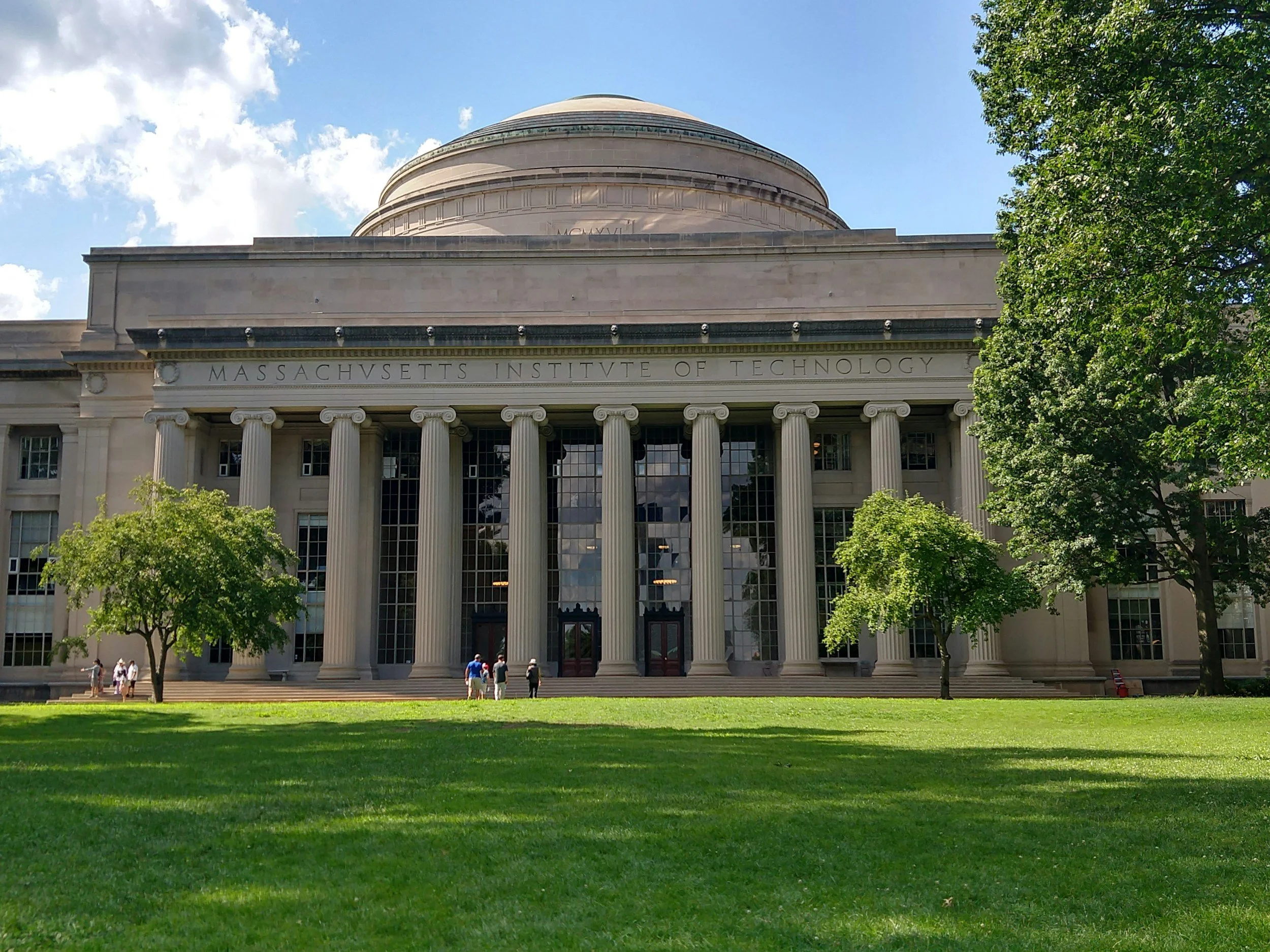
The Research Science Institute is run by the Center for Excellence in Education and sponsored in collaboration with MIT, which hosts it on campus in Cambridge. CEE selects 100 students each summer. The 2024 session drew its cohort from 38 states and 18 countries, which gives you a sense of the geographic spread. The program runs six weeks and is cost free once you are admitted, covering coursework, housing, and dining.
Your first week is classroom time. You sit for seminars covering current research in biology, chemistry, engineering, mathematics, physics, and the humanities, taught by accomplished professors. You get access to MIT's computing resources and to the practical tooling you will need for the rest of the summer, meaning how to find current publications in a field, how to model a complex system, how to build a scientific paper, and how to give a conference style talk. The evening lecture series starts that same week and continues throughout, and it regularly puts Nobel laureates and technology founders in front of you in a room small enough to ask questions.
At the end of week one your mentor assigns your project. This is worth sitting with, because it is the single structural fact that surprises applicants most. You do not bring a project to RSI, and CEE states plainly that continuation of a previous research project is not permitted. Mentors and projects are matched to the interests and background you described in your application, so what you wrote in the fall shapes what you spend the summer on, but the specific question is chosen for you. Many students start reading the assigned papers over that first weekend.
You join your research placement at the start of week two and spend weeks two through five doing guided research at what CEE describes as business hours plus. The work happens off campus as often as on it, in university laboratories, hospitals, and corporate research facilities, under mentors who are working scientists, engineers, and researchers. Week six is output. Every participant writes a paper and delivers an oral presentation at a level appropriate for an academic conference, and an outside panel of Boston area academic and corporate scientists selects five papers and five presentations for special commendation.
The summer is not only lab hours. Past sessions have included field trips around Boston, the July 4th celebration on the Esplanade, and a weekend in New England, and program staff shape the activity calendar around each cohort.
Two things follow you out. The RSI Director writes a college recommendation letter for every student in the program. And the alumni network runs past 3,000 people across every US state and 61 nations, concentrated at colleges in Boston, New York, San Francisco, Los Angeles, Chicago, and Washington, with alumni who routinely come back as counselors, tutors, and speakers.
Inside MIT PRIMES
PRIMES is a free, year long research program that runs after school across the whole calendar year, and it is organized into four phases with hard deadlines. Across all its sections, PRIMES staff have described the program as serving more than 150 students annually.
Phase I runs from January 1 to March 14, which PRIMES lists as Pi Day. You get a mentor as soon as you are admitted, and the mentor assigns advanced reading meant to prepare you for a specific research direction. To finish the phase you submit a five page reading report your mentor approves, due on that March 14 milestone. PRIMES then evaluates whether you are ready for research and invites the students with the strongest progress and commitment to continue. Getting admitted is not the end of the selection process, and that is deliberate. The commitment during this phase is at least ten hours per week, including a ninety minute weekly meeting with your mentor at a time the two of you choose.
Phase II runs from March 15 to June 15 and is the active research period. You work your problem under your mentor's guidance, occasionally talking with the MIT faculty member who proposed the project and with the head mentor. An interim progress report is due in early June. Again, at least ten hours per week.
Phase III runs from June 15 to August 31 and is independent study on a flexible schedule, with email contact rather than standing meetings. PRIMES built this phase to be light on purpose so the program does not collide with summer programs.
Phase IV runs from September 1 to December 31 and is the write up. You present at the fall PRIMES conference in mid October, which family and friends can attend, and you finish a paper that gets posted publicly on the PRIMES website. A penultimate draft is due December 1 and the final paper January 15. That paper is expected to go somewhere, either to national science competitions or to professional research journals, and PRIMES will help you prepare it for competitions and write you a mentor letter.
The program splits by where you live. There is a Boston area track where students meet mentors in person on the MIT campus, and PRIMES-USA, the nationwide distance track for students outside Greater Boston, mentored by graduate students and faculty at MIT and partner universities including Cornell, Stanford, Penn State, Illinois, City College of New York, Stony Brook, UMass Amherst, Michigan, and Washington, or occasionally by a local mentor PRIMES selects for you. Read the current year's eligibility text closely before you choose a portal, because MIT's own pages describe the boundary between the two tracks slightly differently in different places. Juniors work on individual or group projects. Sophomores work on group projects.
Scope matters here. Since 2025 PRIMES has narrowed to mathematics and computational biology, and it is no longer admitting new students to computer science, though applied mathematics projects still reach into theoretical computer science and mathematical biology. If you want a robotics project or a wet lab, this is not the program that has those mentors.
Size gives you a sense of the odds. PRIMES-USA opened in 2013 with five students and had grown to 47 by 2024. The output is visible in competition results year after year. At the 2026 Regeneron Science Talent Search, PRIMES students took 4th place, 5th place, and 9th place, with two more students reaching the finals and a further run of scholar awards. PRIMES students also collect medals at the S.-T. Yau High School Science Award annually.
One number PRIMES publishes deserves a careful read. Around 45 percent of PRIMES alumni go on to attend MIT. That figure describes who PRIMES admits far more than what PRIMES does for you, since the program is selecting students who were already strong MIT candidates. Treat it as a description of the peer group, not as a projection of your odds.
What the RSI application actually rewards
You apply in eleventh grade, with one year left before graduation. Seniors are not eligible, and you must turn 16 by July 1 of the program year. Public, private, and homeschooled students all apply the same way, directly to CEE, with no school nomination involved.
The application runs through Slideroom and asks for an online form, essay responses about your goals in STEM, three letters of recommendation, your official high school transcript, all your standardized test scores, and a listing of honors and awards. The recommendation letters should come from a math and science teacher and, if you have done a research project of four weeks or longer at a university or lab, from that research supervisor. The third can be an endorsement from someone who can speak to your leadership. Your registrar or counselor uploads the transcript in a fourth slot. There is a $75 non refundable application fee, and waivers are available to students with demonstrated financial need if you contact CEE.
Test scores are required for United States students who are able to sit the exams. CEE recommends a PSAT Math score of 740 or higher with Evidence Based Reading and Writing at 700 or higher, an SAT Math of 750 or higher, or an ACT math score of at least 33 with verbal at least 34. Review is holistic, and CEE says directly that strong essays, strong recommendations, and prior research can offset scores slightly under those marks.
CEE names the criteria its selection committee uses, and the committee itself is made up of professional educators and RSI alumni. They read your high school record, your personal essays, your standardized test scores, your teacher recommendations, your research experience, your potential for leadership, and your honors and awards in math and science. The published guidance adds that successful applicants show superior scholastic achievement in mathematics, the sciences, and the verbal arts, and that many carry a long record of competition results at the regional, state, and national levels. Some have finished university coursework, worked in a lab, or run original research. Others have built hands on projects showing real design and analysis ability. Most have led something at school or in their community.
Prior research helps but is not required, and roughly ten percent of admitted students arrive with none. What CEE does insist on is evidence that your interest is grounded in something you have actually done. Their guidance puts it plainly: applicants whose research interests are purely aspirational are less likely to be selected. Coursework, independent reading, an online course, a science club, a fair project, or a job all count as foundation. If you attend school in a place with few STEM opportunities, say so in the application, because the committee reads students against the opportunities available to them.
The scale is worth knowing before you invest a fall in this. CEE reports receiving more than 2,500 United States applications and 600 international applications each year and admitting under 2.5 percent. The deadline falls at 11:59 pm Eastern in early to mid December, typically the Wednesday of the second full week, and the 2026 cycle closed on December 10, 2025. Everyone hears back at the same time in March. There is no rolling admission and no individual feedback for students who are turned down.
What the PRIMES application actually rewards
PRIMES asks for three things and charges nothing. You fill out a questionnaire covering personal information, academic history, and a statement of interest. You arrange two or three letters of recommendation from people who know you well, ideally people familiar with advanced mathematics, so a math teacher, a counselor from a math camp, or a college professor. And you submit your solutions to the PRIMES entrance problem set.
The problem set is the application, and PRIMES prints its rules on the set itself. You may use any resource except another person, which means calculators, computers, books, and the internet are all fair game, and if you consult a book or a website you are asked to give a reference. Posting the problems to problem solving websites before the deadline is forbidden outright, and applicants who do it are disqualified, with their parents and recommenders notified. PRIMES asks for proofs rather than answers, and explicitly invites partial solutions, results, and ideas on problems you cannot finish, so an incomplete but well reasoned attempt is worth submitting. Solutions in LaTeX are preferred and handwritten scans are accepted, submitted as a single PDF named with your last name. Your solutions do double duty, since PRIMES uses them both to admit you and to decide which projects suit you.
On how much you need to solve, read the current year's instructions rather than a summary. Recent problem sets have encouraged students to apply if they can solve at least half the problems. Older versions of the application page suggested a higher bar of around seventy percent for the math section, and the current page states no threshold at all. Since the sets differ by section and change each year, the number printed on this year's set is the only one worth planning against.
PRIMES lists four background signals it prefers, while stating clearly that none is required. Qualifying for the USAMO or USAJMO. Earning an A in a college level proof based mathematics course, online courses included. Attending a summer mathematics program such as Canada/USA MathCamp, AwesomeMath, HCSSiM, MathILy, PROMYS, the Ross Program, or SUMaC, with a letter from a counselor there. Or a recommendation letter from a college mathematics professor. Meeting one of these strengthens your case. None substitutes for the problem set.
The stated selection criteria are demonstrated extraordinary mathematical ability, potential for conducting original research, and self motivation for independent study, with a very advanced background expected of a small admitted group. PRIMES also publishes a short guide on AI use in student mathematical research that applies to both the application and the work itself, and it requires that you have a personal computer with administrator privileges, a webcam, and high speed internet, since much of the mentoring happens by video.
The calendar is tight and early. The new problem set and application go live in September for the following January start, and the deadline lands on November 30 or December 1 depending on the year. The 2026 cycle closed December 1, 2025. PRIMES describes notifying students in early January, and the 2026 cycle decisions went out January 28, so plan for late January.
The contrast with RSI is sharp and it is the most useful thing to understand about these two programs. RSI reads a record. PRIMES reads a page of mathematics you wrote. A student with no competition results and no research who writes clean, original proofs has a real path into PRIMES. A student with a decorated resume who cannot construct a proof does not.
The four questions that settle it
What grade are you in? PRIMES takes juniors and sophomores. RSI takes juniors only. If you are a sophomore, PRIMES is the one of these two that is open to you, and the year you spend there becomes part of the record RSI reads the following fall.
What do you want to work on? PRIMES is mathematics and computational biology, and that is the entire program. RSI spans mathematics, physics, biology, chemistry, neuroscience, computer science, robotics, and engineering, so a mathematician there is one of several kinds of researcher in the building. If your interest is experimental, applied, or in a field PRIMES no longer mentors, RSI is the program with those mentors on hand.
Do you want a project handed to you, or do you want to hold one for a year? These demand different things from you. RSI's compression is the point: you go from assignment to conference paper in five weeks, surrounded by 100 people doing the same thing at the same intensity. PRIMES asks for sustained attention across twelve months with nothing but a weekly meeting holding you to it, while you are also taking a full course load. Students who thrive in one of these often find the other genuinely hard.
What is your strongest evidence right now? If you have the transcript, the scores, the competition record, and the leadership, RSI has a place to put all of it. If what you have is unusual mathematical depth and the ability to write proofs, PRIMES has a mechanism that will see it and RSI mostly will not.
There is one calendar detail worth planning around. If you enter PRIMES as a junior, Phase IV lands squarely on senior fall. You are presenting at the October conference and finishing a paper in December while your college applications are due. Plenty of students manage it, and the same paper is ready to submit to Regeneron STS that fall, which is precisely what PRIMES expects you to do with it. Just know it is coming. RSI finishes in early August, before senior year starts.
Applying to both, and attending both
Applying to both in the same fall is straightforward, and the two deadlines sit about ten days apart, PRIMES at the end of November or December 1 and RSI in the second full week of December.
Attending both in the same year takes a little more thought, and it is worth being precise about how the pieces fit. PRIMES states that it does not conflict with summer programs, because Phase III from June 15 to August 31 carries a flexible time commitment by design. PRIMES goes further and names RSI directly as one of the summer research programs its students go on to do. RSI, meanwhile, runs roughly late June to early August, which sits inside that flexible window.
The constraint is on your project, not on your enrollment. CEE will not let you bring outside work to RSI or continue a project you started elsewhere, so your PRIMES problem cannot become your RSI problem. Your RSI mentor assigns you something new. That means a student doing both is running two separate research projects in the same calendar year, and for six of those weeks the RSI project has your full attention at business hours plus. In practice PRIMES work pauses while you are at RSI, which is exactly what Phase III was built to allow.
Be honest with yourself about the workload, and about that November. A serious attempt at the PRIMES problem set is weeks of work, and PRIMES itself advises thinking about the problems on and off across several days rather than sitting down with them once. A strong RSI application needs essays, three recommenders lined up early, a transcript request, and scores already in hand. Doing both well means starting in September, not Thanksgiving.
What to do this fall
For the 2027 cycles, PRIMES posts its new problem set and opens applications in September. RSI opened its 2026 cycle on October 3, 2025 with a December 10 deadline, and a similar shape is likely for 2027. Confirm current dates directly at math.mit.edu and cee.org, since both shift year to year.
If PRIMES is your target, start with the archive. Every entrance problem set from 2013 through 2024 is posted with full solutions, and working them is the most direct preparation available. If RSI is your target, take the PSAT, get your recommenders committed in September, and spend the fall making sure your stated field of interest is backed by something concrete you have done in it.
Get your fall organized
Cosmic College Consulting works with students on summer research placement, competition strategy, and the long build that makes an application like this credible. Our consultants hold PhDs in their fields, and we help students plan coursework and competitions years ahead of a deadline, choose the programs their profile genuinely fits, and write applications that show a demonstrated foundation in a field.
If you are applying to ultra-competitive research programs and need guidance on your essay, or are looking for other options to get a research position, schedule a free consultation with a college admissions expert today.