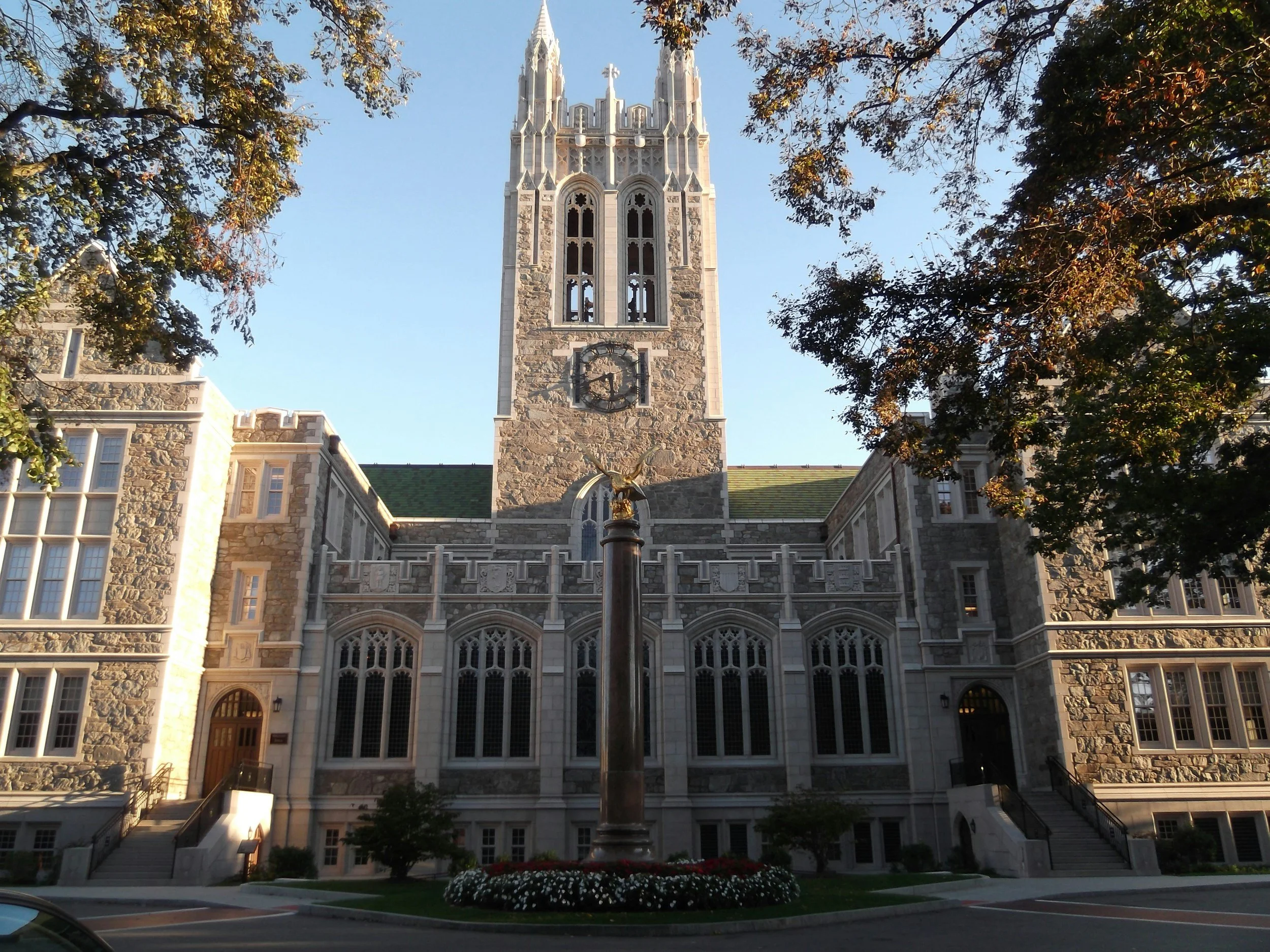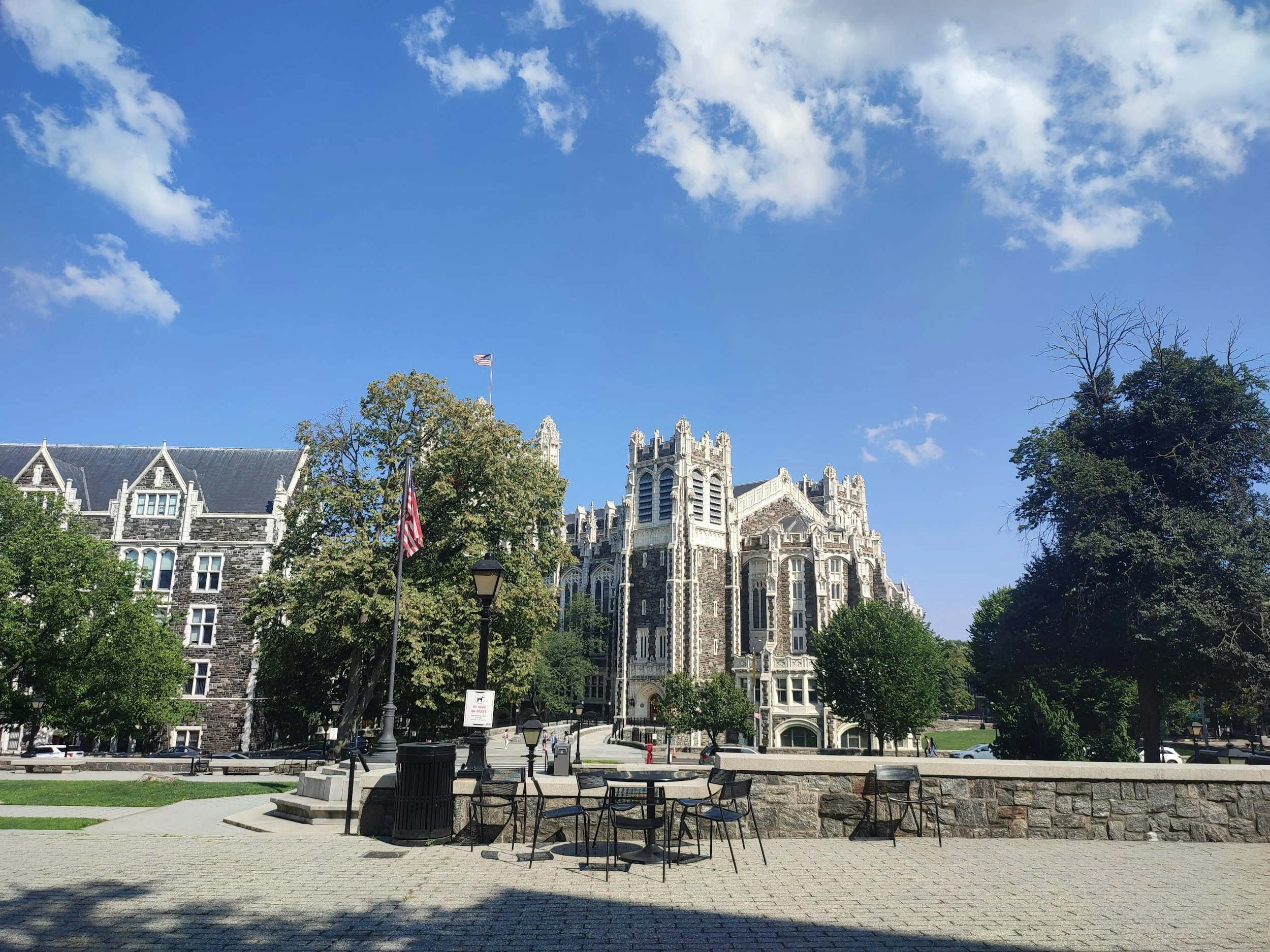
Liberal Arts School vs Research University

One of the most common questions families bring to Cosmic is deceptively simple: should my student go to a liberal arts college or a research university? The answer is not that one type is better. It is that these two models are built differently, and the differences matter enormously depending on what a student actually needs.
This post breaks down the real structural distinctions between liberal arts colleges and research universities across four dimensions: campus culture, teaching and mentorship, academic programs and research access, and long-term ROI. The goal is not to hand you a ranking. It is to help you figure out which model fits your student's profile.
How to Define the Two Categories
Before comparing them, it helps to use consistent definitions rather than vibes.
The most rigorous framework comes from Carnegie Classifications, which organizes American colleges and universities based on their actual degree mix and research activity. A liberal arts college, in Carnegie terms, is a Baccalaureate College with an Arts and Sciences Focus. A research university, in Carnegie terms, is a Doctoral University with Very High Research Activity, which under the updated 2025 Carnegie methodology is formally called an R1. To qualify as an R1, an institution must spend at least $50 million annually on research and produce at least 70 research doctorates per year. These are measurable structural thresholds, not reputational labels.
This matters because people use the phrase "research university" loosely to describe anything from Harvard to a mid-tier state school with a PhD program. When you hold the category to Carnegie R1 standards, you are talking about a genuine research infrastructure: labs, grants, compliance offices, doctoral training pipelines, and industry-sponsored centers. That is a fundamentally different ecosystem than the one most liberal arts colleges operate in.
Campus Culture: What the Data Actually Shows
Culture is the hardest thing to quantify, but there is real data on it.
The CIRP Freshman Survey, which tracks the characteristics and attitudes of entering college students nationally, published institution-type comparisons in its 2024 tables. The results show a significant difference in political self-identification between the two categories. Among entering students at baccalaureate institutions, 29% identified as conservative and 21.6% identified as liberal. At universities, those numbers essentially flipped: 40.9% identified as liberal and only 12.2% identified as conservative.
The CIRP report itself flags that the 2024 tables are not weighted or normalized due to lower participation that year, so treat these as directional rather than precise. But the pattern is consistent with what observers of higher education have noted for years: the typical entering student at a liberal arts college and the typical entering student at a major research university are coming from meaningfully different cultural starting points. This shapes classroom discourse, campus politics, and the kind of intellectual environment a student will spend four years in.
If your student holds views that diverge from the dominant campus ideology, this is worth taking seriously. It is not just about comfort. It is about whether a student will feel safe engaging authentically in seminars, forming genuine intellectual relationships with peers, and developing their thinking through real disagreement.
Beyond politics, scale shapes culture in ways that are hard to overstate. Liberal arts colleges are smaller and more residential by design. That density creates a different social texture than a large research university where the undergraduate student body is one part of a much larger ecosystem that includes graduate students, professional schools, and faculty whose primary community is their discipline.
The National Survey of Student Engagement found that among nearly 180,000 students at over 300 bachelor's-granting institutions, majorities reported civic development and frequent engagement with people holding different political views. But NSSE also found a slight downtrend in cross-political dialogue over the past decade, which suggests that diverse views do not automatically produce productive exchange. Campus culture requires intentional design. The question is whether an institution has actually built it.
Teaching and Faculty Mentorship: Structure Over Stereotype
The stereotype is that liberal arts colleges have better teaching and mentorship. The reality is more nuanced.
The 2023 HERI Faculty Survey, which surveyed faculty across 72 institutions, found that 84% of respondents reported teaching as their principal activity. Faculty mentorship was widespread: among faculty who worked with undergraduates, 68% reported mentoring them to a large or very large extent, and 92% rated those mentoring relationships as good or excellent.
The more important finding is structural. The Carnegie R1 definition is built around research expenditures and doctoral production. That means faculty at R1 universities are operating inside an incentive system that rewards grant-getting, publication, and PhD supervision. Teaching undergraduates is often valued in principle but competes directly with activities that drive tenure and promotion. At a liberal arts college with an arts and sciences focus, the incentive system is structurally different. Undergraduate teaching is the core mission, not a requirement that competes with it.
This does not mean every professor at a liberal arts college is a great teacher, or that every professor at an R1 ignores undergraduates. It means the structural incentives push faculty in different directions, and students at research universities typically need to be more proactive to access meaningful mentorship. The students who thrive at R1s tend to be the ones who show up to office hours without being prompted, cold-email professors, and seek out honors programs or research labs as a freshman.
If a student needs structure, frequent check-ins, and a culture where advising is expected rather than earned, the liberal arts model is more likely to deliver that reliably.
Academic Programs and Research Access
This is where research universities have a clear structural advantage for certain students.
R1 universities offer broader program catalogs. If a student wants to study biomedical engineering, supply chain management, public health, or computational linguistics as a standalone major, they are far more likely to find it at a research university. Liberal arts colleges are built around a general arts and sciences curriculum. That is a feature for some students and a limitation for others.
Undergraduate research access is more complicated than most families realize.
Research universities have more labs, more external funding, more graduate students, and more formal research centers than liberal arts colleges. The NSF reports that U.S. higher education R&D expenditures exceeded $108 billion in fiscal year 2023. The overwhelming share of that spending sits at R1 institutions. That money funds core facilities, sequencing centers, imaging equipment, translational research partnerships, and the doctoral training ecosystems that produce the next generation of researchers.
But having access to that infrastructure and actually using it are different things. At a large R1, undergraduates compete with graduate students for faculty attention, and getting into a meaningful research role often requires significant initiative, connections, and sometimes luck. A first-year who does not know to cold-email a professor in September may not find themselves in a lab until junior year.
At a well-resourced liberal arts college, the pathway to undergraduate research can be more direct, even without the same scale of infrastructure. The NSF Survey of Earned Doctorates consistently lists liberal arts colleges among the top baccalaureate-origin institutions for students who go on to earn research doctorates. Schools like Macalester, Middlebury, Bucknell, and St. Olaf appear alongside much larger universities. This is the "punching above weight" phenomenon: liberal arts colleges can be exceptionally strong research pipelines even without massive lab budgets, because the mentorship and preparation environment is structured around undergraduate development.
The bottom line is this. If a student needs the specific infrastructure of an R1, they need to be honest about that and plan proactively to access it. If a student would benefit from a more guided research experience with lower barriers to entry, a strong liberal arts college may outperform an R1 in practice.
ROI: What the Data Can and Cannot Tell You
The question families ask most often is some version of: is it worth it? That question deserves a serious answer, not a slogan.
True ROI for a college decision involves at least five things: earnings trajectory over time, debt burden at graduation, completion rate and time-to-degree, graduate and professional school placement rates, and opportunity cost. Federal data supports analysis of all of these, though with meaningful limitations.
The College Scorecard is the most rigorous public tool for comparing earnings and debt outcomes. It pulls from institutional reporting, federal student aid data, and tax records to produce median earnings and debt figures at the institution and field-of-study level. A critical caveat: the Department of Education has published errata noting that some entry-cohort earnings calculations from 2022 and 2023 were misaligned with described cohorts. Anyone doing serious ROI analysis should check the current documentation before relying on historical files.
The most important thing the data shows is that field of study is a more powerful predictor of earnings outcomes than institution type. A student who majors in computer science at a liberal arts college will typically out-earn a student who majors in fine arts at an R1. Before you optimize for institution type, optimize for having a realistic plan around what you are studying and what that leads to.
Net price is also far more important than sticker price. IPEDS publishes net price figures that reflect actual cost after grant and scholarship aid for full-time, first-time undergraduates. Well-resourced liberal arts colleges with large endowments can have net prices that are competitive with or lower than public research universities for families in the middle-income range. Do not make institution-type decisions based on published tuition figures.
Completion rate deserves more attention than it gets. Noncompletion is one of the most reliable ways to destroy ROI regardless of institution type. When comparing schools, look at four-year and six-year graduation rates via IPEDS, not just brand reputation.
How to Choose: A Simple Framework
Here is how Cosmic advises families to think about this decision.
If a student needs frequent faculty access, discussion-based classes, a dense residential community, and lower barriers to undergraduate research, a liberal arts college is structurally better aligned with those goals. Verify in practice: ask about advising systems, who teaches introductory courses, and how undergraduates get into labs or independent study.
If a student has a clear interest in a specialized STEM or professional field, wants to work alongside doctoral researchers, or wants to take advantage of industry partnerships and large-scale facilities, a research university is structurally better positioned to deliver that. Verify in practice: ask about intro course sizes, honors programs, and how early undergraduates can join research groups.
If the campus cultural and political environment matters to the student, the CIRP data is genuinely useful directional evidence. It does not describe every campus, but it describes a real and consistent pattern at the aggregate level.
Location also matters more than families give it credit for. Urban research universities often offer denser internship pipelines and industry adjacency. Smaller, rural liberal arts colleges tend to generate intense on-campus social environments but require more intentional planning for professional development and internships, often through alumni networks or dedicated summer programs.
The decision is not about prestige. It is about fit. A student who thrives in small seminars with frequent feedback, who wants to build close relationships with faculty, and who is still developing their intellectual interests will often do better at a strong liberal arts college than at an R1 where they get lost. A student with a specific disciplinary passion, high self-direction, and a clear research or professional trajectory will often do better at an R1 where the infrastructure matches their ambition.
Both paths can lead to excellent outcomes. The variable is whether the structure of the institution actually fits the student in it.
Whether it’s Harvard University or Swarthmore College, if you need help getting into your dream school, take the first step toward maximizing your chances by scheduling a free consultation with an admissions expert today.