Waitlisted from Hamilton College: What to Do

If Hamilton College just placed you on the waitlist, you are navigating the waitlist at one of the most selective liberal arts colleges in the country and a school whose academic philosophy places it in rare company. Hamilton received approximately 8,500 applications for the Class of 2029, admitted roughly 13.5%, and enrolled a class of approximately 475 students. The college is a "Little Ivy" on a 1,300-acre campus in Clinton, New York, with approximately 2,100 undergraduates, a 9:1 student-faculty ratio, and an institutional identity built around intellectual freedom and the craft of communication.
Hamilton's waitlist page provides qualitative rather than quantitative detail. In any given year, several hundred students are offered waitlist spots. More than half typically withdraw immediately because they have made alternative plans. Those who remain are held for further review near or after May 1. Hamilton's admissions office says clearly: "If Hamilton is your top choice, we hope you will let us know." The most recent published Common Data Set data shows that Hamilton has used its waitlist in recent years, though the number admitted varies depending on yield. The waitlist is not ranked, and all who remain on it will be considered if spaces open.
Accept Your Place on the Waitlist
Hamilton requires you to indicate that you wish to remain on the waiting list. If you do not respond, the college will assume you have made alternative plans and remove you from consideration. Respond promptly through whatever mechanism Hamilton provides (portal or written response).
Commit to Another School Before May 1
Hamilton is direct: "it may be in your best interest to fully pursue your other options and pay an enrollment deposit at one of your other colleges, on the chance that a spot at Hamilton may not become available." If Hamilton later admits you from the waitlist and you choose to enroll, you will forfeit the deposit at the other school.
Write a Letter of Continued Interest
Hamilton explicitly invites expressions of continued interest. The admissions office says: "If Hamilton is your top choice, we hope you will let us know." Write up to 650 words and email it to the admissions office or submit through the portal. Make it a love letter to Hamilton. Not a brag sheet. Not a resume update. Not a list of other schools that admitted you. A letter that makes the reader understand exactly who you will be in the Hamilton community and why this specific college, with its specific academic structure and culture, is where you belong.
Hamilton's identity is built on several distinctive pillars, and your letter should engage with them directly.
The first and most academically distinctive is the open curriculum. Hamilton has no core curriculum and no distribution requirements. Students choose every course they take based on their own intellectual interests, guided by faculty advisors but not constrained by mandatory categories. Among the schools in this series, only Amherst and Vassar share a fully open curriculum. If you are drawn to Hamilton because of the freedom to design your own education, because you want to pursue interdisciplinary combinations that a distribution-based system would not allow, and because you believe your intellectual curiosity is focused enough to build a coherent education without external requirements, say so with specificity. Name the courses, departments, or combinations of study that excite you and that the open curriculum makes possible. The student who can articulate why the open curriculum is not just a convenience but a reflection of how they learn and think is the student Hamilton was built for.
The second is Hamilton's emphasis on writing and oral communication. Hamilton is nationally recognized for its commitment to teaching students to write and speak persuasively across every discipline. The college states that its students "learn to think independently, embrace difference, write and speak persuasively, and engage issues ethically and creatively." This is not a tagline. It is the organizing principle of the curriculum. The Nesbitt-Johnston Writing Center, the Oral Communication Center, and the expectation that writing and speaking are skills developed in every course, not just English classes, set Hamilton apart from peer institutions where communication skills are treated as the province of specific departments. If you are drawn to Hamilton because you believe that the ability to write and speak well is the foundation of every other intellectual pursuit, and if you want a college where that conviction is shared by the institution itself, say so. This is Hamilton's distinctive academic identity, and a student who can connect their own intellectual goals to it demonstrates genuine understanding of what makes Hamilton different.
The third is the scale and intimacy of the academic community. Hamilton enrolls approximately 2,100 undergraduates and offers 44 concentrations (majors) across 57 subjects. The 9:1 student-faculty ratio ensures that classes are small and relationships with faculty are personal. All classes are taught by professors. The Sophomore Summer Program provides funded research opportunities for students to work alongside faculty during the summer between sophomore and junior year. If specific departments, faculty, research opportunities, or the mentorship structure draws you to Hamilton, name them.
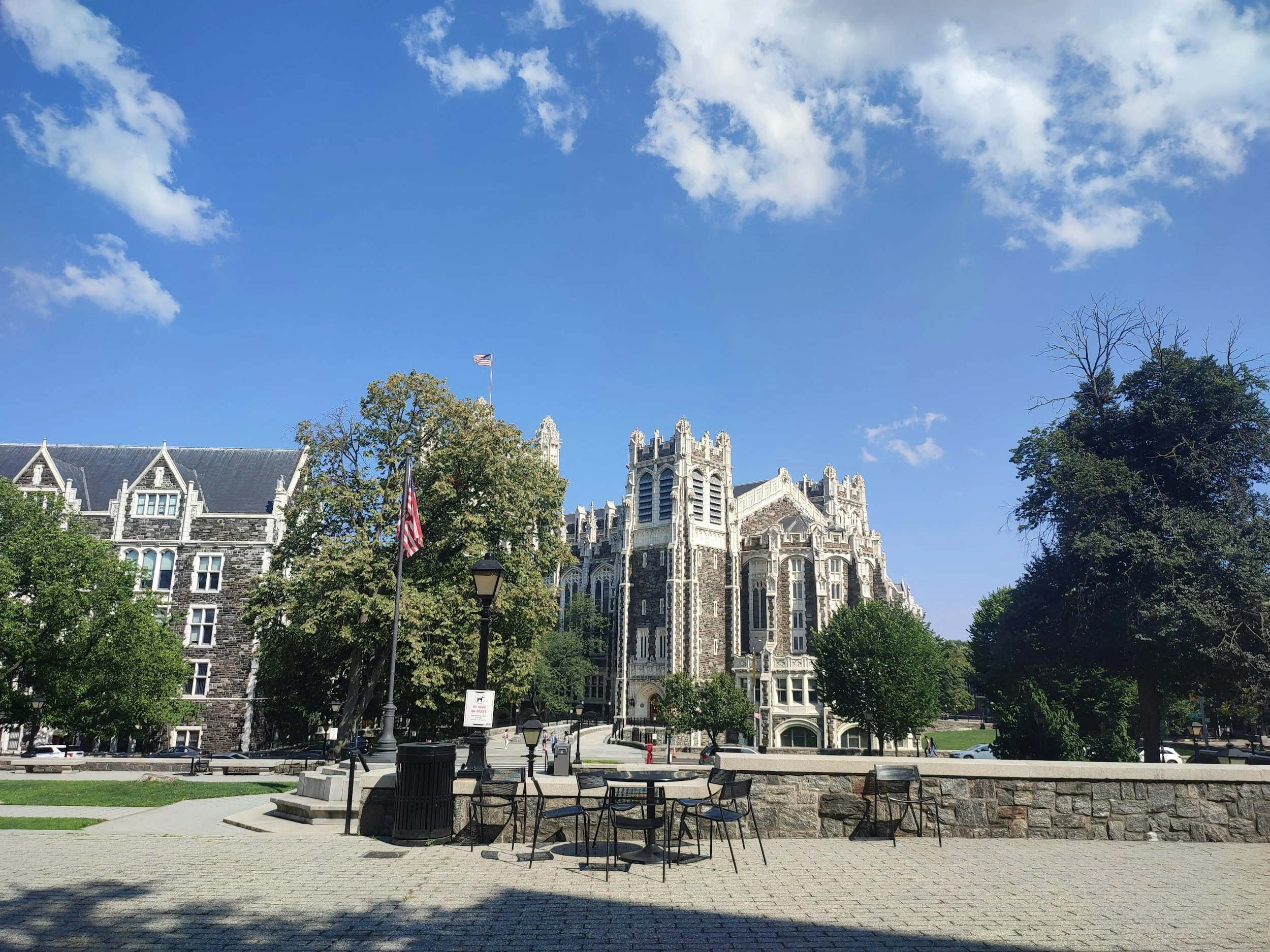
The fourth is the campus and setting. Hamilton's 1,300-acre campus sits on College Hill in Clinton, New York, in the Mohawk Valley of upstate New York. The campus is rural, scenic, and self-contained, with the Wellin Museum of Art (designed by Machado Silvetti, opened in 2012) and the Taylor Science Center among its defining facilities. The setting is approximately 45 minutes from Syracuse and 90 minutes from Albany. Hamilton's outdoor recreation, skiing, and the natural beauty of the Mohawk Valley are part of the student experience. If the combination of a close-knit residential community in a rural setting with world-class campus facilities is part of what draws you to Hamilton, articulate that with specificity.
The fifth is the campus culture and community. Hamilton's residential system houses all students on campus for four years. Greek life is present but does not dominate the social scene in the way it does at some peer institutions. The college's motto, "Know Thyself," reflects an institutional commitment to self-discovery, intellectual exploration, and personal growth. The student body is described as intellectually curious, collaborative, and genuinely engaged with campus life. If the culture of a small, residential, academically intense community where students know each other and their professors is part of your draw, say so.
Do not brag. Do not list your accomplishments in the body of the letter. Submit the letter promptly after accepting your waitlist spot. The primacy effect matters.
Have Your Guidance Counselor Make an Advocacy Call
After your letter is submitted, your guidance counselor should contact the admissions office to communicate that Hamilton is your top choice and that you will enroll if admitted. Hamilton strongly encourages interviews as part of its admissions process and values demonstrated interest. A counselor call fits naturally within that culture.
Keep Your Grades Up
Hamilton's middle 50% SAT range is approximately 1450 to 1530. The average GPA of admitted students is approximately 3.87. The academic profile is extremely strong. Continue performing at the level that made you competitive. Updated academic information is among the most meaningful things you can share.
If you'd like help maximizing your chances of getting off the waitlist and into your current top-choice colleges, schedule a free consultation with an admissions expert today.