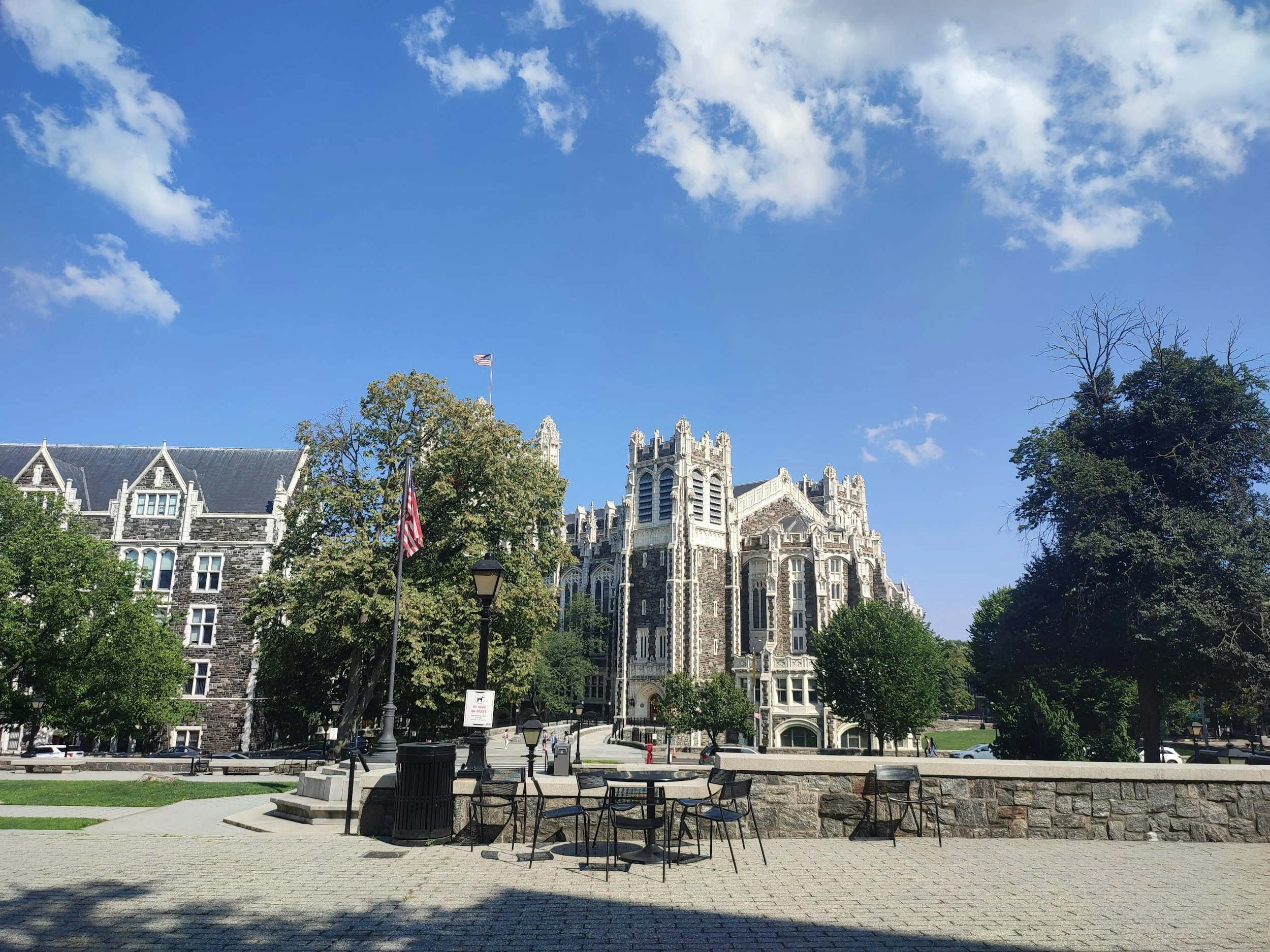
Williams vs Harvard 2026
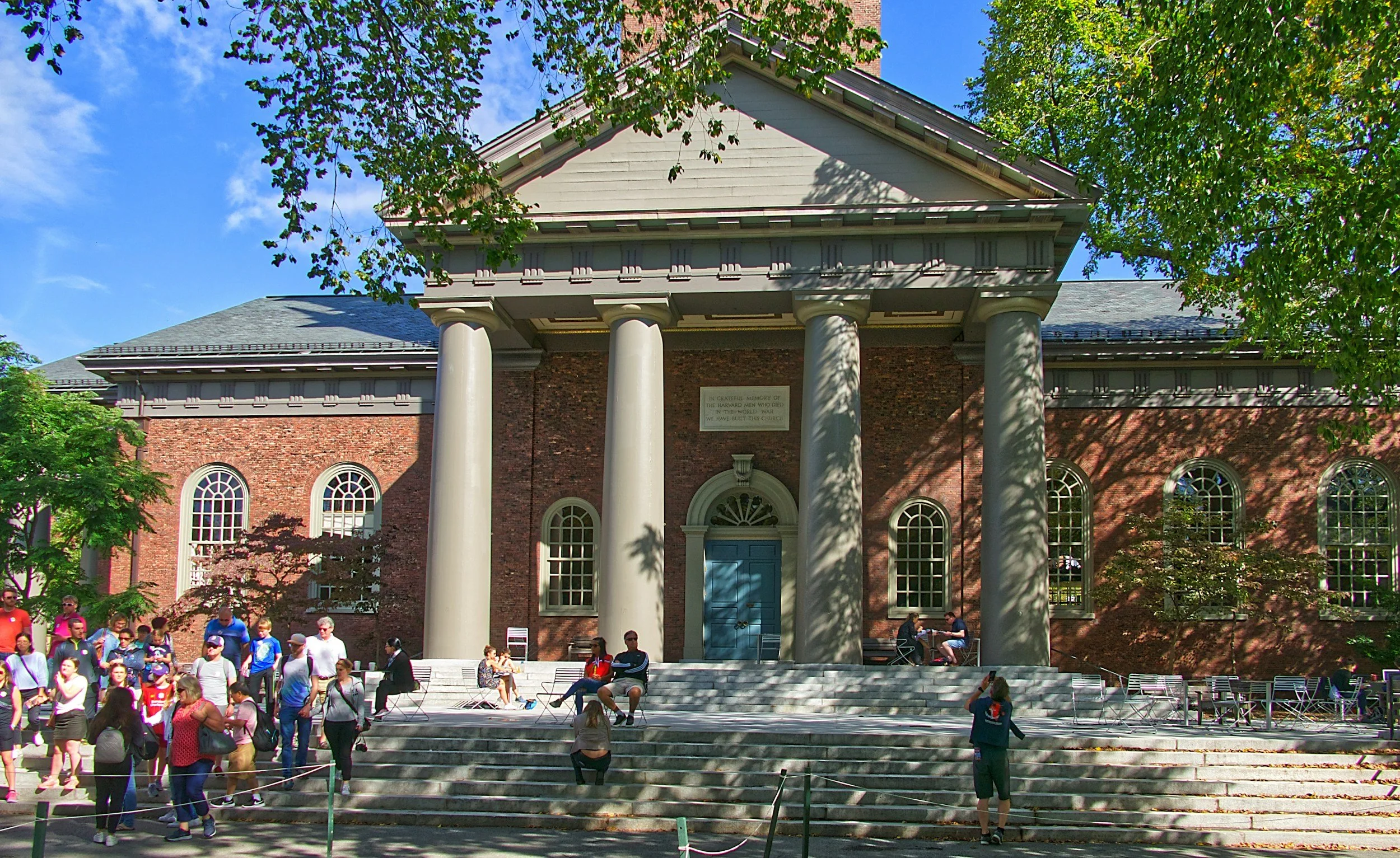
If you are a high-achieving student weighing Williams College against Harvard College, you are not really comparing apples to apples. You are comparing two fundamentally different institutional types, two different admissions structures, and two different visions of what an elite undergraduate education looks like. This article breaks down exactly what the data shows across selectivity, early admissions mechanics, testing policy, and financial aid so you can make a smarter application strategy decision.
How Selective Are They Really?
The gap in selectivity between Harvard and Williams is significant, and you should factor it into your college list construction.
Harvard's overall admit rate has hovered in the 3 to 4 percent range across the 2021 to 2025 entering classes. For Fall 2024, Harvard admitted 1,970 students from 54,008 applicants, a rate of about 3.65 percent. For Fall 2025, Harvard admitted 2,003 students from 47,893 applicants, landing at approximately 4.18 percent.
Williams is extremely selective for a liberal arts college, but it operates in a materially different band. Over the same period, Williams' overall admit rates have ranged from roughly 8 to 10 percent. For Fall 2024, Williams admitted 1,272 students from 15,411 applicants, an admit rate of about 8.25 percent.
Yield tells an equally important story. Harvard's yield rate has been remarkably stable in the low-to-mid 80 percent range, sitting at about 83.6 percent for Fall 2024. Williams' yield is considerably lower and more variable, ranging from roughly 43 to 52 percent depending on the year. That gap reflects a simple reality: when students who get into both Harvard and Williams have to choose, they typically choose Harvard. Williams competes for those students, but it does not win that matchup at the same rate.
Early Admissions: Two Completely Different Structures
This is where applicants frequently make strategic errors. Harvard and Williams do not just have different early deadlines. They have structurally different early programs with different rules, different risks, and different implications for your broader application strategy.
Harvard uses Restrictive Early Action, which is nonbinding. If you are admitted REA, you have until May 1 to decide. That means you can compare financial aid packages and weigh your options before committing. However, REA comes with real restrictions: you cannot apply early to any other private institution under any early decision or early action program. You can apply early to public universities under nonbinding programs, to military academies, and to non-U.S. universities under nonbinding programs. Harvard's deadline is November 1, with decisions released in mid-December.
Williams uses binding Early Decision. If you are admitted ED, you are expected to withdraw all other applications and enroll. This is not a soft commitment. It is a formal agreement. Williams' ED deadline is November 15, with decisions by December 15. The Regular Decision deadline is January 5, with decisions by April 1.
What does this mean for you practically? If Harvard is your top choice and you want an early signal without locking yourself into one school, REA gives you that optionality. If a small, residential liberal arts college is genuinely your first choice and you are confident about the financial aid you will receive, Williams ED can make strategic sense within a broader application plan.
One critical note on early admit rates: do not compare them at face value. Williams' ED admit rates have declined steadily as the program has grown. For the Fall 2024 entering class, Williams admitted 249 students from 1,067 ED applicants, a rate of about 23.3 percent. That is substantially higher than the overall admit rate, but it is heavily influenced by selection effects. ED applicants as a group are self-selected for strong fit and institutional commitment, which inflates the apparent advantage. Harvard makes a similar caution explicit in its own admissions materials, noting that higher REA admit rates reflect the strength of the early pool rather than any timing advantage for individual applicants.
Testing Policy: A Real Divergence
Harvard and Williams have moved in opposite directions on testing, and that matters for how you approach your application.
Harvard has returned to requiring standardized testing. Its current application requirements state that Harvard requires the SAT or ACT, with alternative exam pathways available only in exceptional cases when those tests are genuinely inaccessible. This is a meaningful shift from the broader test-optional language Harvard used during the pandemic era. For the Fall 2026 entering class onward, testing is back in Harvard's admissions architecture in a meaningful way.
Among Fall 2024 enrolled first-years who submitted scores, Harvard reported SAT Math 25th to 75th percentile scores of 770 to 800 and SAT Evidence-Based Reading and Writing scores of 740 to 780. ACT Composite scores ranged from 34 to 36.
Williams, by contrast, continues to describe itself as genuinely test optional and has maintained that framing consistently across this period. The data backs it up: the share of Williams enrolled students submitting SAT scores has declined steadily, from 43 percent for Fall 2021 to 35 percent for Fall 2024. Among those who did submit for Fall 2024, SAT Composite 25th to 75th percentile scores were 1500 to 1560, with a median of 1535. ACT Composite scores ranged from 34 to 35.
The practical implication is straightforward. If you are test-strong and applying to Harvard, submitting strong scores reinforces your application under a policy that now requires them. If you are applying to Williams and your scores are not at your personal ceiling, test-optional remains a real and well-supported pathway.
Financial Aid: Know What You Are Actually Paying
Sticker prices can be misleading, and both Harvard and Williams have financial aid structures that significantly lower net costs for many families.
For 2025 to 2026, Harvard lists tuition at $59,320 with required fees of $5,476 and on-campus room and board at $22,130. Williams lists tuition at $72,170 with required fees of $340 and on-campus room and board at $18,240. The raw tuition gap does not reflect what most aided students actually pay.
Harvard has expanded its income-based aid thresholds significantly since 2021. As of the 2025 to 2026 academic year, Harvard states that families with incomes of $100,000 or less attend for free, and families with incomes up to $200,000 attend tuition-free. For the Fall 2025 entering class, Harvard reported that 21 percent of students are estimated to be Pell-eligible and 20 percent are first-generation college students.
Williams meets 100 percent of demonstrated financial need for domestic applicants and is need-blind in admissions for domestic students, explicitly including undocumented and DACA-designated applicants. Williams offers need-based aid rather than merit scholarships.
One important note if you are considering Williams ED: if affordability is a concern, you should have a candid conversation with your family and ideally your school counselor before submitting an ED application. ED admits are expected to enroll. Releases from the ED commitment do occur, but they are uncommon and typically tied to financial circumstances. Know where you stand before you apply.
Campus Environment: The Fundamental Tradeoff
This is ultimately the core strategic question for students who are genuinely considering both schools.
Harvard is in Cambridge, Massachusetts, which means you are embedded in a dense metro area with access to Boston, a robust internship ecosystem, and a network of peer institutions. Harvard's residential housing rates are notably high for a university of its size, with close to 100 percent of first-year students living in college-owned housing, which creates a genuinely residential community within an urban setting.
Williams is in Williamstown, Massachusetts, a small town in the Berkshires. The experience is more contained, more insular in both positive and challenging ways, and built around the liberal arts model of close faculty contact and a tight-knit residential community. The binding ED pool and the emphasis on first-choice commitment tend to concentrate students who specifically chose Williams, which shapes the campus culture in a way that is meaningfully different from a large research university.
The Bottom Line
Harvard and Williams are not interchangeable options sitting at different price points on the same shelf. They are different types of institutions serving different educational models, and the decision between them should be driven by what you actually want from your undergraduate experience rather than a ranking number.
If research university scale, proximity to a major metro, and a globally recognizable brand are what you are optimizing for, Harvard is the target. If you want a rigorous, residential, faculty-centered liberal arts environment and are genuinely excited about that model, Williams belongs near the top of your list.
If you want to learn what you can do right now to optimize your application for either Williams or Harvard, schedule a free consultation with an admissions expert today.