Harvard vs Stanford 2026

When students ask us whether they should be targeting Harvard or Stanford, the question usually isn't about prestige, it's about fit. Both schools sit at the very top of every ranking, both admit fewer than 5% of applicants, and both attract the same pool of extraordinarily accomplished students. So what actually separates them? In 2026, the differences come down to admissions mechanics, campus culture, location, and what kind of academic experience you're actually looking for.
Acceptance Rates: Just as Selective as You Think
Let's get the obvious out of the way. Harvard and Stanford are, for all practical purposes, equally selective. For the fall 2024 entering class, Harvard admitted 3.65% of applicants, while Stanford came in at 3.61%. Harvard's most recent cohort (fall 2025) saw its rate tick up slightly to 4.18%, largely due to a drop in applications, not because the school became meaningfully easier to get into.
Over the past several years, Harvard's acceptance rate has bounced between roughly 3.2% and 4.2%, and Stanford has consistently hovered around 3.6% to 3.9%. The key takeaway: neither school is statistically "easier" than the other. If you're trying to choose between the two based on odds alone, you're solving the wrong problem.
Early Action: Restrictive at Both Schools
Both Harvard and Stanford offer Restrictive Early Action (REA), which is nonbinding, meaning you're not committed to attend if admitted, but carries real restrictions on where else you can apply early. Under REA at either school, you generally cannot apply early to another private university's early action or early decision program. You can, however, apply early action to public universities and institutions outside the U.S., and there are carve-outs for certain scholarship or special program deadlines.
The early round does carry a higher stated admit rate. For Harvard's fall 2023 entering class, for example, the early action admit rate was approximately 7.55%, compared to roughly 2.62% in regular decision. But this gap is not a simple "boost." Early applicants tend to include a higher concentration of recruited athletes, legacy-connected applicants, and students who have done the deep institutional research to know Harvard is genuinely their first choice. The pool self-selects for strength. Applying early because you've done your homework and Harvard or Stanford is genuinely the right fit is smart strategy. Applying early just to chase a higher admit rate is not.
Testing Policy: Both Are Going Back to Required
This is one of the most practically important updates for the 2026 cycle. Harvard already returned to required standardized testing for fall 2025 admission. Stanford announced it will resume requiring the SAT or ACT for fall 2026 entry, meaning students applying in the 2025–26 cycle need a score.
This matters for how you interpret historical data, too. During the test-optional years, the score ranges published by both schools only reflected students who chose to submit, a self-selected group. Harvard's reported SAT Math 25th–75th percentile range for fall 2024 submitters was 770–800; Stanford's was essentially identical. With testing now required again, those distributions will reflect everyone, and the ranges may shift somewhat as a result. The practical implication: if you're a current junior or sophomore, a strong standardized test score is non-negotiable for either of these schools.
Academic Structure: Concentrations vs. Majors
The two schools organize undergraduate academics differently, and this matters if you have a clear intellectual agenda.
Harvard calls its fields of study "concentrations" and offers 50 of them, embedded within a liberal arts model that requires coursework across General Education, divisional distribution, a language requirement, expository writing, and quantitative reasoning. The Harvard model pushes you toward breadth even as you specialize.
Stanford has 66 undergraduate major fields, organized across its various schools, and its general education framework is structured around what it calls "Ways of Thinking/Ways of Doing,” eight categories of intellectual inquiry across 11 required courses. Stanford's system tends to offer more flexibility in how students navigate interdisciplinary work, and its structure across schools (Engineering, Earth Sciences, Humanities and Sciences, etc.) means students can sometimes pursue a more specialized path earlier.
A distinctive academic perk at Harvard: formal cross-registration with MIT. Through structured agreements between the two universities, Harvard students can take courses at MIT (and vice versa). For STEM-focused students in particular, this gives Harvard undergraduates access to MIT's unparalleled technical curriculum, a meaningful differentiator.
Residential Life: Houses vs. Guaranteed Housing
Harvard's residential system is one of the most distinctive features of the undergraduate experience. First-years live in the Freshman Yards around Harvard Yard, and then, through a beloved (and occasionally anxiety-inducing) tradition called Housing Day, are assigned to one of 12 residential Houses for their remaining three years. These Houses function almost like small colleges within the university, each with its own dining hall, culture, tutoring staff, and community. Once you're in your House, that's your home base for the rest of your undergraduate career.
Stanford takes a different approach. The university guarantees twelve quarters of on-campus housing for students who enter as first-years, providing stability and flexibility without locking students into a single community. Stanford's residential ecosystem is large and varied, with dedicated residential education programming built throughout.
Neither model is better, they're genuinely different. If you value a tight-knit, assigned community that you grow with over three years, Harvard's House system is special. If you value the ability to move through different residential environments and communities, Stanford's model offers more optionality.
Campus Life and Social Scene
Stanford has a more active Greek life presence than Harvard. Roughly 21% of Stanford men participate in fraternities and about 25% of women participate in sororities. At Harvard, Greek life plays a much smaller role in the social ecosystem; the residential Houses and final clubs (the latter being private, selective social organizations) define a different kind of social architecture.
Both schools offer extensive extracurricular ecosystems, performing arts, publications, student government, athletics, research, and students at both are extraordinarily busy with things that matter to them. But the texture of the social experience differs, and it's worth spending time on campus at both schools if you can.
Location: Boston vs. Silicon Valley
Harvard sits in Cambridge, Massachusetts, a dense, walkable, transit-connected academic city directly adjacent to Boston. The MBTA Red Line stops at Harvard Square and connects you to the broader Boston metro. Winters are real: average annual snowfall near Boston is close to 50 inches, with a mean temperature around 52°F. If you thrive in a proper four-season East Coast environment, Harvard's setting is genuinely energizing.
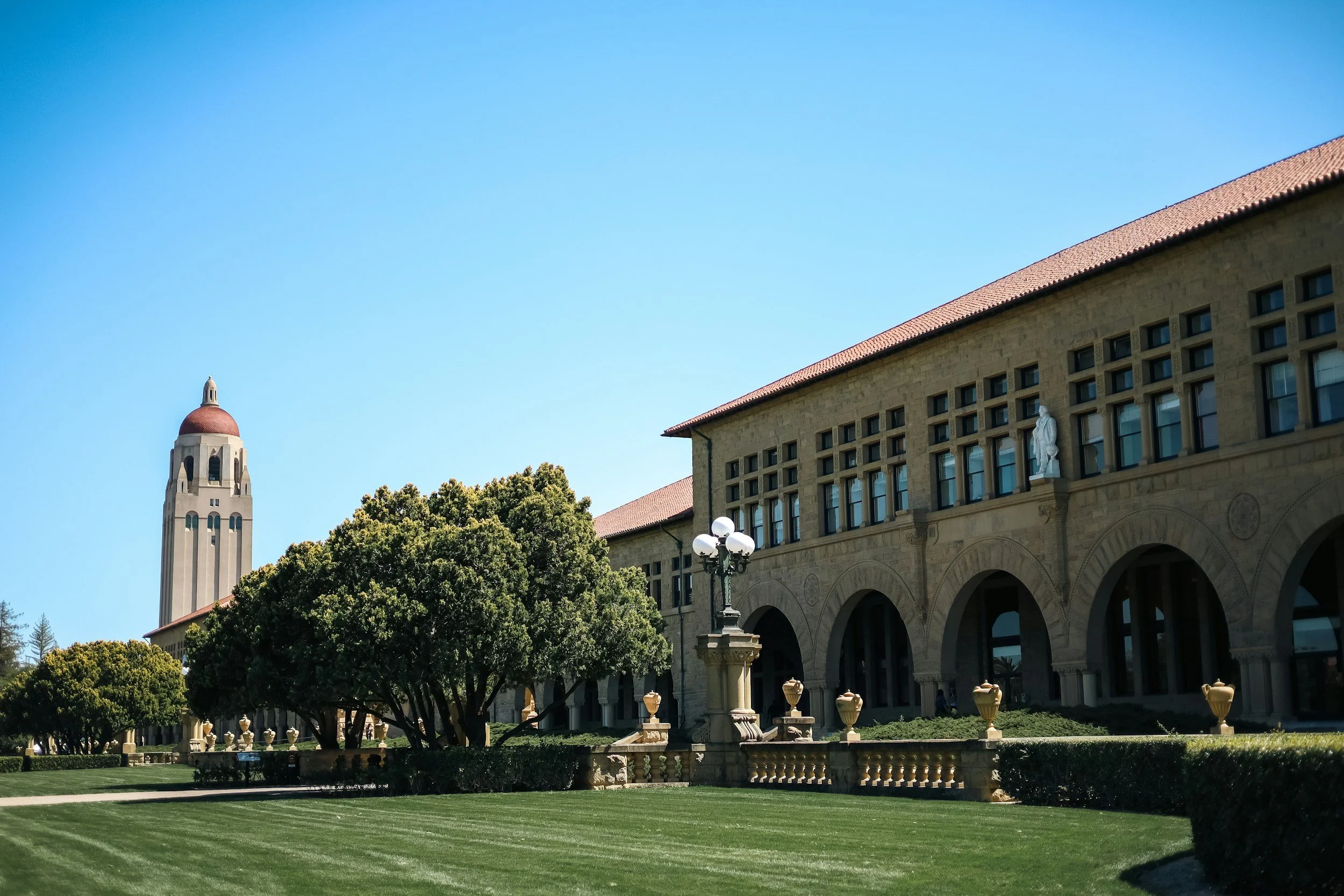
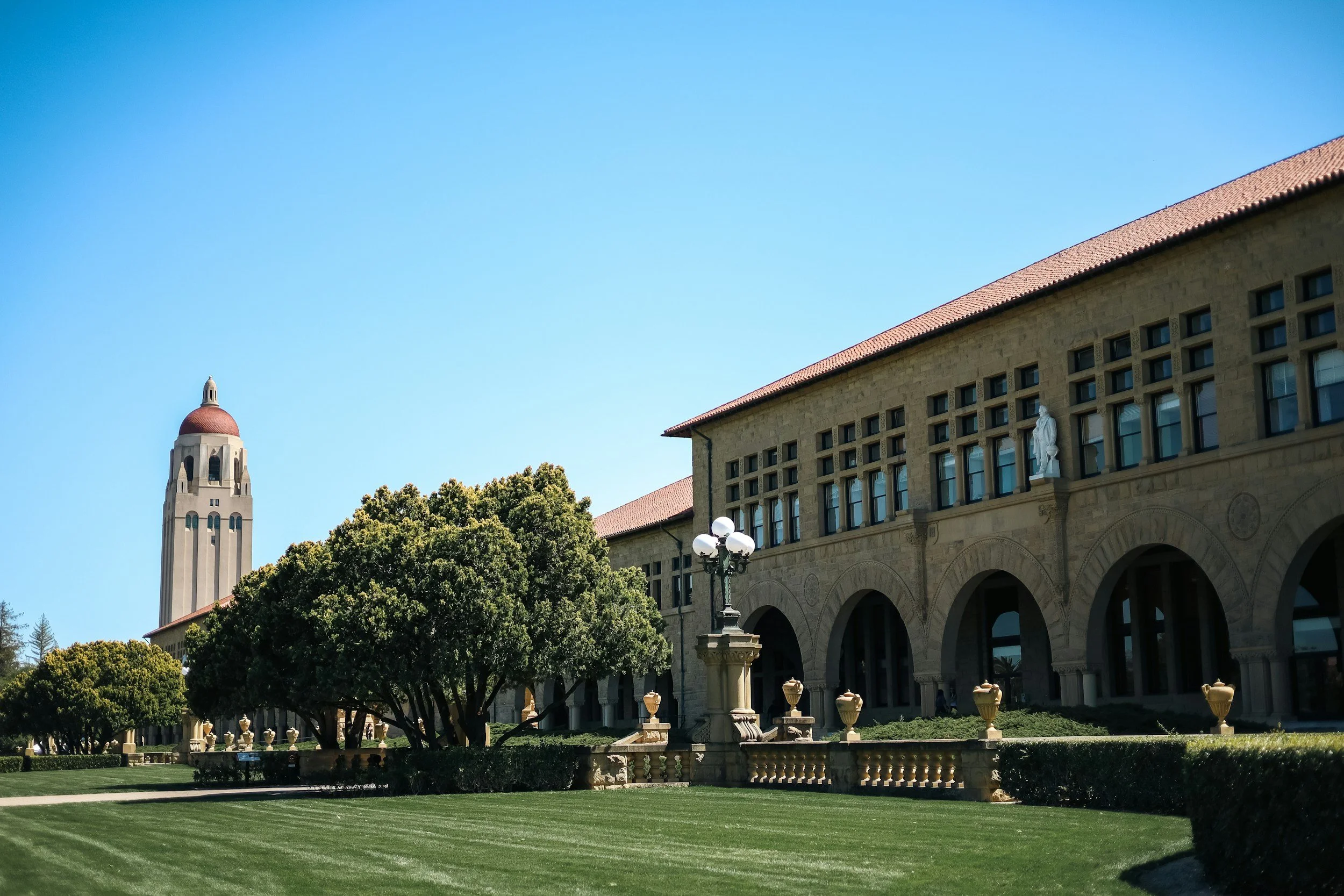
Stanford is located near Palo Alto in the heart of Silicon Valley, approximately 35 miles south of San Francisco. The campus is large, flat, and best navigated by bike. The climate is decidedly more mild, the San Jose area averages around 61°F annually with very little precipitation and essentially no snow. Stanford's free Marguerite shuttle connects the campus to the Palo Alto Caltrain station for regional mobility.
In terms of cost of living, both metros are expensive. Regional price data puts the San Jose metro slightly higher than Boston (roughly 10.4% above the national average vs. 8.3%), though the practical difference depends heavily on where and how you're living.
The Bottom Line
Harvard and Stanford are different places that happen to be equally selective. If you want a structured residential community, access to MIT's course catalog, and the intellectual density of the Boston-Cambridge corridor, Harvard is worth a serious look. If you want a larger major catalog, a more flexible general education framework, a milder climate, and immersion in Silicon Valley's startup ecosystem, Stanford may be the better fit.
If you want to learn what you can do right now to optimize your application for either Harvard or Stanford, schedule a free consultation with an admissions expert today.