Johns Hopkins vs Northwestern 2026
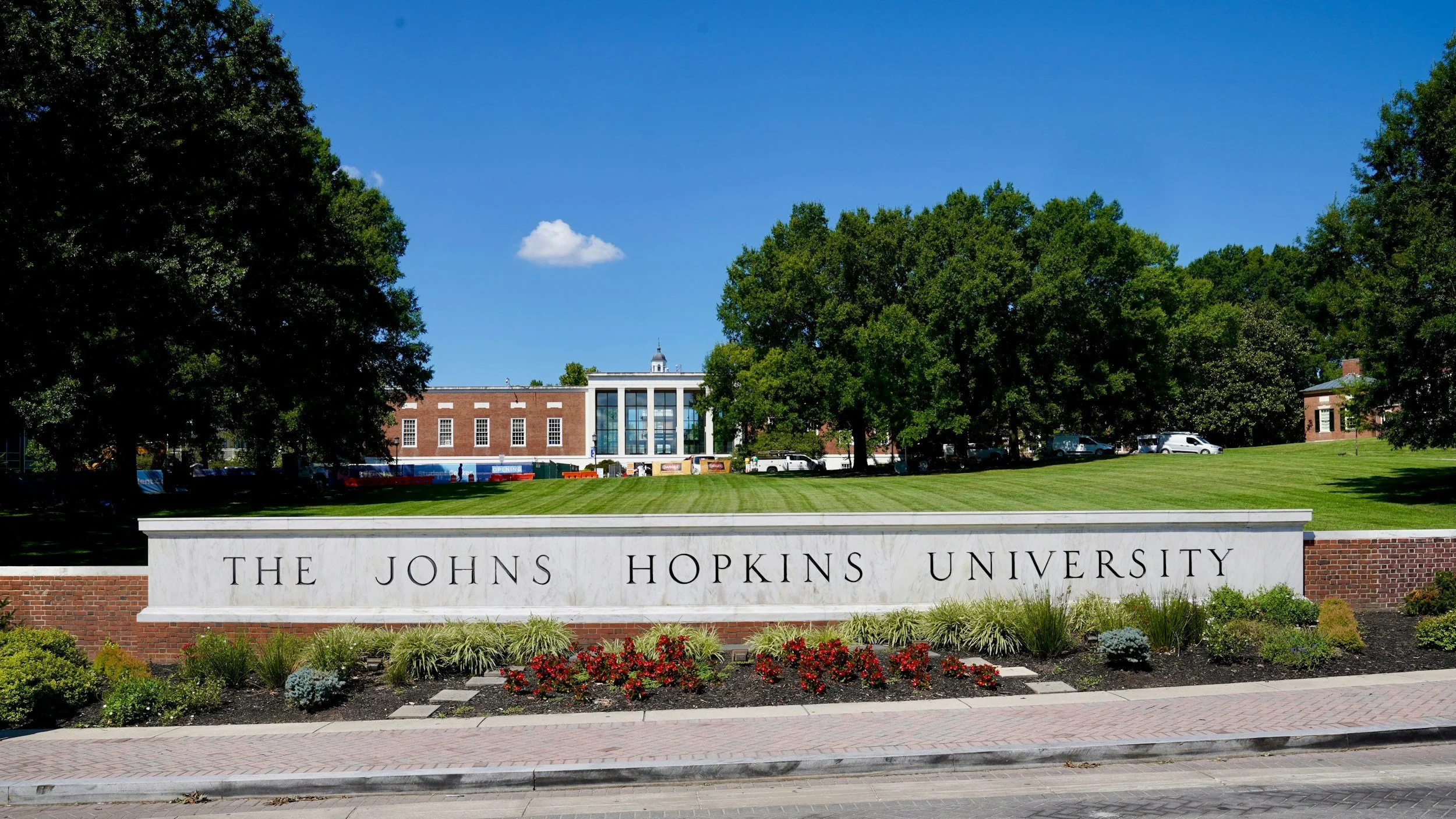
Johns Hopkins and Northwestern are two of the most selective universities in the country, and they end up on the same shortlist for a lot of high-achieving students, especially those leaning toward STEM or pre-health but who also want access to a broader liberal arts ecosystem. On paper they look like peer institutions: both sit around a 6 to 8 percent overall acceptance rate, both meet 100 percent of demonstrated financial need, both are research powerhouses. But the day-to-day experience at each school is meaningfully different, and understanding those differences is what turns a coin-flip decision into a clear one.
This article breaks down admissions selectivity by round, testing policies, campus geography, academics, and student culture so you can figure out which school actually fits you.
Admissions Selectivity: How Hard Is It to Get In?
Both Johns Hopkins and Northwestern have hovered around a 6 to 8 percent overall acceptance rate for the entering classes of 2021 through 2024, based on Common Data Set reporting. Neither school is "easier" than the other in any meaningful sense. If you are competitive for one, you are likely competitive for the other.
Where things get more interesting is in the Early Decision numbers.
Northwestern's ED admit rate has consistently landed in the 22 to 24 percent range over this period, against an overall rate of roughly 7 percent. That is a significant gap. Johns Hopkins, which offers both ED I and ED II (more on that below), has seen its combined ED admit rate decline from about 15 percent for the class entering in 2021 down to roughly 12 percent for the class entering in 2024. Both schools clearly admit a higher proportion of their ED applicants than their overall pool.
But you need to interpret that carefully. The ED pool is not the same as the regular pool. ED applicants include recruited athletes, legacy admits, and other "hooked" candidates at higher concentrations. These are also students who have self-selected into a binding commitment, which signals genuine interest and makes yield management easier for the school. The higher ED admit rate is not a magic multiplier you can apply to your own odds. It reflects a structurally different applicant pool, not a secret admissions hack.
That said, if one of these schools is genuinely your first choice and you can commit, applying ED is still strategically meaningful. It is one of the clearest signals of interest you can send, and at Northwestern especially, the numerical gap between ED and overall acceptance is hard to ignore.
For the non-ED pool (estimated by subtracting ED admits from total admits, which is an imperfect calculation because deferred ED applicants can later be admitted in RD), the estimated acceptance rate has been in the 5 to 6 percent range at both schools in recent years. That is the reality for most applicants.
Early Decision Policies: Key Structural Differences
Both schools offer binding Early Decision, but the structures are not identical.
Johns Hopkins offers ED I (deadline November 1, notification around December 10) and ED II (deadline January 3, notification around February 11), plus Regular Decision. This is a significant strategic option. If you do not get into your ED I school elsewhere, you can still apply ED II to Hopkins and get the demonstrated-interest benefit of a binding commitment. However, Hopkins is explicit that you may not apply Early Action or Early Decision to any other school while your Hopkins ED application is pending. That is a stricter restriction than what some other schools impose.
Northwestern offers one binding ED round (deadline November 1) and Regular Decision (deadline January 1). There is no ED II and no Early Action. Northwestern describes its ED commitment in standard terms: if admitted, you agree to withdraw all other applications and enroll. Northwestern's public materials focus on the obligation upon admission rather than restricting what other early plans you can file simultaneously, though you should always read the actual ED agreement carefully.
The practical takeaway: if you are the kind of applicant who wants to keep options open during the early round, Northwestern's single-ED structure may feel simpler. If you want a second bite at a binding early round (say, after an EA or ED I decision elsewhere), Johns Hopkins' ED II is a genuine strategic asset that Northwestern does not offer.
Testing Policies: Test-Optional vs Test-Required
This is one of the sharpest policy differences between the two schools right now.
Northwestern remains test-optional for the 2025-26 admissions cycle. You can apply without submitting SAT or ACT scores, and the school states that applicants will not be disadvantaged for withholding scores. Northwestern also superscores the SAT. For the ACT, Northwestern provides specific guidance and instructs students not to self-calculate an ACT superscore the same way they would for the SAT.
Johns Hopkins has returned to requiring SAT or ACT scores. After extending test-optional policies through the 2025-26 application window, Hopkins' current testing policy page now states that first-year applicants must submit standardized test scores. Hopkins superscores both the SAT and the ACT, and it reviews self-reported section scores during the admissions process (with official score reports required upon enrollment).
If you are a strong test-taker, both schools will reward that. But if testing is a weakness or you have a compelling profile without a top-tier score, Northwestern's continued test-optional stance gives you more flexibility.
For context on score ranges among enrolled students (keeping in mind that in test-optional years, only score-submitters are represented), the 25th to 75th percentile SAT range at both schools has been roughly 1500 to 1560 in recent years, and the ACT range has been around 33 to 35. These are functionally identical. The difference is not "which school wants higher scores" but "which school lets you choose whether to submit them."
Location: Baltimore vs Evanston and Chicago
This is where the two schools diverge most dramatically in terms of lived experience.
Johns Hopkins is in Baltimore. The university describes itself as "a campus in the city and of the city," and that framing is accurate. You are in an urban environment. The neighborhoods around campus offer cultural amenities, restaurants, and city life, and the university encourages students to explore Baltimore. But safety is a recurring topic in student discussions. The general consensus among current and former students is that the campus-adjacent area is manageable if you exercise standard city awareness and use university-provided transit and security resources, but it is a real factor in daily life that you should not dismiss.
Northwestern is in Evanston, Illinois, a college town on the shore of Lake Michigan, roughly 30 minutes from downtown Chicago by train. The result is a dual-context experience: you get the walkable, self-contained feel of a college town for your day-to-day routine, plus genuine access to a world-class city for internships, nightlife, cultural events, and food. Student discussions about Northwestern tend to focus less on neighborhood safety and more on academic stress and the pace of the quarter system. The location itself is rarely described as a drawback.
If you want a true urban campus experience and are comfortable navigating city dynamics, Johns Hopkins puts you in a real city from day one. If you want access to a major city but prefer your daily environment to feel more campus-centric and contained, Northwestern's Evanston setting with Chicago nearby is a compelling combination.
Academics: Curriculum, Calendar, and Research
Both schools are research-intensive and academically rigorous, but the structure and feel are different.
Calendar and pacing. Northwestern operates on a quarter system. This means shorter terms, faster course pacing, and more frequent exams. Students consistently describe this as one of the defining features of the Northwestern experience, for better and for worse. You cover more ground and can take more total courses, but the "midterm after midterm" rhythm is a real source of stress. Johns Hopkins uses a 4-1-4 calendar (fall semester, January intersession, spring semester). The semester-based pacing is more traditional, and the January term creates a distinct window that students can use for short courses, research, or other projects.
Breadth and flexibility. Northwestern markets itself heavily on breadth. It has six undergraduate schools and advertises over 100 majors and minors combined. The multi-school ecosystem makes it relatively easy to combine fields across different parts of the university. Johns Hopkins organizes its undergraduate programs primarily through the Krieger School of Arts and Sciences and the Whiting School of Engineering, with a strong emphasis on depth in your chosen field. Both schools have distribution requirements, but Northwestern's structure is often described as more naturally encouraging of exploration across disciplines.
Research. This is where Johns Hopkins leans especially hard into its identity. The Hopkins Undergraduate Research Office (HOUR) claims that over 90 percent of undergraduates participate in at least one research experience during their time at Hopkins. Research is deeply woven into the undergraduate culture and is one of the most common reasons students choose Hopkins. Northwestern also has a strong undergraduate research infrastructure, with its Office of Undergraduate Research providing advising, funding (including the Summer Undergraduate Research Grants program), and support for independent projects across disciplines, including creative work. Both schools will give you access to serious research, but Hopkins positions research as arguably the central pillar of the undergraduate experience, while Northwestern frames it as one of many high-quality options.
Student Culture and Social Life
Johns Hopkins students frequently describe the culture as academically intense, research-oriented, and self-directed socially. The social scene exists, but it is not a default party environment. Students tend to build their communities through clubs, labs, and smaller friend groups rather than through a dominant Greek or party culture. The close-knit campus community is a theme in both official university messaging and student accounts. Baltimore itself becomes part of the social equation, with students who embrace the city often reporting a richer experience than those who stay entirely on campus.
Northwestern students describe a "work hard, play hard" culture. The academic intensity is very real, driven in large part by the quarter system's pace, and overcommitment is a common theme. But the social landscape is broader: Greek life is a significant presence for some students, Evanston and Chicago provide off-campus social options, and the overall vibe is one of high-achieving students who still prioritize having a social life. The quarter-system stress is probably the single most consistent theme in Northwestern student discussions, so take it seriously if you are someone who already struggles with academic pressure or time management.
Housing patterns reflect these cultural differences. At both schools, nearly all first-year students live on campus (99 percent at Northwestern, 92 percent at Hopkins in recent reporting years). But Northwestern's overall undergraduate housing rate drops to about 55 percent, meaning a substantial portion of upperclass students move off campus. At Hopkins, the pattern is more campus-anchored, with students navigating an urban environment from a residential base.
Cost of Attendance
Both schools meet 100 percent of demonstrated financial need and describe their aid as loan-free. Johns Hopkins has also expanded its affordability messaging through the Hopkins Tuition Promise, funded in part by a major commitment from Michael Bloomberg.
For sticker price, the numbers are close but not identical for 2025-26. Johns Hopkins lists tuition at $66,670 with $500 in required fees and about $21,000 for on-campus food and housing, putting the base cost of attendance around $88,172 before books and personal expenses. Northwestern lists tuition at $69,375 with $1,214 in fees and about $21,975 for food and housing, totaling roughly $92,564. Neither school is cheap at sticker price, but for families qualifying for financial aid, the net cost comparison depends entirely on your specific aid package.
Who Should Choose Johns Hopkins?
You should lean toward Johns Hopkins if you want undergraduate research to be the defining feature of your college experience, if you are drawn to STEM or pre-health pathways and want a school that is synonymous with those fields, if you prefer a close-knit campus community where social life is self-directed, and if you are comfortable living in an urban environment and see Baltimore's city dynamics as an opportunity rather than a concern. Hopkins' ED II option also makes it a strong strategic choice if it is not your first-choice school going into the early round but might become your top pick after an early rejection or deferral elsewhere.
Who Should Choose Northwestern?
You should lean toward Northwestern if you value breadth and want easy access to multiple undergraduate schools and a wide range of academic combinations, if you want the "college town plus major city" lifestyle that Evanston and Chicago provide, if you thrive in fast-paced environments and can handle the intensity of the quarter system, and if you want a social scene that includes Greek life, city access, and a variety of pathways for building community. Northwestern's test-optional policy also gives you more flexibility if standardized testing is not your strongest suit.
If you want to learn what you can do right now to optimize your application for either Johns Hopkins or Northwestern, schedule a free consultation with an admissions expert today.