Waitlisted from Boston University: What to Do

If Boston University just placed you on the waitlist, you are navigating the waitlist at one of the largest and most rapidly selective private research universities in the country and an institution whose trajectory over the last decade has been among the steepest in American higher education. BU received over 76,000 applications for the Class of 2029 and admitted approximately 12.83%, enrolling a first-year class of 3,461 students. Five years ago, the acceptance rate was roughly 22%. The compression has been dramatic, driven by surging applications and a deliberate strategy of filling over half the class through binding Early Decision: 59% of the Class of 2029 enrolled via ED. This means the Regular Decision round is substantially more competitive than the headline acceptance rate suggests, and waitlisted students are competing for the remaining margin after both ED and RD admits have committed.
BU publishes waitlist data through the Common Data Set, and the 17-year average acceptance rate is approximately 9.67%. That average, however, masks extreme recent volatility. For the Class of 2024, 12.1% of waitlisted students were admitted (pandemic-influenced). For the Class of 2025, 0% were admitted. For the Class of 2026, 0.1% were admitted (essentially one student). More recent data shows some recovery, but the pattern is clear: in years when yield hits its target, the waitlist barely moves or does not move at all. In years when yield misses, BU can admit hundreds. The sole determinant is yield, and with 59% of the class filled through ED, the margin for waitlist movement is narrower than it was a decade ago.
Accept Your Place on the Waitlist
BU requires you to confirm your interest in remaining on the waitlist. Respond promptly through the method indicated in your decision notification. If you do not confirm, you will not be considered when spots open. The waitlist is unranked.
Commit to Another School Before May 1
Deposit at another school. BU's waitlist activity begins after May 1, once the enrollment deposit deadline has passed and the admissions office can assess yield. Decisions can continue into the summer, potentially through June or July. Do not leave yourself without a seat in a first-year class.
Write a Letter of Continued Interest
BU accepts letters of continued interest from waitlisted students. Email your LOCI to the admissions office or upload it through the applicant portal as directed. Write up to 650 words. Make it a love letter to BU. Not a brag sheet. Not a resume update. Not a list of other schools that admitted you. A letter that makes the reader understand exactly who you will be in the BU community and why this specific university, with its specific structure and setting, is where you belong.
BU's identity is built on several distinctive pillars, and your letter should engage with them directly.
The first and most structurally distinctive is the multi-school undergraduate system. BU admits students to one of its undergraduate schools and colleges, and your LOCI must be anchored in the specific school you applied to. The major schools and colleges include the College of Arts and Sciences (CAS, the largest), the Questrom School of Business, the College of Engineering (ENG), the College of Communication (COM), the College of Fine Arts (CFA), the Sargent College of Health and Rehabilitation Sciences, the Wheelock College of Education and Human Development, the Pardee School of Global Studies, the School of Hospitality Administration (SHA), and the College of General Studies (CGS, a two-year foundational program). Each school has its own curriculum, faculty, and academic identity. Waitlist movement may be partly driven by where yield shortfalls occur across these schools. A student waitlisted at Questrom competes within the Questrom pool. A student waitlisted at COM competes within the COM pool. Demonstrating deep knowledge of and genuine enthusiasm for the specific school you applied to is the most important strategic move you can make.
The second is the BU Hub, the university's cross-college general education program. The Hub is not a traditional core curriculum. It is a skill-based framework organized around six capacities (philosophical, aesthetic, and historical inquiry; scientific and social inquiry; quantitative reasoning; diversity, civic engagement, and global citizenship; communication; and critical thinking, research, and inquiry) that students fulfill by choosing from hundreds of courses across the entire university. The Hub is designed for flexibility and integration with any major, and it creates a shared intellectual framework across all of BU's schools. If the Hub's interdisciplinary structure is part of what draws you to BU, engage with it specifically.
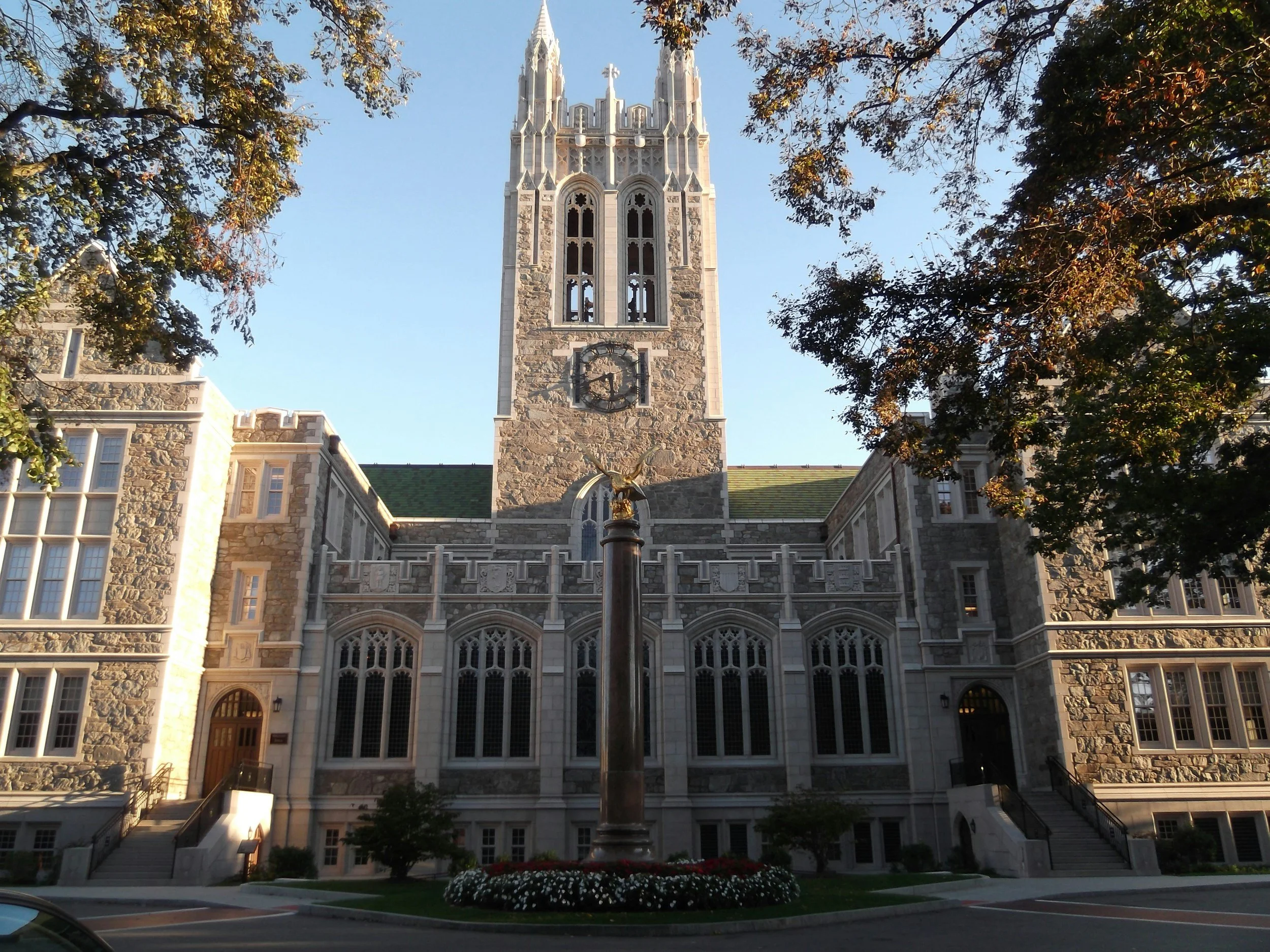
The third is Boston. BU's campus stretches along Commonwealth Avenue and the banks of the Charles River in the heart of Boston, and the relationship between the university and the city is a defining feature of the BU experience. Boston's concentration of universities (MIT, Harvard, Tufts, Northeastern, BC, and dozens more), hospitals (the Longwood Medical and Academic Area, Boston Medical Center), technology companies, financial firms, media organizations, and cultural institutions creates an internship, research, and career ecosystem that is among the richest in the country. The MBTA Green Line runs through campus, connecting BU students to the entire metropolitan area. If Boston-specific career, research, or cultural opportunities are part of what draws you, connect them to your specific plans.
The fourth is the research infrastructure. BU is a major research university (AAU member) with annual research expenditures exceeding $600 million. The Undergraduate Research Opportunities Program (UROP) funds over 500 students annually for term-time and summer research placements with faculty. The Duan Family Center for Computing and Data Sciences, a 19-story, fossil-fuel-free building that opened in 2022, is a flagship facility for data-driven research and interdisciplinary collaboration. The National Emerging Infectious Diseases Laboratories (NEIDL), one of the few Biosafety Level 4 facilities in the country, is on BU's Medical Campus. If specific labs, research programs, centers, or faculty draw you to BU, name them.
The fifth is the campus culture and community. BU enrolls approximately 18,000 undergraduates across its schools and colleges, making it one of the largest private universities in the country. The scale creates an extraordinary breadth of extracurricular opportunities: over 450 student organizations, Division I athletics in the Patriot League (BU's hockey program competes in Hockey East and is among the most storied in college hockey), a thriving arts and performance scene, and a residential system that houses most undergraduates on campus along the Charles River. The combination of a large, urban research university with a defined residential campus creates a student experience that is genuinely distinctive. If the specific culture of BU, the scale, the diversity, the energy of a large university embedded in one of the great college cities in the world, is part of your draw, articulate what it means to you.
Do not brag. Do not list your accomplishments in the body of the letter. Submit the letter promptly after accepting your waitlist spot. The primacy effect matters.
Have Your School Counselor Make an Advocacy Call
After your letter is submitted, your guidance counselor should contact the admissions office to communicate that BU is your top choice and that you will enroll if admitted. A brief, credible call reinforces the signal that your interest is genuine.
Keep Your Grades Up
BU's acceptance rate has dropped below 13%, and the academic profile of admitted students continues to strengthen. Continue performing at the level that made you competitive. Updated grades strengthen your candidacy.
If you'd like help maximizing your chances of getting off the waitlist and into your current top-choice colleges, schedule a free consultation with an admissions expert today.