Should You Submit a Schoolhouse Portfolio to Colleges?

Sixty-one colleges and universities now accept the Schoolhouse Portfolio as part of their undergraduate application. Fifteen of them accept a second, separate credential called the Dialogues Portfolio. Both are free, both are optional, and both are surrounded by advice that is either out of date or written by people repeating a nonprofit's marketing copy back to you.
Here is what the credential actually is, what admissions officers actually do with it, and the narrow set of circumstances in which building one is worth your time.
What Schoolhouse Is
Schoolhouse, formerly branded Schoolhouse.world, is a nonprofit peer tutoring platform founded in 2020 by Sal Khan of Khan Academy. Tutoring is free, live, and hosted on Zoom in small groups. The tutors are high school and college students who have demonstrated mastery in the subject they teach. The academic content comes from Khan Academy, so a Schoolhouse certification is essentially a proctored demonstration that you can pass a Khan Academy assessment.
The platform is large. Schoolhouse reports more than 220,000 learners across 180 countries and more than 538,000 tutoring sessions to date. That scale matters for your decision, because it means a minimal Schoolhouse record is not rare and therefore does not distinguish you from anyone.
Two Credentials, Not One
Almost every question we receive about Schoolhouse stems from families collapsing two different things into one. Separate them before you do anything else.
The Schoolhouse Portfolio is a record of your subject certifications and your volunteer tutoring statistics. Sixty-one colleges accept it for the 2026-2027 cycle. It is uncontroversial and has been in circulation since roughly 2021.
The Dialogues Portfolio is a record of your participation in structured one-on-one conversations about contested political and social topics, including peer feedback and your own written reflections. It launched publicly in May 2025. Fifteen colleges accept it. It is politically contested, and two of its eight founding partners publicly withdrew within three months of launch.
The Dialogues Portfolio appears at the bottom of the general Schoolhouse Portfolio, which is a large part of why people conflate them. They are different credentials with different audiences and different risks.
What Is Actually Printed on the Portfolio
Your portfolio is a quantitative document. It leads with four headline numbers displayed in large type, which are your total tutoring hours, sessions hosted, countries reached, and learners impacted. Below that sit your top courses tutored, any accolade badges you have earned as a Senior Tutor, Coach, or Moderator, and a feedback section showing your total count of positive learner ratings alongside the keywords learners selected most often to describe you, each with its own tally. Real examples from Schoolhouse's own sample portfolio include Super Helpful, Friendly, Interactive, Patient, and Good explanations. Verbatim learner testimonials follow. The certification list comes last, showing each Khan Academy unit you completed with a mastery percentage.
Read that structure again and notice what it means. An admissions officer sees your numbers before your certifications. If you have logged four tutoring hours and reached two learners, you have produced a document that communicates minimal commitment in large type on the first line. Submitting a thin portfolio is not a neutral act. It is an affirmative disclosure that you did very little.
How Certification Works
The process has four steps. You choose a Khan Academy unit or course challenge. You record video of your screen and webcam while taking the assessment aloud, explaining your reasoning, and you score at least 90 percent. You then peer review two videos from other students certifying in the same unit. Once your video is approved, you receive a shareable transcript link.
You may retake the assessment as many times as you want, and Caltech confirms on its own admissions site that colleges do not see your prior attempts. Certifiable subjects include Pre-Algebra through Calculus, Statistics, Biology, Chemistry, Physics, Computer Science, Reading and Writing, and History.
The Honorary Certification Detail Nobody Mentions
Schoolhouse also grants what it calls honorary certifications, awarded on the basis of submitted SAT and AP scores rather than a recorded assessment. Those honorary certifications do not appear on your portfolio at all.
Schoolhouse's stated reason for excluding them is worth reading closely, because it is the organization conceding the central point of this article. Honorary certifications are omitted because AP and SAT scores already reach colleges directly, so listing them would give admissions readers no new information.
Apply that logic to yourself. If your transcript already shows an A in AP Calculus BC and your score report already shows a 5, a Schoolhouse Calculus certification gives an admissions reader nothing they did not have. The nonprofit that built the credential agrees with that reasoning.
One caveat worth knowing. AP honorary certifications do count toward the full certification requirement for Senior Tutor status, and Senior Tutor badges do appear on your portfolio. So the honorary route carries indirect value even though it is invisible on its face.
How Dialogues Works
Dialogues brings students together for one-on-one Zoom conversations on topics like immigration, climate change, and artificial intelligence. Sal Khan piloted the program in March 2024 with a committee of civil discourse experts, running more than 2,000 sessions with over 600 students before the public launch in May 2025.
You can participate through one-off events, which are single thirty-minute conversations restricted to high school students aged 14 to 18, or through Dialogue Clubs, which meet every other week and are open to ages 14 through 21. The fall term runs from September through December with eight sessions, the spring term from January through May with ten, and the summer term from June through August with six.
To earn the portfolio you need three sessions and a completed post-session survey after each one. You have seven days to submit each survey. Miss the window and that session does not count.
How the Quotes on a Dialogues Portfolio Work
The quote mechanics confuse nearly everyone, so here is the sequence in order.
After each conversation, Schoolhouse prompts you with two separate forms. The first collects general program feedback and never appears on your portfolio. The second is the mandatory post-session survey, and that is the one that matters. It captures two different kinds of writing. Your self reflections are your own words about what the conversation taught you. Your peer reflections are your partner's words about you. Both feed into a pool of material attached to your account.
None of that pool shows up on your portfolio automatically. Your Dialogues portfolio starts out with no quotes on it at all. To add any, you open your portfolio, click Add Dialogues Feedback, and star the specific lines you want visible. You may feature up to three of your own reflections and up to three peer comments, six quotes in total, and Schoolhouse caps it there so admissions readers can review the page quickly. Nothing appears until you have finished at least three sessions with their surveys completed.
Two consequences follow, and both catch students off guard.
First, your own reflections cannot be edited once you submit them. Schoolhouse will let you decide whether to feature a reflection, but not to rewrite it. The paragraph you type at eleven at night right after a thirty-minute Zoom call is the paragraph a Columbia reader may eventually see. Treat every post-session survey as a piece of application writing, because it may become exactly that.
Second, you have no control over what your partner writes about you, only over whether to include it. If a partner leaves a lukewarm or clumsy comment, you simply leave it unstarred and it stays off the page.
When you do choose which quotes to feature, Schoolhouse's own guidance is to avoid anything that states your political position. Its published example is that if you discussed abortion, you should not select a quote identifying yourself as pro-life or pro-choice. Feature instead the lines that show how you listened, how you handled disagreement, or what the conversation changed in your thinking. That advice is sound for admissions reasons as well as the ones Schoolhouse gives. A reader learns nothing useful about your candidacy from your position on a contested issue, and the information can only work against you.
One element you cannot curate at all is the summary data. Your portfolio displays the first five topics you discussed and the five keywords your partners used most often to describe your conversation strengths, and Schoolhouse does not currently let you choose which of those appear.
The three-session threshold means you can finish the requirement in a few weeks. The permanence of the quotes means those few weeks produce a document you cannot revise later.
Which Colleges Accept It, and What That Actually Means
Treating all sixty-one partnerships as equivalent is where most published advice goes wrong. They fall into four tiers, and the difference between the top and bottom tier is enormous.
Tier One, Where the Certification Replaces a Requirement
Caltech offers the strongest case in American admissions. Caltech requires demonstrated mastery in calculus, physics, and chemistry. If you cannot take one of those because your school does not offer it or because you face an unresolvable scheduling conflict, Caltech accepts exactly three substitutes. A 5 on the relevant AP exam, a 6 or 7 on the relevant IB exam, or completion of the Schoolhouse course challenge in AP/College Calculus BC, AP/College Chemistry, or AP/College Physics 1. Both you and your counselor must document the underlying conflict, and proof of certification is due within one week of the application deadline. Caltech states plainly that there are no exceptions. Note that Caltech requires the Calculus BC certification specifically, because Khan Academy's BC course carries two units beyond AB.
Washington University in St. Louis applies a similar principle. If you are applying to McKelvey Engineering, Olin Business School, or the College of Architecture in the Sam Fox School, verified mastery of the Schoolhouse Calculus or Physics curriculum satisfies WashU's strong recommendation that you complete those subjects in high school.
If you fall into either category, stop reading and go get certified. This is the use case the credential was built for and it does concrete work on your file.
Tier Two, Named Academic Interest, Placement, or Credit
The University of Chicago accepts your portfolio in the UChicago Account portal, where it appears as Schoolhouse.world Transcript, and states that it is specifically looking for certifications in Calculus and Statistics. Worth calibrating your expectations against the actual numbers. In the first year of the partnership, students from fifteen countries and fourteen states submitted certifications, and UChicago enrolled thirteen students who had them.
Carnegie Mellon announced its partnership in May 2025 during Sal Khan's commencement address. The portfolio counts in holistic review, and certified students become eligible to sit for CMU placement exams in biology, chemistry, physics, calculus, and computer science. Passing lets you advance directly into higher-level coursework, with actual course credit signaled as a future possibility. CMU also uses a unique submission mechanic. Rather than a portal upload, it asks for your portfolio URL inside the CMU supplemental questions on the Common App.
Southern New Hampshire University grants real transferable college credit, currently for College Algebra, to students who complete the Khan Academy coursework and certify on Schoolhouse.
Tier Three, A Clear Intake Channel in Holistic Review
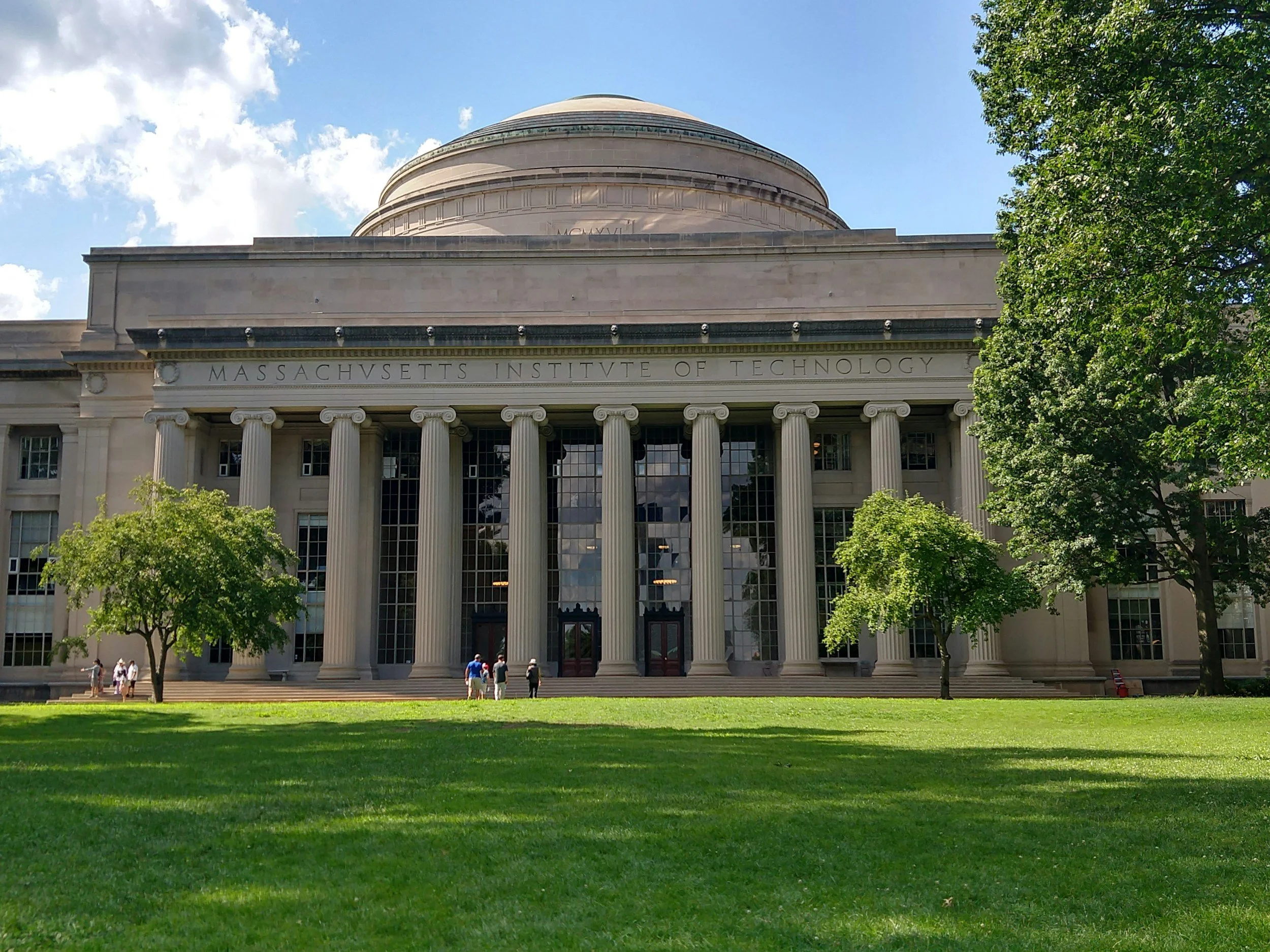
MIT provides a dedicated place on its own application to link your portfolio and accepts calculus certifications specifically. MIT's language is unusually candid and you should weigh it. The Institute strongly recommends that you take calculus through your school or a structured class if you possibly can, and presents Schoolhouse as the fallback when you cannot.
Most other Tier Three schools use a portal upload after you submit your application. That group includes Brown, Columbia, Dartmouth, Duke, Johns Hopkins, Northwestern, NYU, Swarthmore, Notre Dame, USC, UT Austin, Vanderbilt, Yale, Case Western, Colby, Holy Cross, Colorado School of Mines, Dickinson, Franklin and Marshall, Arkansas, Vermont, and Denver. Others accept email submission, including American University, Amherst, Drexel, Florida State, Georgia Tech, Ohio State, University of Georgia, St. Olaf, Wooster, Wentworth, Willamette, and Belmont.
Two schools in this group are refreshingly honest about weight, and you should take them at their word. Ohio State says you do not need to submit a portfolio because it is not a required document, though it will add one to your file if you send it. The University of Iowa says the document does not affect the admission process but may serve as a talking point with academic advisors later.
Tier Four, Listed as a Partner With No Published Mechanism
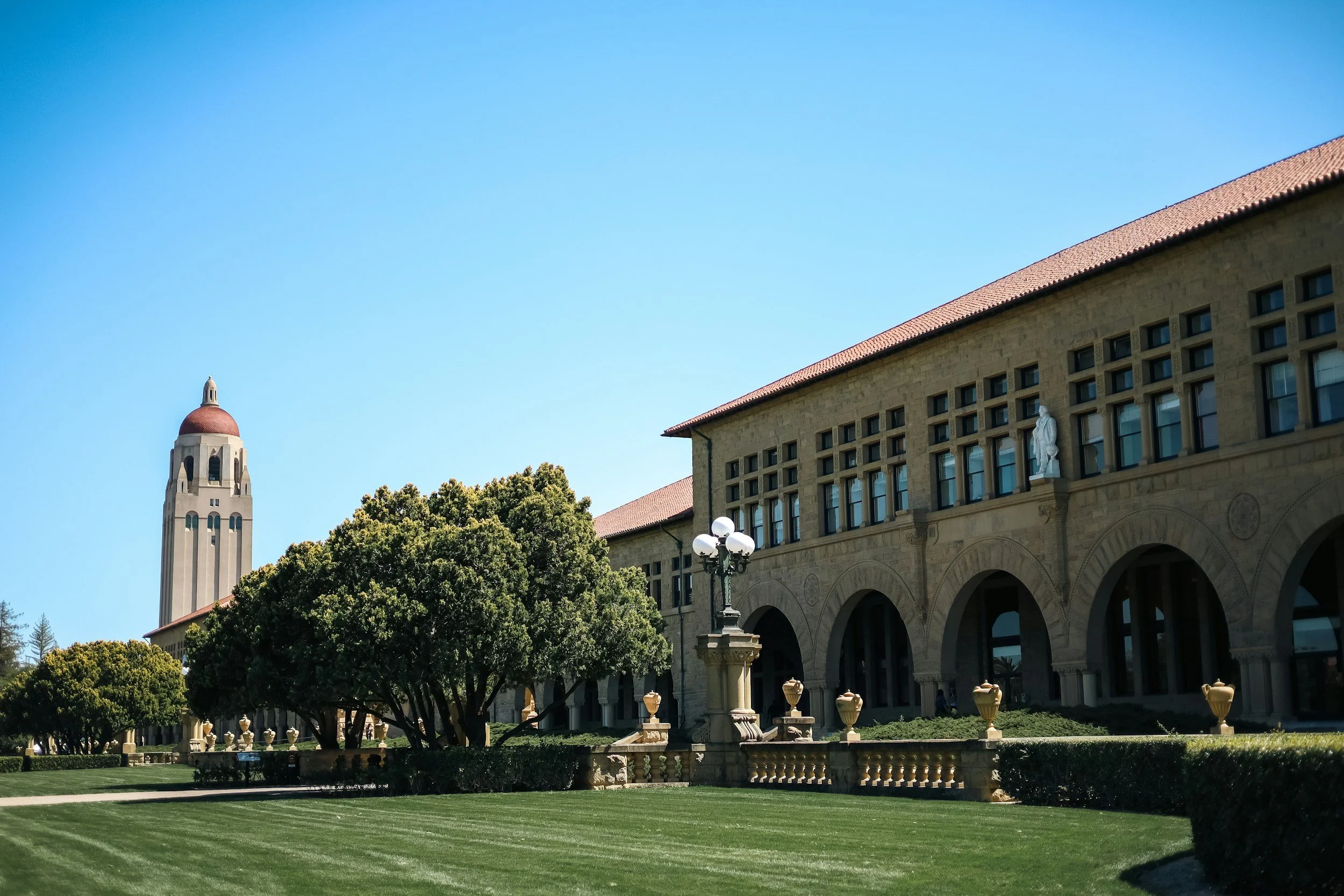
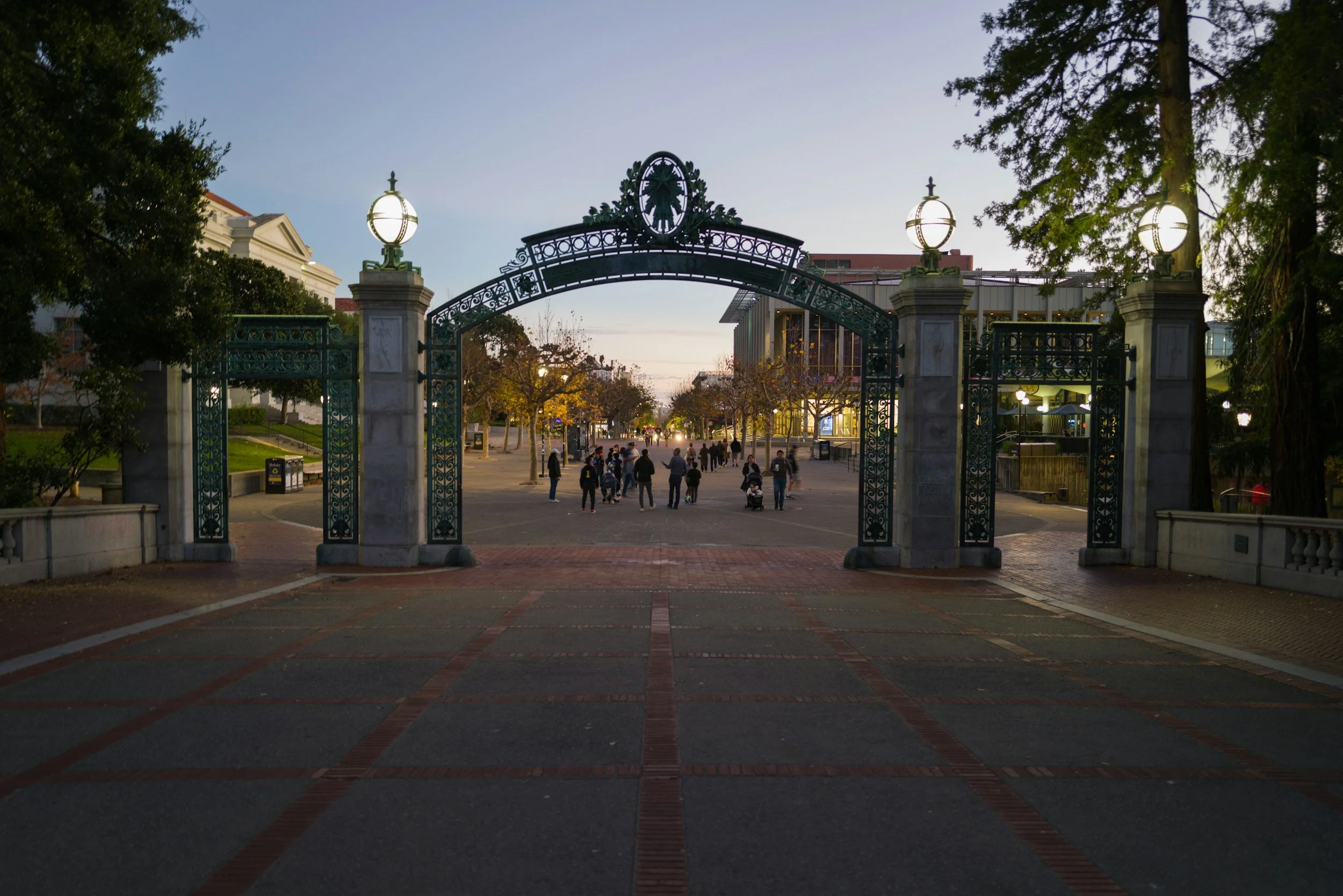
For a substantial share of partners, Schoolhouse's own instructions read simply that you should reach out and ask how to submit. That group currently includes Auburn, Olin College of Engineering, Purdue, Scripps, SMU, Spelman, Stony Brook, Union College, Berkeley, Delaware, La Verne, Maryland, Wesleyan, and York College of Pennsylvania. Five more schools appear on the 2026-2027 partner list with no submission instructions published anywhere, namely George Washington, Purdue Global, Stanford, Alabama, and Penn.
For these schools the fallback is attaching your portfolio in an Additional Information or Other Materials section, or contacting the admissions office directly. That is a materially weaker proposition than a dedicated field, and you should plan accordingly.
Submission Mechanics That Trip People Up
Most portals require you to submit after your application is already filed, not before. NYU, Colby, Dickinson, Franklin and Marshall, Northwestern, Swarthmore, Willamette, Denver, Vermont, Wooster, and American University all specify this. Students who try to attach a portfolio in advance find nowhere to do it and assume the option does not exist.
Caltech's one-week rule deserves a calendar entry. Certification requires peer review by volunteers, which introduces an unpredictable queue, so a student certifying three days before the deadline is gambling. Build in weeks of buffer.
Johns Hopkins and WashU both ask for a single consolidated PDF once all your certifications are complete. Sending five separate certificates creates clutter in a reader's queue and helps nobody. Brown requires your full name and applicant ID inside the email, and an email without them may never be matched to your file. UT Austin enforces a supplemental deadline separate from the application deadline.
Finally, Caltech requires counselor documentation of the scheduling conflict. You cannot self-certify it. That is a September conversation with your counselor, not a December one.
Who Should Actually Build One
The honest answer depends entirely on which of four situations describes you.
If you face a real access gap, do it. Your school does not offer calculus, physics, or chemistry, or a scheduling conflict blocks you, and you are applying to Caltech, WashU engineering or business or architecture, MIT, or UChicago. The certification removes a gap that could otherwise sink your file or satisfies a stated recommendation. This is the clearest yes in the entire analysis.
If you are a rural or small-town applicant, it is probably worth it. Much of this partnership infrastructure grew out of the STARS College Network, an initiative built specifically for small-town and rural students. Brown, Dartmouth, Yale, and Georgia Tech all route Schoolhouse instructions through their rural student pages. The portfolio supplies exactly the context a holistic reader is looking for in your file.
If standardized testing access is limited for you, consider it. UChicago's framing of the partnership is explicit, which is that it lets students represent themselves on their own terms regardless of their ability to access standardized testing. Caltech offers a parallel pathway for students who cannot sit a required exam due to accessibility issues.
If you already have a full AP schedule, the answer is usually no. A Schoolhouse certification duplicating a course you have already taken adds nothing, by Schoolhouse's own stated logic. There is one exception, and it is not a small one. If you accumulate a substantial tutoring record, meaning three figures of hours, hundreds of learners reached, Senior Tutor status, and real feedback volume, you have built something worth showing. But at that point you are not submitting an academic credential. You are documenting a serious, sustained service commitment, and it belongs in your activities list and possibly your essays, not just in a PDF upload.
That reframing is the most useful thing we can tell you. For nearly every applicant, the Schoolhouse Portfolio is not an admissions credential at all. It is documentation of an extracurricular. The question is not whether submitting a portfolio helps. The question is whether volunteer peer tutoring is a real, multi-year part of your story, and whether the portfolio documents it credibly. Submitted as evidence of a genuine commitment, it reads well. Submitted as a credential in itself, it reads as padding, and those large numbers at the top of the page make thin participation visible at a glance.
Deciding whether a credential like this belongs in your application is exactly the kind of judgment call that separates a strategic application from a cluttered one. Our consultants hold PhDs and have spent years helping students in engineering, mathematics, and the physical sciences present their academic preparation to the most selective programs in the country.
If you want a candid assessment of what belongs in your file and what does not, schedule a consultation with a college admissions expert today.