The 2026 Admissions Research That Contradicts What You Have Been Told

Most of what you read about college admissions comes from anecdote. A friend's daughter got into Cornell. A neighbor's son with a 1580 was rejected everywhere. An admissions officer said something vague at an information session, and a hundred parents left with a hundred different interpretations.
Academic research is slower and less satisfying than anecdote, but it is the only thing that tells you what is actually happening across millions of applications rather than across the four you happen to know about. Over the past eighteen months, a wave of peer reviewed studies has landed in journals like the Quarterly Journal of Economics, the American Educational Research Journal, and Educational Researcher. Several of them contradict advice you have probably been given.
Here is what the newest research actually found, and what each finding should change about how you approach your applications.
One. Family income predicts admission even when test scores are identical
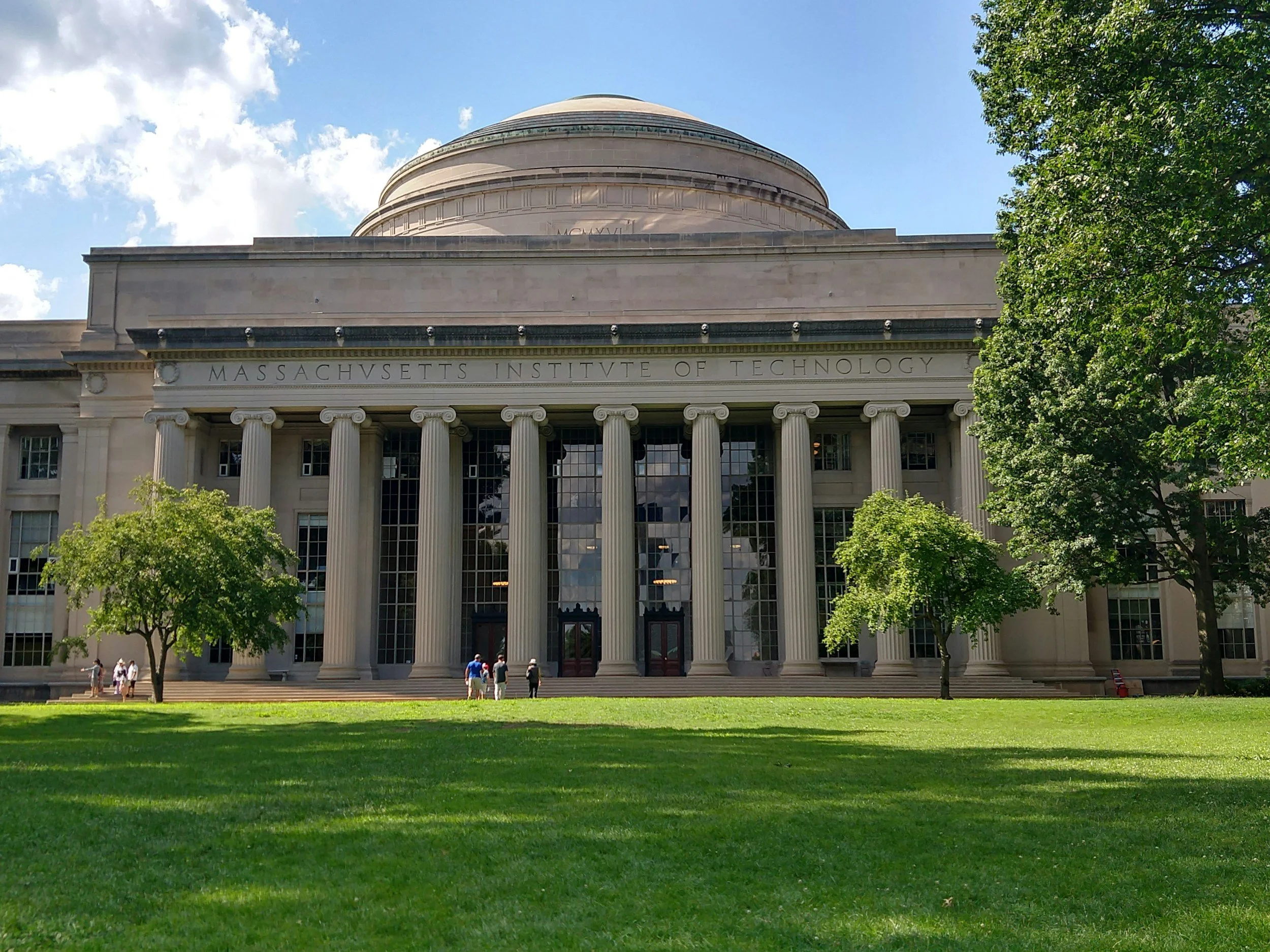
The most important admissions study of the last decade was published in the Quarterly Journal of Economics in February 2026. Raj Chetty, David Deming, and John Friedman linked admissions records, federal tax data, and standardized test scores across the Ivy League plus Stanford, MIT, Duke, and Chicago.
Their headline finding is that children from families in the top one percent of the income distribution are more than twice as likely to attend one of these colleges as middle class students with the same SAT or ACT scores. Not similar scores. The same scores.
The advantage comes from three specific mechanisms. The first is legacy preference. The second is the weight admissions committees place on non academic credentials, which are far easier to accumulate when your family can fund them. The third is athletic recruitment, which at these institutions disproportionately favors sports played at private schools and expensive clubs.
The detail that matters most for your strategy is what the researchers found at flagship public universities. There, high income applicants had no admissions advantage at all. The wealth premium is a feature of a specific set of private institutions, not of American higher education generally.
You can read the study at https://doi.org/10.1093/qje/qjaf050.
What this means for you. If you are not a legacy, a recruited athlete, or a student whose family has funded years of expensive activities, you are competing on a tilted field at roughly a dozen schools. That is an argument for building a list that includes strong public flagships where the tilt does not exist, and for making sure your non academic credentials demonstrate genuine initiative rather than purchased access. An activity that cost your family nothing and required you to build something from scratch reads very differently than one with a five figure program fee attached.
Two. Test optional policies did not change student outcomes
Christopher Bennett published an analysis in Educational Researcher in 2026 examining whether test optional adoption changed student outcomes. He looked at first year retention and six year graduation rates at institutions that dropped the requirement.
He found essentially nothing. Test optional adoption was not associated with meaningful changes in either measure. The policy neither improved nor harmed the outcomes it was supposed to affect.
This sits alongside a body of earlier peer reviewed work finding that test optional policies did little to increase campus diversity while reliably raising the reported average scores institutions publish, since students with lower scores simply stopped submitting them.
You can read the study at https://doi.org/10.3102/0013189X261426360.
What this means for you. Treat test optional as a reporting policy rather than an access policy. It changed what colleges publish about themselves more than it changed who gets in. If you can produce a strong score, produce one. The reinstatement of testing requirements at Yale, Harvard, Dartmouth, and MIT is the clearest signal available about how these institutions actually value the data.
Three. Score disclosure decisions track high school and community resources
A 2026 study in Research in Higher Education examined how applicants actually decide whether to disclose scores under test optional policies. Using application data from a selective public flagship, the researchers found that disclosure decisions track high school characteristics, the patterns of peers at the same school, and community income levels, even after accounting for the scores themselves.
In plain terms, students at well resourced high schools with well informed counselors are playing the disclosure game more skillfully than students without those advantages.
You can read the study at https://doi.org/10.1007/s11162-026-09908-3.
What this means for you. The submit or withhold decision is not a simple cutoff. It depends on the specific school, the specific program, and how your score reads against the context of your high school. A 1480 can be an asset at one institution and a liability at another. This is one of the highest leverage decisions in the entire application, and it is worth analyzing school by school rather than applying a single rule across your list.
Four. Holistic review can reproduce the inequality it is meant to correct
An important 2025 study in the American Educational Research Journal by Awilda Rodríguez and colleagues interviewed admissions officers about how they evaluate course rigor. The researchers found that officers frequently apply deficit oriented framings to students from low resourced high schools, effectively penalizing applicants for the limitations of schools they did not choose.
This matters because holistic review is usually presented as the equity conscious alternative to numbers driven admissions. The research suggests that the way holistic review is implemented can reproduce the exact inequality it is meant to correct.
You can read the study at https://doi.org/10.3102/00028312251360905.
What this means for you. If your high school does not offer a deep AP or IB catalog, you cannot assume an admissions officer will fill in that context on your behalf. You need to make it explicit. Take the most demanding courses your school offers, then supplement deliberately through dual enrollment or accredited online coursework, and make sure your counselor's school profile and recommendation letter state plainly what was and was not available to you.
Five. AI generated essays are generic and poorly matched to applicant voice
A 2025 study presented at the Conference on Language Modeling by researchers including Cornell's René Kizilcec compared real application essays against essays generated by eight different large language models. The finding was consistent. Model generated essays are generic and poorly aligned to the voice of any individual applicant.
Separately, a 2025 paper in the Proceedings of the ACM on Human Computer Interaction examined the algorithmic tools admissions offices are buying, documenting significant gaps between what vendors claim their systems do and what applicants understand about how they are being evaluated.
You can read the algorithmic admissions paper at https://doi.org/10.1145/3757550.
What this means for you. The failure mode of an AI written essay is not that it gets caught. It is that it is forgettable. A strong personal statement contains sentences that only you could have written, built from specifics a language model has no access to. If a paragraph of your essay could plausibly appear in another student's application, it is doing nothing for you, whether a machine wrote it or you did.
Six. Direct admissions increases applications but not enrollment
Direct admissions programs, in which states proactively admit students to public institutions based on their existing academic records, have expanded quickly. A 2025 experimental study by Taylor Odle and Jennifer Delaney across four states found that direct admissions meaningfully increased the probability that a student applied to college but had no significant effect on whether that student enrolled.
This is a working paper rather than a peer reviewed journal article, so treat it as strong preliminary evidence rather than settled fact. The finding is still instructive. Removing an application step does not overcome the two barriers that actually determine enrollment, which are affordability and information.
What this means for you. Access to an offer is not the same as access to an education. Financial aid strategy and college list construction deserve as much of your attention as your essays do, and probably earlier in the process than you are giving them.
A note about affirmative action research
You have likely seen coverage of enrollment changes following the Supreme Court's 2023 decision in Students for Fair Admissions v. Harvard. The most rigorous work on this question, including a large January 2026 analysis by a College Board and Annenberg team linking more than twelve million student records, finds substantial declines in underrepresented minority enrollment at highly selective colleges in the first post decision cycle.
We are flagging this carefully. Those findings currently exist in working papers rather than peer reviewed journals, and researchers are still separating the effects of the Court's decision from the effects of the disastrous 2024 FAFSA rollout that happened in the same admissions cycle. The peer reviewed literature so far, including Natasha Warikoo's 2025 review in the Annual Review of Sociology available at https://doi.org/10.1146/annurev-soc-090324-040338, is largely theoretical. Expect the rigorous empirical picture to arrive in journals over the next eighteen months.
What this means for your strategy
The research points in a consistent direction. The parts of the application you control most directly, which are your academic rigor, your test scores where you have them, and the specificity of your writing, remain the parts that carry the most weight for applicants without institutional advantages. The parts you do not control, including legacy status and recruited athlete status, are real and quantified, and the correct response is to build a college list that does not depend on them.
Strategy matters more now than it did five years ago, not less. The disclosure decision alone has become a genuine analytical problem. So has positioning a student from a high school with a thin course catalog against one from a school offering twenty three AP options.
At Cosmic, our consultants hold doctorates and read this literature as it publishes, because your application strategy should be built on evidence rather than on what worked for somebody's cousin in 2019.
Schedule a consultation with a college admissions expert to talk through how this research applies to your specific profile today.