Waitlisted from Princeton: What to Do

If Princeton University just placed you on the waitlist, you are navigating the waitlist at one of the most selective universities in the world and the institution whose financial aid program has set the standard for every elite university in this series. Princeton received 42,303 applications for the Class of 2029 and admitted 1,868, a 4.42% acceptance rate. The enrolled class came from 47 states, Washington D.C., four U.S. territories, and 65 countries. On their applications, 65.7% indicated interest in the bachelor of arts degree and 27.3% in the bachelor of science in engineering. The Class of 2029 marks the completion of Princeton's planned undergraduate expansion, meaning the incoming class likely reflects the university's fullest enrollment targets.
Princeton's waitlist history over 18 years of available data shows that the university has turned to its waitlist approximately two-thirds of the time. In the remaining years, zero students were admitted. For the Class of 2028, Princeton admitted 40 students from 1,396 confirmed waitlist spots, a 2.87% waitlist acceptance rate. The 18-year data reveals a high of 164 students admitted (16.37% for the Class of 2015) and a low of zero in multiple years, including the Classes of 2022 and 2026. The decade average is approximately 4.6%. In years when yield exceeds projections, the waitlist does not move at all. In years when it misses, Princeton can admit well over 100 students. The pattern is binary: either the list moves meaningfully, or it does not move.
Accept Your Place on the Waitlist
Princeton requires you to confirm that you wish to remain on the waitlist. The admissions FAQ states: "Since we don't know until after May 1 how many students will accept our offer of admission, we invite a number of our applicants to stay on our wait list in the event we have remaining spaces in the first-year class." The waitlist is unranked. If you do not confirm, you will not be considered. Respond promptly.
Commit to Another School Before May 1
Deposit at another school. Princeton's waitlist activity does not begin until after the May 1 national reply date. Do not leave yourself without a seat in a first-year class.
Write a Letter of Continued Interest
Princeton has not historically required or formally solicited LOCIs from waitlisted students, but the university accepts them, and submitting one is the single most important action you can take. Email your LOCI to your regional admissions representative. Write up to 650 words. Make it a love letter to Princeton. Not a brag sheet. Not a resume update. Not a list of other schools that admitted you. A letter that makes the reader understand exactly who you will be in the Princeton community and why this specific university, with its specific structure and ethos, is where you belong.
Princeton's identity is built on several distinctive pillars, and your letter should engage with them directly.
The first is the residential college system. Princeton's six residential colleges house all first-year and sophomore students, and the system is the organizing principle of the undergraduate social and intellectual experience. Each college has its own dining hall, common rooms, advising staff, and traditions. After sophomore year, students can choose to join one of Princeton's eating clubs on Prospect Avenue, live in upperclass dormitories, or participate in independent housing options. The residential colleges create a sense of immediate belonging from day one: you arrive at Princeton and immediately have a community of several hundred students, faculty fellows, and a dean who know you by name. If the residential college system is part of what draws you to Princeton, because you want a university where your first community is a diverse cross-section rather than a self-selected group, articulate what it means to you.
The second is the academic structure and the emphasis on undergraduate education. Princeton is unusual among major research universities in that it does not have professional schools in law, medicine, or business (the School of Public and International Affairs is the closest analog). This means that the undergraduate experience is the center of the university's identity in a way that is not true at most peer institutions. The faculty of Princeton's departments and programs are primarily focused on teaching and mentoring undergraduates, not running professional training programs. Princeton offers the A.B. (bachelor of arts) and B.S.E. (bachelor of science in engineering) degrees. The independent work requirement, in which every student completes a junior paper and a senior thesis, is the academic capstone of the Princeton experience and is more rigorous and more central to the degree than at any peer institution. If you are drawn to Princeton because you want a research university where the undergraduate is the primary student, where you will write a thesis under the direct supervision of a faculty member, and where the intellectual culture is organized around that expectation, say so.
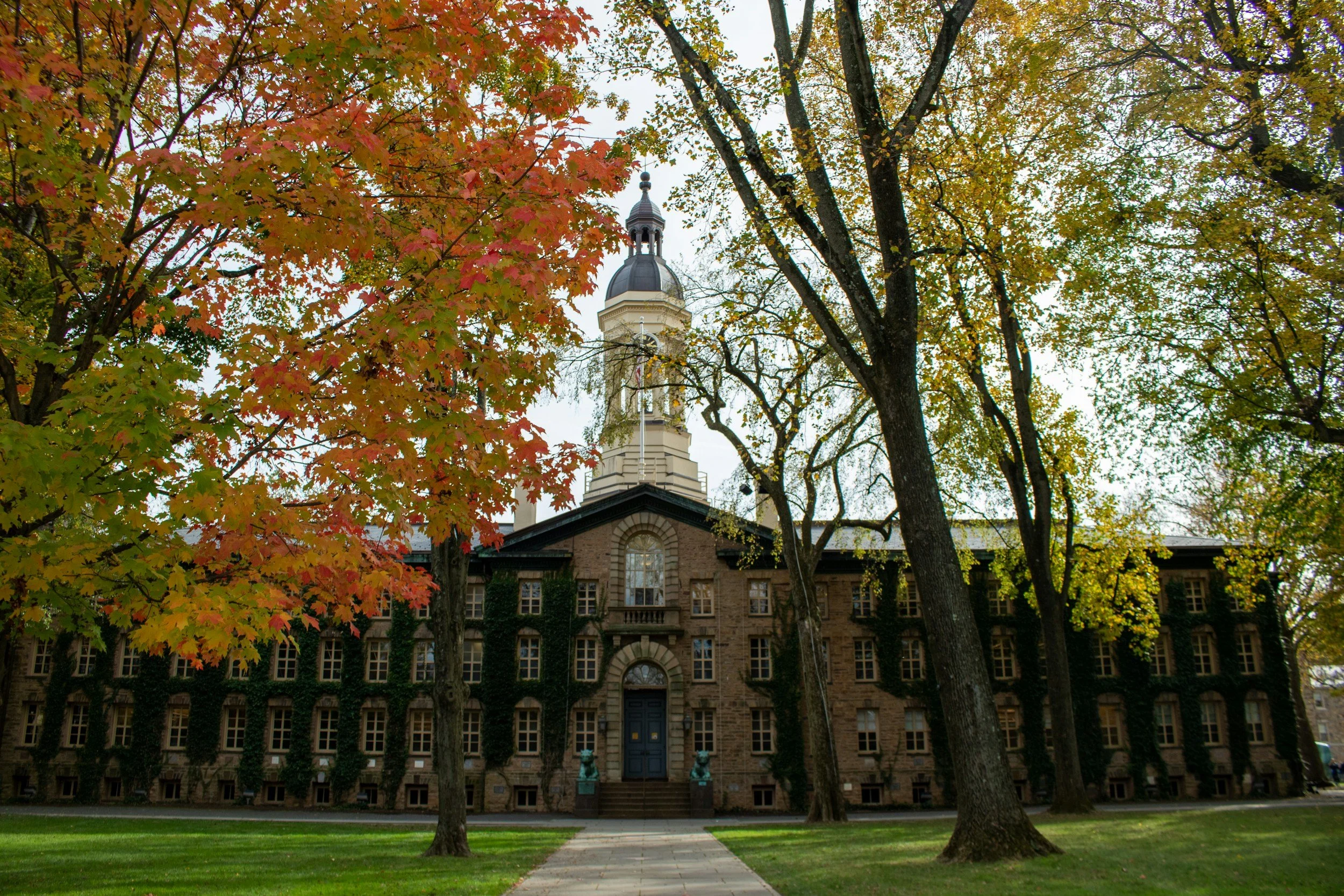
The third is the campus and the broader setting. Princeton's 600-acre campus in Princeton, New Jersey, is among the most beautiful in American higher education and is located roughly equidistant from New York City and Philadelphia (about an hour from each by train). The campus itself is self-contained in a way that creates an immersive intellectual community: the university's labs, libraries, performance spaces, athletic facilities, and residential colleges are all within walking distance of one another. If the immersive campus environment and the access to both New York and Philadelphia are part of your draw, connect them to your plans.
The fourth is the service ethos. Princeton's informal motto is "in the nation's service and the service of humanity," and the commitment to public service runs through the curriculum, the extracurricular landscape, and the institutional culture. The School of Public and International Affairs (formerly the Woodrow Wilson School) is one of the most prominent policy schools in the world. The Pace Center for Civic Engagement, the Novogratz Bridge Year Program (a tuition-free gap year service program abroad), and the Scholars in the Nation's Service Initiative (SINSI) reflect Princeton's institutional commitment to sending graduates into public life. If service, policy, or civic engagement is part of your identity, Princeton's infrastructure in this area is a genuinely distinctive LOCI anchor.
The fifth is the culture and community. Princeton enrolls approximately 5,600 undergraduates and maintains a student-to-faculty ratio of approximately 5:1. The university competes in Ivy League Division I athletics across 37 varsity teams. The eating clubs on Prospect Avenue, the outdoor sculpture collection, the Princeton University Art Museum, and traditions like the Pre-rade and FitzRandolph Gate create a campus culture that is distinctive and deeply felt. If the specific culture of Princeton, the traditions, the scale, the ethos, the people, is part of your draw, articulate it with specificity.
Do not brag. Do not list your accomplishments in the body of the letter. Submit the letter promptly after accepting your waitlist spot. The primacy effect matters.
Have Your Guidance Counselor Make an Advocacy Call
After your letter is submitted, your guidance counselor should contact the admissions office to communicate that Princeton is your top choice and that you will enroll if admitted. A brief, credible call from your counselor reinforces the signal that your interest is genuine.
Keep Your Grades Up
Princeton's academic profile is among the strongest of any university in the world. Approximately 56% of admitted students had unweighted GPAs of 4.0 or above in recent cycles. Continue performing at the level that made you competitive. Princeton may review midyear and final grades before making waitlist decisions.
If you'd like help maximizing your chances of getting off the waitlist and into your current top-choice colleges, schedule a free consultation with an admissions expert today.