UCLA vs UC Berkeley 2026
If you're applying to the UCs, you've almost certainly asked yourself this question: UCLA or UC Berkeley, or both?
Both schools are excellent. Both are brutally competitive. And most students end up applying to both anyway. But "apply to both" isn't a strategy, it's a hedge. The real question is which school is actually a better fit for you, and how to present yourself most effectively to each one.
Here's what the data says, and what it doesn't.
Selectivity: How Hard Is It to Actually Get In?
Let's start with the numbers, because they tell a story that most applicants don't fully appreciate.
UCLA has been the more selective of the two in recent cycles. In fall 2023, UCLA received 145,910 applications and admitted just 12,737 students, an admit rate of 8.7%. In fall 2024, that number ticked up slightly to 9.0% (13,114 admits from 146,276 applicants). UCLA is one of the most applied-to universities in the world, and its admit rate reflects that.
UC Berkeley is extremely selective as well, but in recent memory, sits a few points higher than UCLA. Berkeley's admit rate has hovered around 11% across recent cycles, 11.6% in fall 2023, 11.0% in fall 2024, and 11.4% in fall 2025. Berkeley typically receives roughly 125,000–128,000 applications per year, a somewhat smaller pool than UCLA's, but the competition is no less fierce.
One number that often gets overlooked: Berkeley's yield. Of the students Berkeley admits, only about 45–46% actually enroll. In fall 2023, that was 6,675 students from 14,565 admits. In fall 2024, it was 6,300 students from 13,701 admits. This matters for admissions modeling, Berkeley has to manage enrollment carefully, and a predictable yield in the mid-40s means they have a pretty clear sense of how many acceptances translate to seats filled.
The critical nuance for UCLA applicants: the campus-wide admit rate is not the number you should be thinking about if you're applying to a specific school or major. UCLA's published profiles show dramatically lower admit rates for certain professional schools and impacted programs. If you're applying to a highly competitive major, you may be looking at admit rates that are significantly below the already-low 9% average. Major choice, and alternate major strategy where applicable, is one of the most important decisions an UCLA applicant can make.
Quarter System vs. Semester System: More Important Than You Think
This is the most under-discussed difference between these two schools, and it has real consequences for your academic experience.
UCLA runs on a quarter system. You'll take more courses over the year, but each one moves faster. A quarter is roughly 10 weeks. If a class doesn't click immediately, you don't have much runway to recover. On the flip side, you cover more ground, you can pivot across disciplines more quickly, and you have more flexibility in building a diverse transcript.
UC Berkeley runs on a semester system. Each semester is roughly 15–16 weeks. You go deeper into fewer courses per term, which is often a better fit for research-heavy or lab-intensive work. Semesters also align more naturally with summer internship and research timelines.
If you're a STEM student who plans to do independent research, work in a lab, or pursue summer programs, the semester calendar at Berkeley may actually give you a logistical edge. Internship timelines, research program cycles, and academic calendar alignment are worth thinking through before you commit.
Location: Los Angeles vs. the Bay Area
This one really does come down to preference, and you should be honest with yourself about it.
UCLA's main campus is in the Westwood neighborhood of Los Angeles. It's a 419-acre campus embedded in one of the world's largest entertainment, media, and creative industry ecosystems. The energy is different from a traditional college town, Los Angeles is a sprawling metropolis, and navigating it often requires a car or willingness to work with limited public transit options. That said, the access to industry, culture, and opportunity is unlike almost anywhere else.
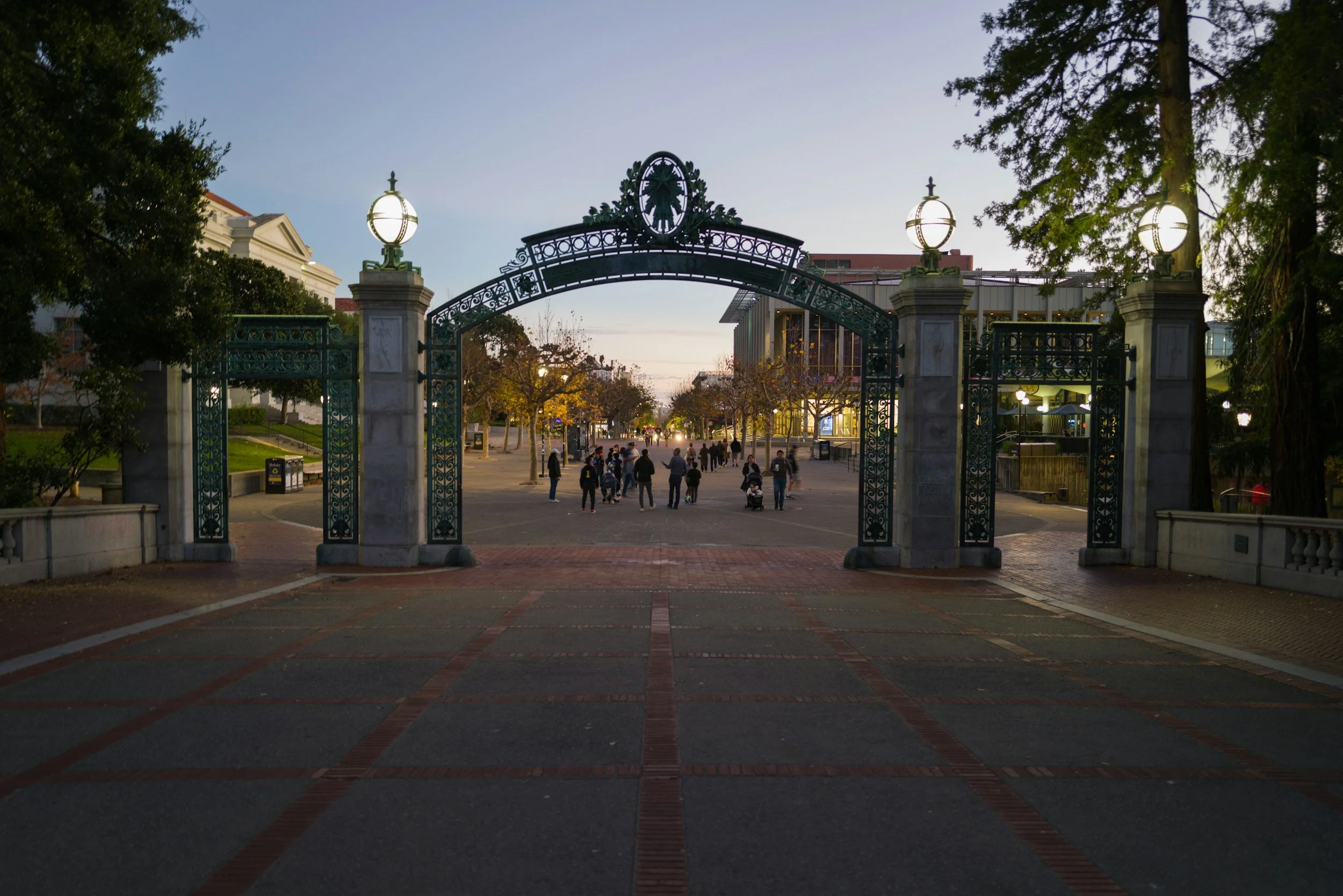
UC Berkeley's campus spans over 1,200 acres with a 178-acre central core overlooking the San Francisco Bay. Berkeley sits directly on Bay Area Rapid Transit (BART), with the Downtown Berkeley Station a short walk from campus. This means genuine, functional access to San Francisco, Oakland, and the broader Bay Area tech ecosystem, without a car. For students interested in tech, startups, or Bay Area industry connections, the transit access alone is a significant practical advantage.
The weather is also a real difference. Los Angeles is warmer and sunnier throughout the academic year. Berkeley lives under the Bay Area's marine layer, coastal fog, cool summers, and milder (but wetter and greyer) winters. Neither is objectively better, but they produce very different day-to-day campus experiences.
Cost of Living: Both Are Expensive, But Differently
There's no way around this: both campuses are located in high cost-of-living markets.
At UCLA, the estimated student budget includes food and housing in roughly the $19,000 range depending on living arrangement. There are large cost differences between resident and non-resident totals due to supplemental tuition, so that distinction matters.
At Berkeley, the student budget is similarly high, and the school is explicit about the fact that tuition and fee figures can change subject to Regents approval. Berkeley's off-campus housing market is concentrated in a relatively compact East Bay geography, which creates intense competition for rental units near campus. UCLA's Westside market is embedded in a larger metro, where commute radius becomes a strategic lever, you can live further out to reduce rent, but you're trading time and transportation costs.
Campus Culture: More Overlap Than You'd Expect, But Real Differences Exist
Both campuses support massive student organization ecosystems, each claims over 1,200 registered student groups. Both have significant Greek life communities (roughly 4,100 members and 60 organizations at UCLA; about 3,500 members across 55+ organizations at Berkeley). Both produce highly engaged student bodies with serious academic cultures.
Where the campuses diverge culturally is harder to quantify but real. Berkeley's identity is frequently framed around public scholarship, civic engagement, and intellectual activism. The campus's historical role in shaping national discourse around free speech, student movements, and public institutions is not just history, it shapes the culture students walk into. Berkeley students often describe the campus as politically intense in a way that's woven into daily life.
UCLA's cultural footprint is more intertwined with Los Angeles, entertainment, sports, scale, and a campus that generates its own ecosystem of traditions and community. UCLA athletics, particularly with its recent move to the Big Ten Conference, bring a different kind of school spirit and national visibility. Berkeley's athletics are affiliated with the Atlantic Coast Conference.
Neither culture is better. They're different, and if you know yourself well, you probably already have a preference.
The Bottom Line for 2026 Applicants
Both schools are exceptional and both deserve serious applications. But here's how to think about them strategically:
Apply to UCLA with clarity about your major. The campus-wide admit rate is one of the most misleading numbers in college admissions. What matters is the admit rate for your specific program. Research it, think carefully about your school and major selection, and consider whether an alternate major makes sense for your situation.
Apply to Berkeley if you want a semester system, strong Bay Area industry access, a compact campus with real transit connectivity, and a culture with deep intellectual and civic identity.
If you're a strong STEM student with legitimate research experience, a clear intellectual focus, and the ability to articulate impact, not just participation, both schools are worth pursuing. The difference comes down to where you can actually see yourself living and learning for four years.
That's a question only you can answer.
If you want to learn what you can do right now to optimize your application for either UCLA or UC Berkeley, schedule a free consultation with an admissions expert today.