Yale vs Stanford 2026

Two Ivy League giants. Both ultra-selective. Both world-class. So what actually separates Yale from Princeton, and which one is right for you?
At Cosmic College Consulting, we help academically driven students navigate exactly this kind of decision. In this guide, we break down the real differences between Yale and Princeton: their admissions data, early action policies, academic cultures, campus environments, and student life. By the end, you'll have a clear picture of where you'll thrive.
Admissions Selectivity: Early vs. Regular Decision
Yale and Princeton are statistically interchangeable in terms of selectivity. Both admit roughly 4% of applicants overall, but early action candidates enjoy a meaningfully higher admit rate, making the choice of when to apply genuinely strategic.
Yale's Single-Choice Early Action (SCEA) admit rate has hovered around 10–11% in recent cycles (2021–2025), compared to just 2.9% in the regular decision round for the Class of 2028. Princeton follows a similar pattern: its historical EA admit rate has reached 13–15%, far above the 3–4% RD rate.
Applying early roughly triples or quadruples your odds, but only if Yale or Princeton is genuinely your first choice. Don't apply early just for the statistics.
A brief historical note: Princeton suspended its early action program for the Class of 2025, admitting all students through a single Regular Decision round at approximately a 4% rate. Early Action was reinstated the following year.
Early Action Policy: Key Differences
Both schools offer non-binding Single-Choice Early Action, meaning admitted students are not required to enroll, but applicants cannot simultaneously apply early to other private U.S. universities. The policies are nearly identical, with one practical difference worth knowing.
Princeton's SCEA rules prohibit applying early to any other private college or university in the U.S. Standard exceptions apply: you may still apply early to public universities, international institutions, or programs with rolling admissions.
Yale's SCEA policy is similarly restrictive, but includes an explicit carve-out: you may apply early to other private colleges if those programs' notification dates fall after January 1. In practice, Yale applicants have slightly more flexibility, for example, certain scholarship deadlines or priority programs at other private schools.
Neither school uses Early Decision, so if admitted early, you have until May 1 to decide. Both schools also defer a significant portion of early applicants to the regular round rather than outright rejecting them.
Testing Policies for 2026–2027 (What's Actually Required Right Now)
This is one area where Yale and Princeton have meaningfully diverged, and it matters for how you plan your application.
Yale — Test-Flexible (scores required, but flexible on type): As of the 2024–25 admissions cycle, Yale is no longer test-optional. All applicants must submit some form of standardized test scores. However, Yale's "test-flexible" policy means you can satisfy this requirement with an SAT, ACT, or AP/IB subject exam scores, even just one AP or IB score counts. Yale does not prefer one test type over another, and admissions officers are instructed not to penalize applicants for the type of test submitted. That said, Yale's own internal research found that test scores are the single greatest predictor of academic performance in its courses, so strong scores remain a genuine asset.
Princeton — Test-Optional (for now): Princeton remains test-optional for students applying for fall 2026 and fall 2027 entry. You are not required to submit SAT or ACT scores, and Princeton will evaluate your application holistically without them. However, Princeton has already announced it will return to requiring standardized testing for students applying for fall 2028 entry. If you're a current sophomore or younger, plan accordingly.
As for score ranges, the competitive benchmarks are essentially identical at both schools. The middle 50% SAT range is approximately 1480–1580 at both Yale and Princeton, with ACT composites of 33–35. Median admitted scores hover around the mid-1530s.
The strategic takeaway: if you're applying to Yale, you need to submit scores, so get your SAT/ACT or AP scores in order. If you're applying to Princeton in 2026–27 and your scores are strong, submitting them is still advantageous. If your scores don't reflect your ability, Princeton's test-optional window is one of the last chances at a top Ivy to apply without them.
Location and Campus Setting
This is one of the more tangible distinctions between the two schools, and it matters more than applicants often expect.
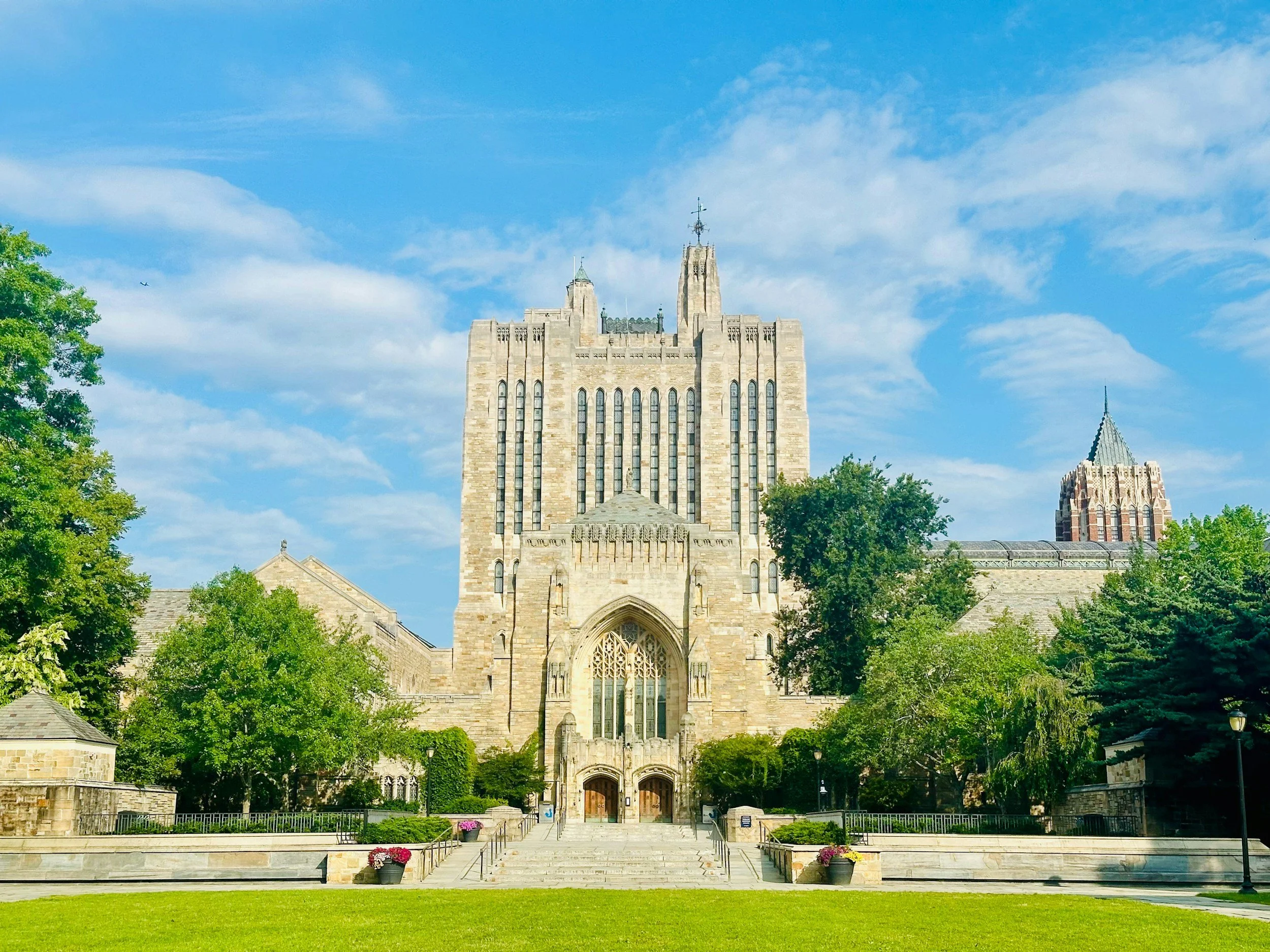
Yale is located in New Haven, Connecticut, a mid-sized, culturally rich city with an active arts scene, restaurants, music venues, and opportunities for community engagement. The campus itself is architecturally stunning, with Collegiate Gothic courtyards and residential colleges woven into the fabric of the city. New York City is roughly 1.5–2 hours away by train.
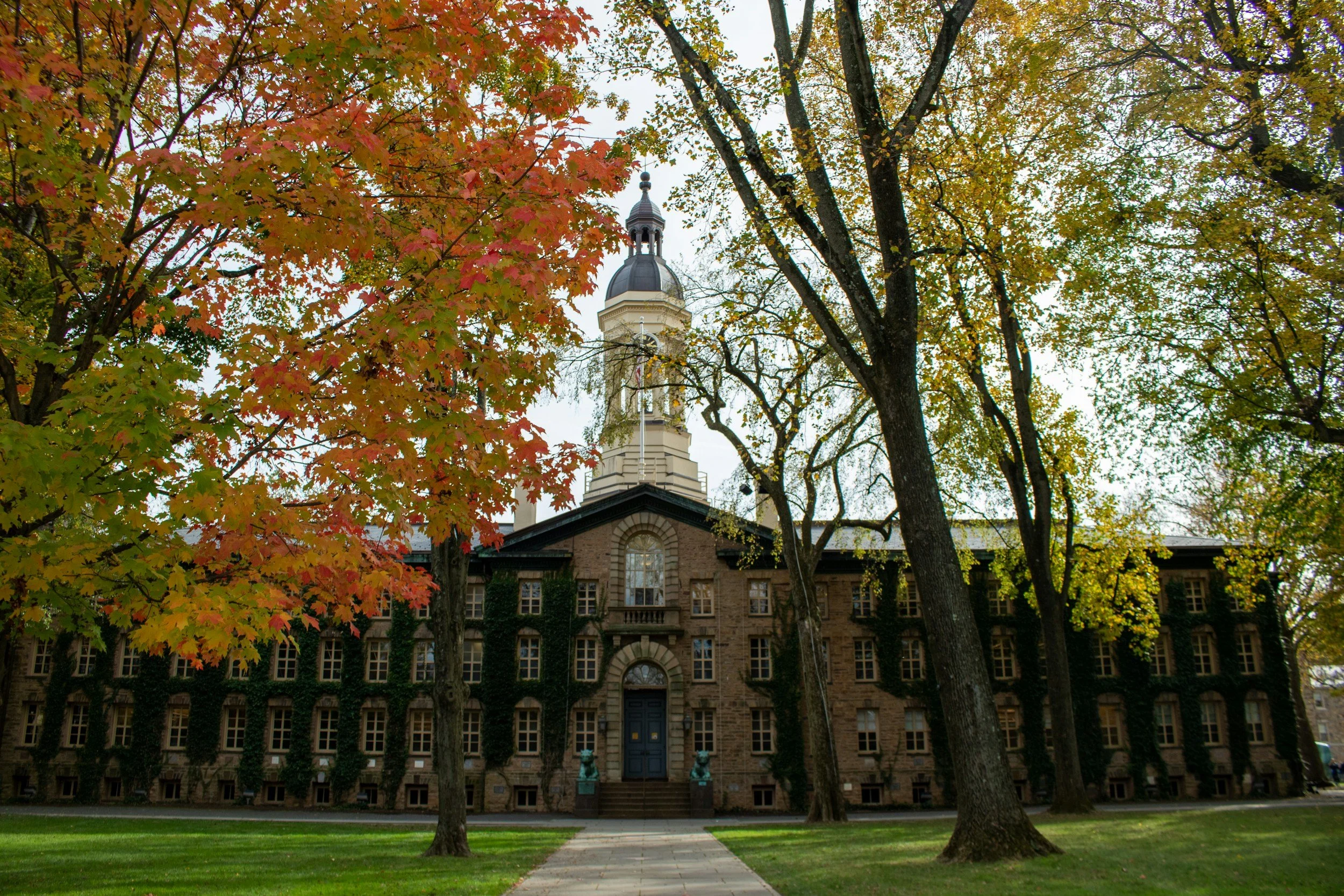
Princeton sits in Princeton, New Jersey, a quiet, affluent college town roughly equidistant between New York City and Philadelphia (about an hour from each). The campus is self-contained and serene, with tree-lined walks and historic architecture. Social life is campus-centric by design.
Ask yourself: do you want your college experience to feel connected to a city, or do you want the campus to be the world? That answer points toward Yale or Princeton respectively.
Academic Programs and Curriculum
Both schools embrace the liberal arts, but their curricular philosophies differ in meaningful ways.
Yale's curriculum is flexible and exploratory. Students fulfill distribution requirements across major disciplines but have significant latitude to chart their own course. Yale is especially distinguished in the humanities, social sciences, political science, history, global affairs, and the arts. The teaching culture emphasizes seminar-style discussion, interdisciplinary thinking, and intellectual breadth.
Princeton's curriculum is more structured and research-intensive. Every A.B. (liberal arts) student completes a year-long senior thesis, a serious scholarly or creative work required across every major. Many students also undertake junior independent research projects. Princeton excels in STEM and quantitative fields: mathematics, computer science, physics, engineering, and economics are among its strongest programs. With approximately 5,300 undergraduates (vs. Yale's ~6,500), Princeton offers a smaller student-to-faculty ratio and a culture of unusually close faculty mentorship.
If you want flexibility and interdisciplinary exploration, Yale's curriculum gives you room to roam. If you want depth, structured research, and the pride of producing a significant independent work, Princeton's model is hard to beat.
Campus Life and Student Culture
Yale's culture is often described as vibrant, collaborative, and artsy. The residential college system, 14 colleges, each with its own community, traditions, dining, and intramurals, creates close-knit social units within a larger, dynamic campus. Beyond the residential colleges, Yale students are active in theater, improv, a cappella, political organizations, publications, and cultural groups. The city of New Haven amplifies that energy considerably.
Princeton's social life revolves more tightly around campus. The iconic Eating Clubs on Prospect Avenue, which juniors and seniors can join, serve as the social core: dining venues, social hubs, and weekend gathering places. The atmosphere is serene, academically serious, and community-focused. With a smaller student body and a self-contained town, Princeton fosters deep bonds. The trade-off is less urban spontaneity and a somewhat more insular social world.
Both schools have outstanding athletics, performing arts, and hundreds of student organizations. Neither has a traditional Greek life system (Princeton's Eating Clubs partially fill that social niche). Both attract extraordinarily talented, driven students from around the world.
Bottom Line: Which School Is Right for You?
Yale and Princeton are both exceptional. The question isn't which is better, it's which is a better fit for who you are.
Choose Yale if: you want an urban campus experience, you're drawn to the humanities, social sciences, or interdisciplinary work, and you value a flexible curriculum and creative campus culture.
Choose Princeton if: you want a focused, research-intensive environment, you're drawn to STEM or quantitative fields, and you value a tight-knit campus community and the pride of completing a senior thesis.
If you want to learn what you can do right now to optimize your application for either NYU or USC, schedule a free consultation with an admissions expert today.