How Much Getting Into RSI Matters for HYPMS

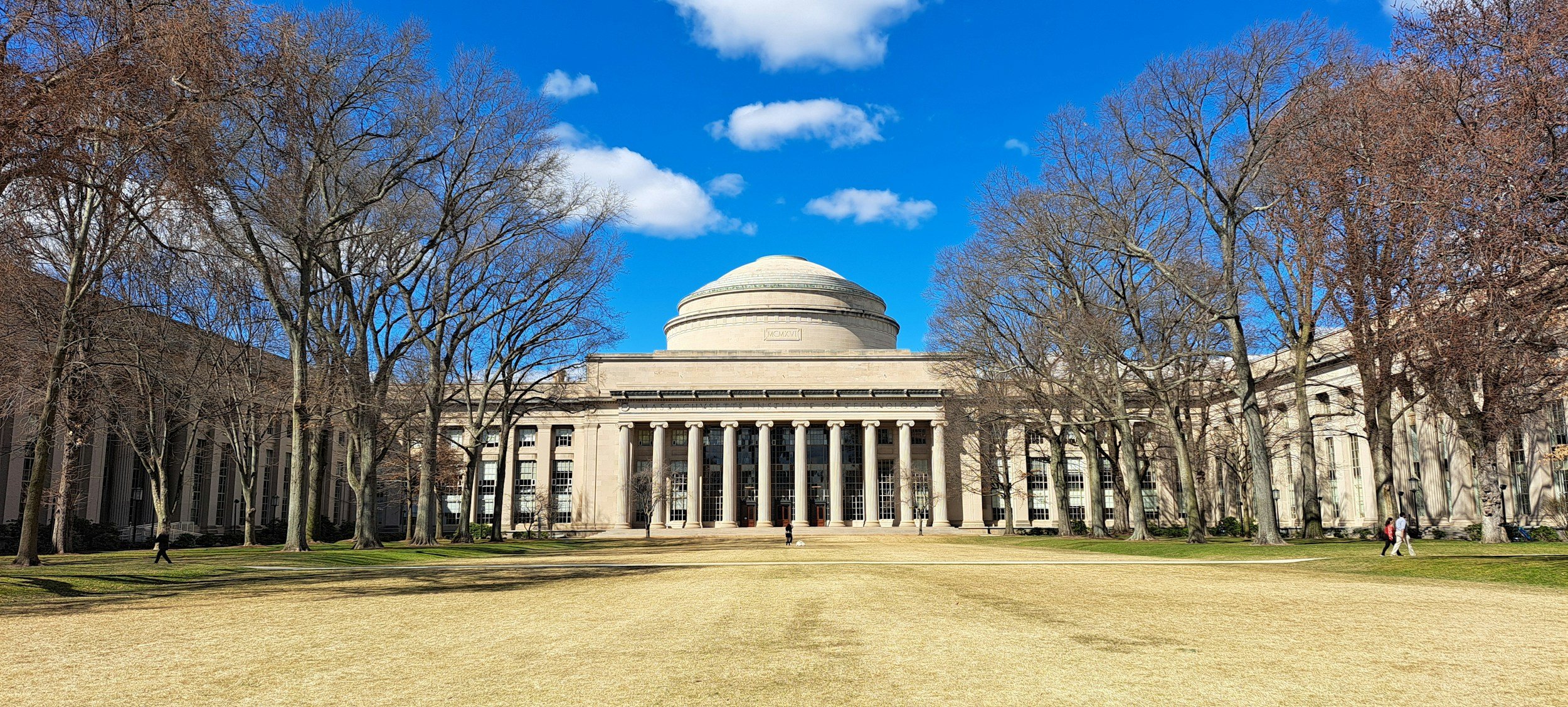
The Research Science Institute, or RSI, is a free six-week summer research program held at MIT for students finishing their junior year of high school. It is run by the Center for Excellence in Education (CEE) in partnership with MIT, and its alumni call themselves Rickoids, after CEE's cofounder Admiral H.G. Rickover. If you are a STEM student aiming for the T20, the top 20 universities in the national rankings, you can judge RSI's value directly, because CEE publishes where its alumni enroll in college.
Nearly four in five RSI alumni enroll at Harvard, Yale, Princeton, MIT, Stanford, or Caltech, the six schools we classify as tier 1, each of which admits only a few percent of its applicants.
How Selective RSI Is
CEE receives more than 2,500 applications from U.S. students and about 600 from international students each year, and it accepts fewer than 2.5 percent of them. Each summer's cohort runs roughly 80 to 100 students, about two-thirds of them American. Each of the six tier 1 schools, by comparison, admits roughly 3 to 5 percent of its applicants.
The applicant pool also matters. CEE recommends that applicants score at least 740 on PSAT Math, 750 on SAT Math, or 33 on ACT Math, and the essays ask you to show the research and coursework that will let you start work on a frontier problem from day one. That filters the pool heavily before anyone reads it, so an RSI acceptance means a selection committee of educators and RSI alumni picked you out of a group made up largely of the country's top STEM juniors. The program's alumni include Fields Medal winner Terence Tao and Feng Zhang, one of the scientists behind CRISPR gene editing.
Where RSI Alumni Go to College
CEE tracks where its alumni enroll and publishes the breakdown on its alumni college page. As reported in Forbes, 33 percent of RSI alumni attend Harvard, 22 percent attend MIT, 10 percent attend Stanford, 5 percent attend Princeton, 5 percent attend Yale, and 3 percent attend Caltech. Duke accounts for another 2 percent.
Add the six tier 1 schools together and you get 78 percent. Across the program's history, nearly four out of every five students who completed RSI went on to enroll at one of those six universities.
Harvard enrolls the largest share even though RSI runs on MIT's campus. A student admitted to several of these schools can enroll at only one, so the split across the six reflects where Rickoids chose to go at least as much as where they were admitted.
How to Read the 78 Percent Figure
Three details shape what this number tells you.
First, it counts enrollment, which understates admission. A student admitted to Harvard, MIT, and Stanford appears in the data once, at the school they picked. The share of RSI alumni admitted to at least one tier 1 school is at least 78 percent and likely higher.
Second, it includes international alumni. About a third of every RSI cohort comes from outside the United States, and some of those students enroll at universities in their home countries. That pulls the overall percentage down, so the rate for American Rickoids is likely above 78 percent.
Third, RSI selects students who were already exceptional. The profile that earns an RSI acceptance, meaning advanced coursework, top math scores, and prior research, is the same profile tier 1 schools look for. Part of the 78 percent reflects who RSI chooses, and part reflects what the program adds to an application once you are in.
Why RSI Carries So Much Weight in Admissions
The first reason is the selection itself. RSI is well known to admissions offices at tier 1 schools, which enroll RSI alumni every year. When RSI appears on your activities list, your reader knows a committee has already compared you against thousands of strong STEM applicants your age and picked you for one of roughly 80 to 100 seats. A single line on your application carries that entire judgment with it.
The second reason is the research you produce. RSI opens with a week of lectures and tutorials from professors. You then spend four weeks on an individual project with a mentor drawn from MIT, Harvard, or another Boston-area research institution, and you finish the final week by writing a paper and presenting your results at the RSI symposium. You leave with a completed paper, a polished presentation, and a mentor who watched you work every day for a month.
The third reason is timing. RSI ends in early August of the summer before your senior year, and early application deadlines at all six tier 1 schools fall on November 1. Your project is finished and fresh when you write your activities list and supplemental essays, and your mentor can speak to your research in specific technical terms.
The fourth reason is what RSI research leads to next. Many Rickoids submit their RSI project to the Regeneron Science Talent Search (STS), the national research competition for high school seniors, which accepts entries in November and names its top 300 scholars in January. In 2022, 24 alumni of RSI 2021 were among those top 300 scholars. Across the program's history, CEE counts 203 STS finalists and 12 first-place winners among RSI alumni. Because STS announces its scholars while colleges are still reading regular decision applications, an RSI project can add a second national honor to your file before regular decisions go out.
Applying to RSI for Summer 2027
The RSI 2027 application closes on December 11, 2026, and CEE does not accept late submissions. You are eligible if you are in your junior year of high school, will be at least 16 by July 1, 2027, and are a U.S. citizen or permanent resident. International students apply through the selection processes in participating countries. The application asks for essays, two recommendations from math or science teachers or a research supervisor, your transcript, and all of your standardized test scores. Every applicant hears back at the same time in March.
In a pool where nearly everyone has top scores, your essays do much of the work of separating you from other applicants. The first prompt asks you to explain the research fields you selected and identify the most interesting open questions in each subfield, and CEE shares those responses with prospective mentors. The remaining prompts cover your long-range goals, your activities, your community involvement, and why you want to attend RSI. Our RSI essays guide walks through every prompt and shows you how to approach each one.
If you are deciding between RSI and another research program, our comparison of RSI and the Simons Summer Research Program explains how the two differ.
Get Expert Help With Your RSI Application
An RSI acceptance places you in a group where nearly four in five students go on to enroll at a tier 1 university. Whether you are applying this December or you are a freshman or sophomore building the research record RSI looks for, our admissions experts can help you plan your research, sharpen your essays, and present your strongest application. You can learn more about our RSI admissions support or schedule a free consultation with an admissions expert today.